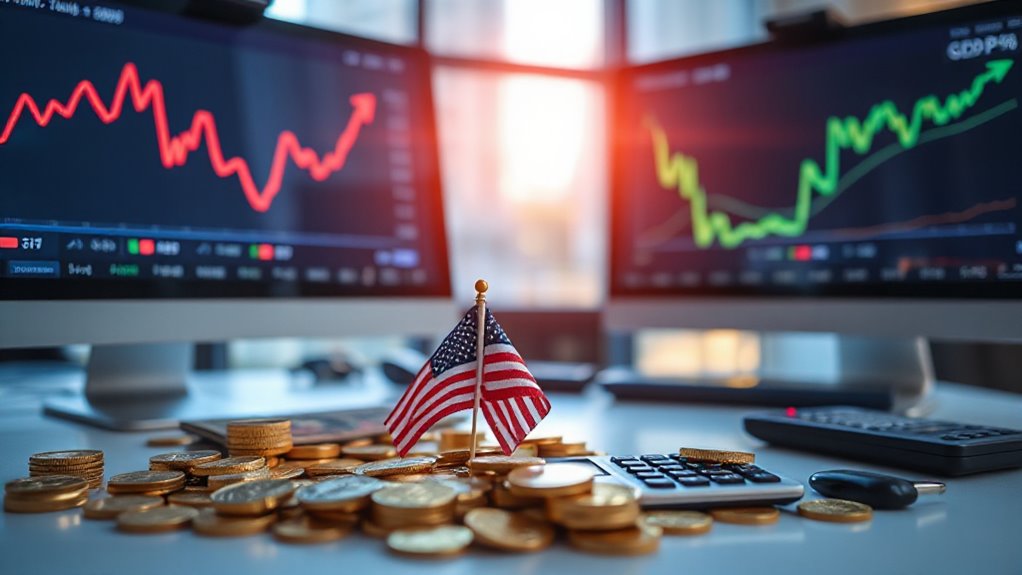
While the US economy is expected to bounce back in 2026 with stronger growth and improved business conditions, rising inflation could throw a wrench into the recovery plans.
Rising inflation threatens to derail America’s 2026 economic recovery despite promising growth forecasts and improving business conditions.
Economic forecasters predict GDP growth will accelerate to 2.2% in 2026, marking a welcome improvement from previous years. The Federal Reserve has even bumped up its growth forecast to 1.8%, thanks to stronger consumer spending and business investment. Think of it like a car finally picking up speed after being stuck in slow traffic.
However, inflation threatens to act like a speed bump on this economic highway. Prices are expected to climb from 2.7% to around 3% in 2026, staying well above the Federal Reserve’s preferred 2% target.
Some experts predict inflation could reach 3.5% before settling back to 2.8% by year’s end.
A big culprit behind these rising prices could be tariffs. If the US increases tariff rates by 10%, inflation might jump by up to 1.2%. These trade taxes work like a hidden sales tax that gets passed down to shoppers at checkout.
The good news is that tariff effects should fade by late 2026, much like how a fever eventually breaks.
The job market presents a mixed picture. Unemployment is projected to rise to 4.5%, with job growth slowing to just 30,000 to 50,000 new positions monthly.
While this keeps unemployment relatively low, wages aren’t expected to grow much after accounting for inflation.
This creates a frustrating situation for American families. Even though the economy is growing, many people won’t feel much better off because their paychecks aren’t stretching as far.
It’s like getting a raise but discovering everything at the store costs more too.
Some bright spots remain on the horizon. Energy prices are expected to stay low, and shelter costs should moderate. Wage growth has remained stable at 3.9% year-over-year, but immigration crackdowns could potentially push these numbers higher as labor shortages develop.
These factors could help keep inflation from spiraling higher. The US dollar has appreciated nearly 20% against major currencies over the past year, which could influence both trade dynamics and inflationary pressures. Sophisticated investors are increasingly turning to AI trading strategies to navigate these volatile market conditions and capitalize on economic shifts.
The economy’s comeback story in 2026 remains intact, but persistent inflation means the recovery might feel less impressive to everyday Americans dealing with higher costs at grocery stores and gas stations.