










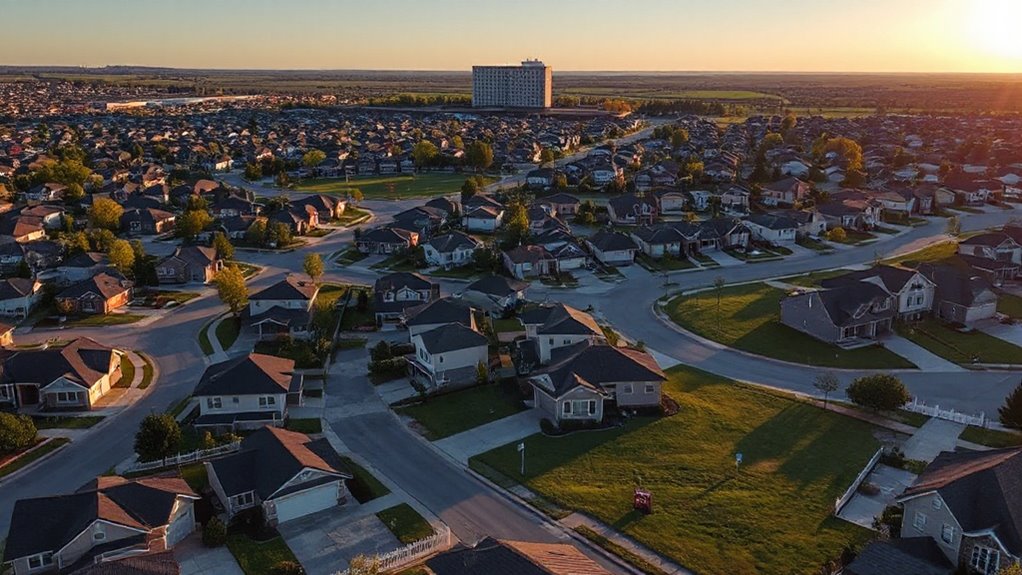
In a move aimed at helping families buy homes, President Trump announced on January 7, 2026, that his administration plans to ban large institutional investors from purchasing single-family houses. Trump shared the news on Truth Social, framing it as a solution to the housing affordability crisis. His message was simple: “people live in homes, not corporations.” The president plans to present more details at the World Economic Forum in Davos and push Congress to make the ban official through legislation.
The proposal targets big investors who buy up properties that families could otherwise purchase. Vice President J.D. Vance supports the plan, which appeals to populist voters concerned about housing costs. Trump intends to issue immediate executive actions while working toward broader congressional support. He also wants Fannie Mae and Freddie Mac to buy $200 billion in mortgage-backed securities to help lower borrowing costs for homebuyers.
However, institutional investors actually own only about 1% of all single-family homes nationwide. These are typically companies that own at least 100 properties, though stricter definitions count those with 1,000 or more homes. Their presence is barely noticeable in most areas but highly concentrated in specific markets like Atlanta, Charlotte, Phoenix, and Jacksonville. Diversifying investment across defensive sectors can help protect portfolios during economic stress.
In fact, only 15 ZIP codes nationwide see institutional ownership above 10%, with eight of those in Atlanta alone.
The Real Estate Roundtable questions whether the ban will truly solve affordability problems without increasing housing supply. They argue that building more homes matters more than limiting investors. Meanwhile, TD Cowen analysts expect bipartisan bills to pass Congress despite previous Republican opposition, driven by political pressure around housing costs. The U.S. needs 3–4 million additional homes above the normal construction pace to ease prices, according to Goldman Sachs estimates. Research indicates affordability pressures stem primarily from supply shortages, high construction costs, and elevated mortgage rates rather than institutional ownership levels.
Interestingly, housing affordability has actually improved recently. Existing home sales reached their strongest pace in three years last December. Mortgage rates dropped to multi-year lows, and income growth has outpaced home price increases. Whether Trump’s ban becomes reality or not, the debate highlights how housing costs remain a hot political issue that affects families across America.