










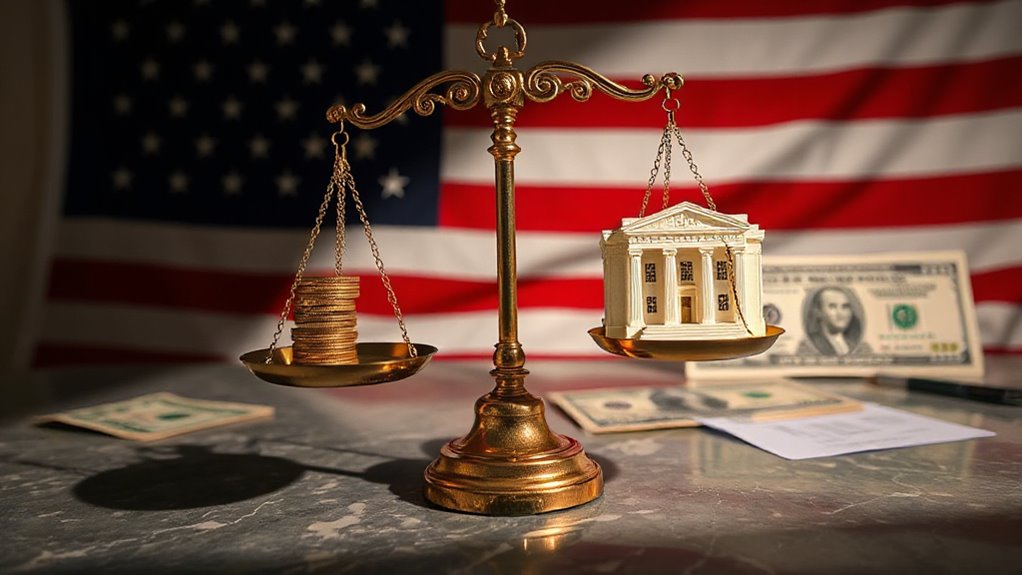
The Supreme Court confronted a historic showdown over presidential power as justices examined whether former President Trump could fire a Federal Reserve governor for the first time in the central bank’s 111-year history. The case centers on Lisa Cook, whom Trump attempted to remove in August 2025 over allegations of mortgage fraud from 2022, before she joined the Fed’s board.
Federal Reserve governors enjoy special legal protection that sets them apart from other agency leaders. While the Supreme Court has allowed Trump to fire heads of agencies like the National Labor Relations Board and Federal Trade Commission, Fed governors can only be removed “for cause.” This means a president needs a serious reason like inefficiency, neglect of duty, or actual wrongdoing in office.
Lower courts ruled that Trump couldn’t fire Cook because the alleged misconduct happened before her appointment. Think of it like getting grounded for something you did before moving into a new house. The legal standard requires problems directly connected to her work at the Fed, not events from her past.
Justice Brett Kavanaugh, appointed by Trump himself, expressed serious concerns about allowing the dismissal. He warned it would “weaken, if not shatter” the Federal Reserve’s independence and create a dangerous pattern. Every time a new president takes office, they could hunt for reasons to fire the previous administration’s Fed appointees.
This political merry-go-round would turn monetary policy into a partisan battleground.
The Court described the Federal Reserve as a “quasi-private entity” with unique historical roots connecting back to America’s First and Second Banks. This special status earned it protection that other agencies don’t receive, though some legal scholars call this distinction “hocus pocus.” The justices largely avoided explaining the legal principle that distinguishes the Fed from other agencies, partly because neither side pushed the issue during oral arguments.
Former Solicitor General Paul Clement argued that Cook deserves court review of her removal rather than leaving such decisions solely to presidential judgment. Justice Amy Coney Barrett questioned the government’s position that governors need not be given notice or a hearing before removal, suggesting that providing an opportunity to respond would be a simple procedural safeguard. The conservative justices carved out this Federal Reserve exception despite granting Trump broad removal authority elsewhere, recognizing that protecting the central bank’s independence serves vital economic interests beyond ordinary political calculations.
Central bank decisions on interest rates and liquidity can have immediate effects on markets, highlighting why independence is considered crucial for economic stability.