
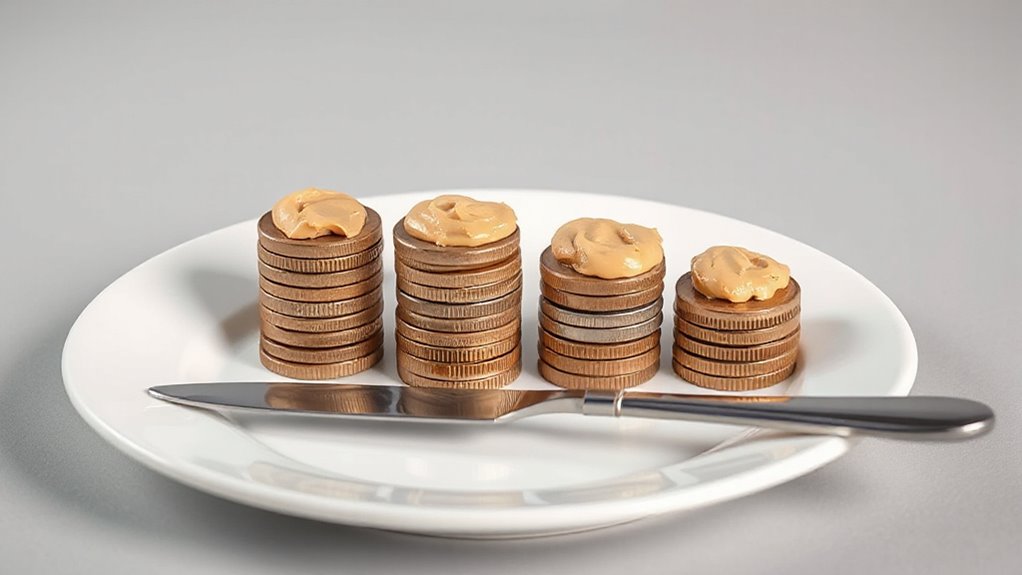
Workers across America can increasingly expect their 2026 paychecks to grow by roughly the same amount as their colleagues’, regardless of individual performance. This shift toward “peanut butter” raises—spreading increases evenly like spreading peanut butter on bread—marks a notable change in how companies reward employees.
The era of performance-based compensation is fading as companies embrace uniform raises that reward everyone equally.
The numbers tell an interesting story. While 48% of companies still use performance-based pay, 44% plan to implement uniform raises by 2026. Among high-performing companies, 56% actually prefer the peanut butter approach. Currently, only 9% use this strategy, but 18% are considering it for 2026. For workers hoping their excellent performance will earn bigger raises, this trend isn’t particularly encouraging.
The typical raise looks modest either way. Total salary increases are projected at 3.5%, matching what employees received in 2025. Merit-based budgets average 3.2%, while promotions—planned for just 9% of workers, down from 10%—come with an 8.7% bump. These numbers suggest employers are keeping a tight grip on compensation.
Economic worries drive these decisions. About 66% of companies cite economic concerns for their compensation strategies, and 61% expect moderate to significant economic impact. Lower employee turnover means less pressure to compete for talent, giving employers breathing room to keep budgets flat. The message seems clear: don’t expect generosity. Nearly a third of companies anticipate reducing salary increase budgets due to economic uncertainties. Employers specifically point to tariffs and economic woes as reasons for trimming compensation budgets. Markets often begin to rebound before recessions officially end, so employers may be reacting to forward-looking economic signals like market movements and rate cuts that hint at coming stimulus.
Regional and industry differences do exist. Healthcare and social services lead with 4.5% growth, while Minneapolis area wages jumped 5.7% through June 2025. Energy and insurance sectors offer 3.3% merit raises, but healthcare, high-tech, and retail lag at 3.0%. Banking and financial services total 3.7%. Your industry and location matter more than ever.
Minimum wage workers face a different landscape. Twenty-one states scheduled increases in 2026, with Alaska reaching $14.00 and Florida hitting $15.00. Missouri and Nebraska already reached that threshold.
The bottom line? Most employees should expect moderate, uniform raises around 3.5%. Outstanding performers might feel disappointed, while average workers might appreciate the predictability. Either way, 2026 paychecks will grow, just not dramatically.