





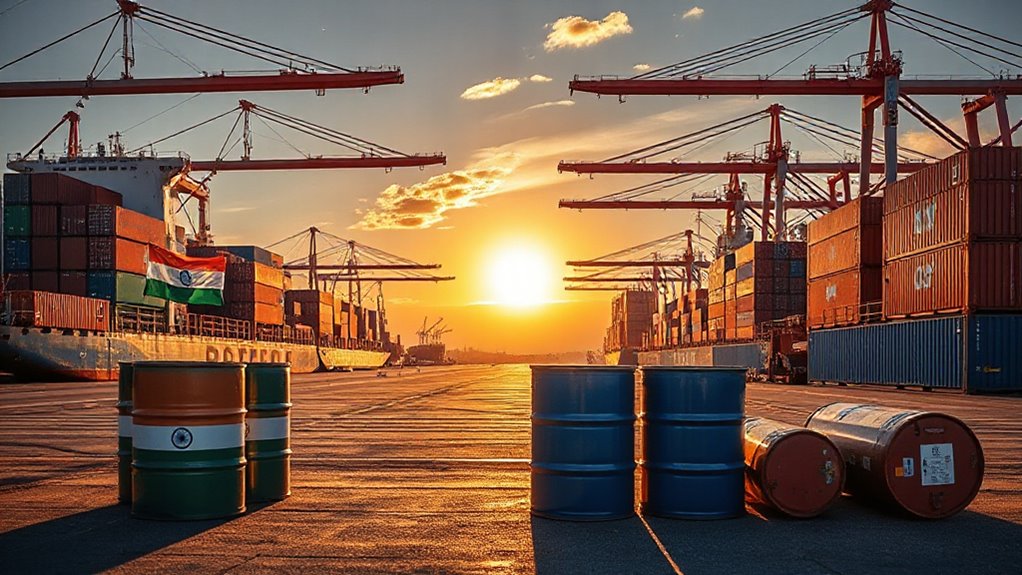
In a major shift for international trade, the United States signed an executive order on Friday that removes a 25% penalty tariff on Indian goods linked to purchases of Russian oil. The tariff removal takes effect Saturday, February 7, 2026, at 12:01 a.m. EST. This change comes alongside broader trade adjustments, including lowering reciprocal tariff rates from 25% to 18% on Indian textiles, apparel, and leather goods.
US removes 25% tariff on Indian goods tied to Russian oil purchases, effective February 7, 2026, while reducing reciprocal tariffs to 18%.
The deal emerged from an interim agreement announced February 6, 2026, following a phone call between former President Trump and Indian Prime Minister Modi. India committed to stop importing Russian oil, both directly and indirectly, according to joint statements. The country also pledged to purchase American energy products as part of the arrangement. Central banks’ decisions on interest rates can influence energy markets and trade dynamics, particularly through policy interest rates.
However, experts remain skeptical about whether India will completely halt Russian oil purchases. After Russia’s invasion of Ukraine, India became a major buyer of discounted Russian crude, helping support Russian military revenue. India-Russia trade reached a record $68.72 billion in 2024-25, up dramatically from $13.1 billion in 2021-22. Analysts describe India’s moves as tactical adjustments with only minor volume reductions rather than a full stop.
The broader trade framework offers significant benefits beyond oil. India agreed to eliminate or reduce tariffs on all American industrial goods and many agricultural products, including dried distillers’ grains, tree nuts, fresh fruit, and wine. The US granted exemptions on certain aircraft parts from steel and aluminum tariffs and provided preferential treatment for Indian auto parts. India will also receive lower duties on plastics, rubber, organic chemicals, and home decor items. The countries committed to negotiate digital trade rules addressing discriminatory practices and barriers to digital trade.
India has committed to purchasing over $500 billion in American products over five years, covering energy, aircraft, technology, and agricultural goods. The deal also addresses generic pharmaceuticals, gems, and diamonds, with both countries pledging to reduce non-tariff barriers.
Despite official announcements, the joint statement lacks explicit mention of a complete Russian oil halt, fueling doubts about full implementation. While the tariff removal is real and measurable, whether India truly stops buying Russian oil remains an open question that only time will answer.