





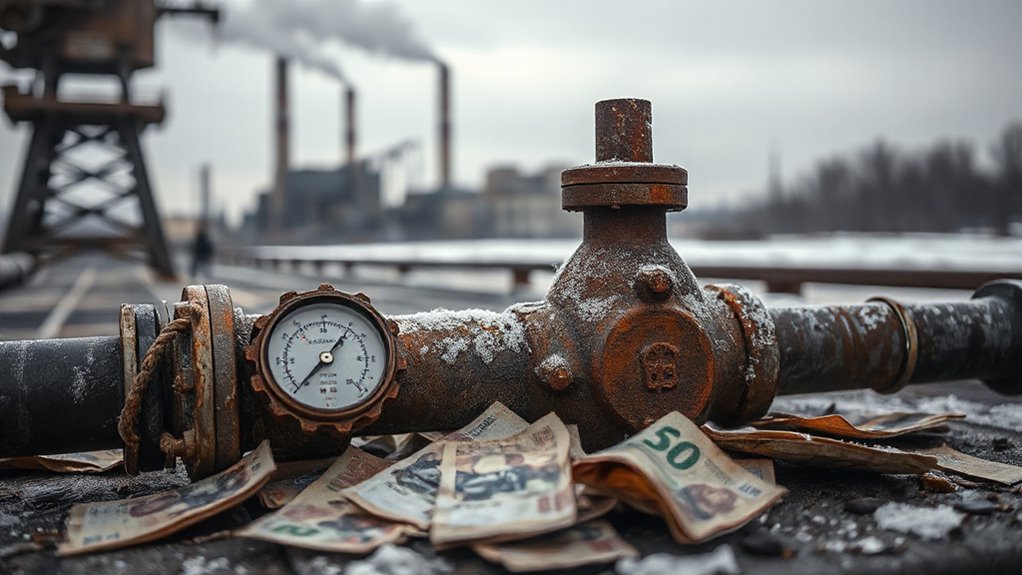
Although Russia’s economy grew at a robust 4.9 percent in 2024, that momentum has vanished like steam from a kettle. Growth has collapsed to barely 1 percent in 2026, creating serious problems for President Putin’s war plans.
Russia’s economic growth has evaporated from 4.9 percent to barely 1 percent, undermining Putin’s ability to sustain his war effort.
The biggest squeeze comes from Russia’s shrinking oil piggy bank. Oil and gas revenues fell 2.2 trillion rubles short of expectations in 2025. That’s like expecting your allowance to be $100 but only getting $80. Western sanctions forced Russia to sell its oil at huge discounts. The price spread between Russian Urals crude and regular Brent oil ballooned to over $20 per barrel, when it used to be just $1-2 before the invasion. Now Russian oil sells for less than $40 per barrel, slashing government income.
Meanwhile, military spending has skyrocketed to 7.2 percent of GDP, more than double the pre-war level. Defense now eats up roughly half the entire budget. This creates a strange situation where the economy appears to grow, but mainly from producing weapons that get destroyed in combat rather than building lasting value.
The Russian government faces tough choices. They’ve already raised taxes, including a two-percentage-point hike on value-added tax that makes everyday items more expensive for regular Russians. The budget deficit hovers around 3 percent of GDP, and cutting military spending seems impossible while the war continues.
Labor shortages add another layer of trouble. Hundreds of thousands of workers have either joined the military, fled the country, or moved to defense plants offering higher wages and exemptions from military service. This brain drain has hammered civilian manufacturing, which contracted for seven straight months in 2025.
The economy’s capacity utilization has dropped to 78 percent overall and just 70 percent in manufacturing. Factories sit partially idle while workers cluster in the defense sector. Russia’s long-term growth potential has slumped to around 1 percent annually. The International Monetary Fund projects 1.0% growth in 2026, matching the grim consensus among economic forecasters.
Putin now confronts an uncomfortable reality: funding a major war on a stagnant economy with collapsing oil revenues. A potential end to hostilities could paradoxically trigger recession as defense output contracts and household incomes tied to military production decline. Something eventually has to give. A tighter interest rate environment set by central banks can also influence Russia’s external financing costs and investor appetite.