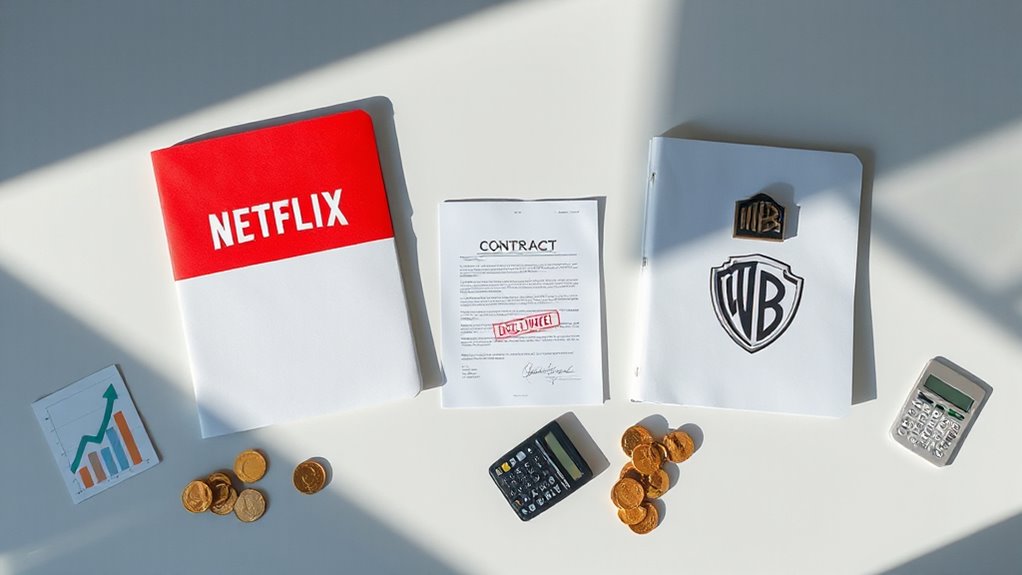
Netflix slammed the brakes on its biggest deal ever, walking away from an $82.7 billion bid to buy Warner Bros. Discovery’s prized studio and streaming assets. The streaming giant had offered $27.75 per share back in December 2025, planning to snap up HBO, HBO Max, and the legendary Warner Bros. film and TV studios. Both company boards had approved the deal, and Netflix even promised a 45-day theatrical window for Warner movies before they hit streaming—a move designed to calm nervous theater owners.
Netflix walked away from its $82.7 billion Warner Bros. Discovery bid after a higher offer emerged from Paramount Skydance.
The acquisition would have been massive. Netflix would have gained control of DC Universe superheroes, Harry Potter magic, and The Matrix sci-fi universe. Add in Game of Thrones, Big Bang Theory, and the Wizard of Oz, and you’d have a content library that could make competitors sweat. Combining these iconic franchises with Netflix hits like Bridgerton and Money Heist seemed like a streaming dream team.
But then Paramount Skydance crashed the party. On December 8, 2025, they launched an all-cash offer that eventually climbed to $31 per share, valuing Warner Bros. Discovery at a whopping $110.9 billion. The Warner board looked at both offers and decided Paramount’s was superior on February 26, 2026. They gave Netflix four days to match it.
Netflix’s co-CEOs Ted Sarandos and Greg Peters politely declined. They said the higher price just didn’t make financial sense anymore. Their message was clear: we won’t overpay just to win a bidding war. Investors loved this disciplined approach, cheering the company’s restraint and sending positive signals about Netflix’s smart money management.
The deal wasn’t without complications anyway. The Department of Justice had opened an antitrust investigation on February 22, 2026, worried about monopoly risks. Netflix already has 300 million subscribers, and adding HBO Max’s dominance raised red flags about too much power in one company’s hands.
Now Warner Bros. owes Netflix a $2.8 billion breakup fee for walking away. Netflix, meanwhile, restarted its share repurchase program and refocused on organic growth with a planned $20 billion content investment for 2026. Sometimes the smartest deal is the one you don’t make. Netflix’s strategy reflects the kind of direct market access and disciplined capital allocation often prioritized by institutional trading platforms.