










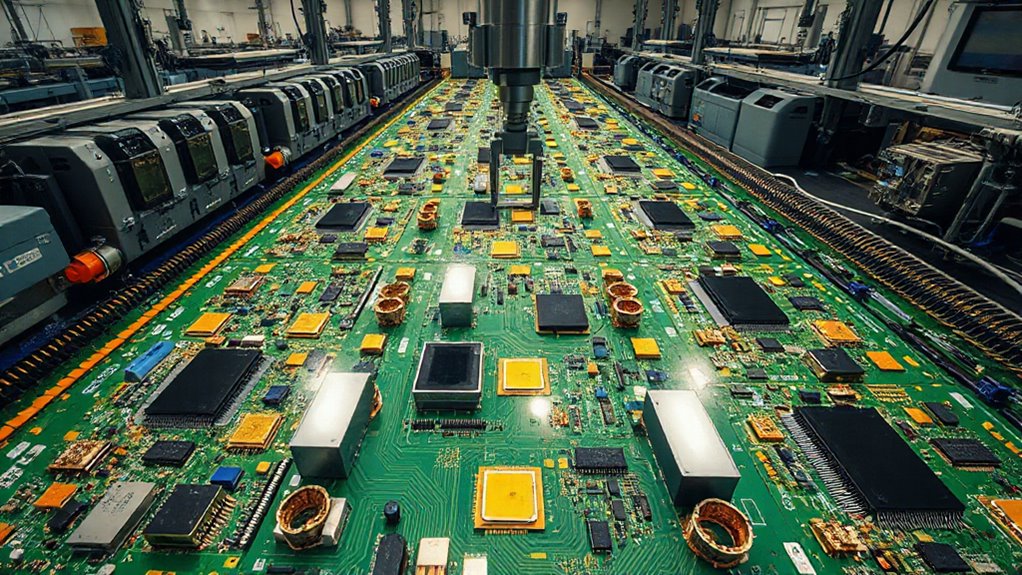
The artificial intelligence boom is colliding with a stubborn reality: there aren’t enough computer chips to go around. What started as a squeeze on specialized AI processors has now spread to memory chips, and the shortage shows no signs of easing anytime soon.
The AI chip shortage that began with processors has now engulfed memory chips with no relief in sight.
High-Bandwidth Memory production for 2026 is already completely sold out. Major producers like Micron and SK Hynix can’t keep up with demand, even though HBM technology has existed for years. The problem isn’t designing new chips anymore—it’s manufacturing enough of them fast enough. Global AI spending is expected to jump 33% in 2026 to reach $480 billion, and much of that money is chasing the same limited supply of components.
Data centers are winning this battle by sheer force of spending power. They will consume 70% of all memory chips produced worldwide in 2026. Samsung, Micron, and SK Hynix produce 90% of the world’s memory supply, and they’re redirecting everything toward AI customers. Micron even killed its consumer Vital brand in late 2025 to focus entirely on the AI market. When companies that make almost all the memory chips decide to abandon everyday consumers, that’s a clear sign of where priorities lie.
Ordinary electronics are feeling the pinch. Forecasters predict smartphone sales will drop 5% in 2026, while PC sales could fall anywhere from 5% to 9%. The decline isn’t because people don’t want these devices—it’s because manufacturers can’t get enough components at reasonable prices. AI servers need far more memory per system than laptops or phones, pulling a disproportionate share of global capacity.
The storage shortage extends beyond computers to TVs, cars, and smart home appliances. Enterprise customers face no pricing limits when competing for chips, which pushes costs higher across all consumer segments. Graphics card prices are skyrocketing while fewer PCs even include them. The chips physically exist, but they’re all flowing toward whoever pays the most—and right now, that means AI data centers.
Index funds remain a recommended option for many new investors, and their broad diversification can help mitigate sector-specific risks like the memory chip crunch.