







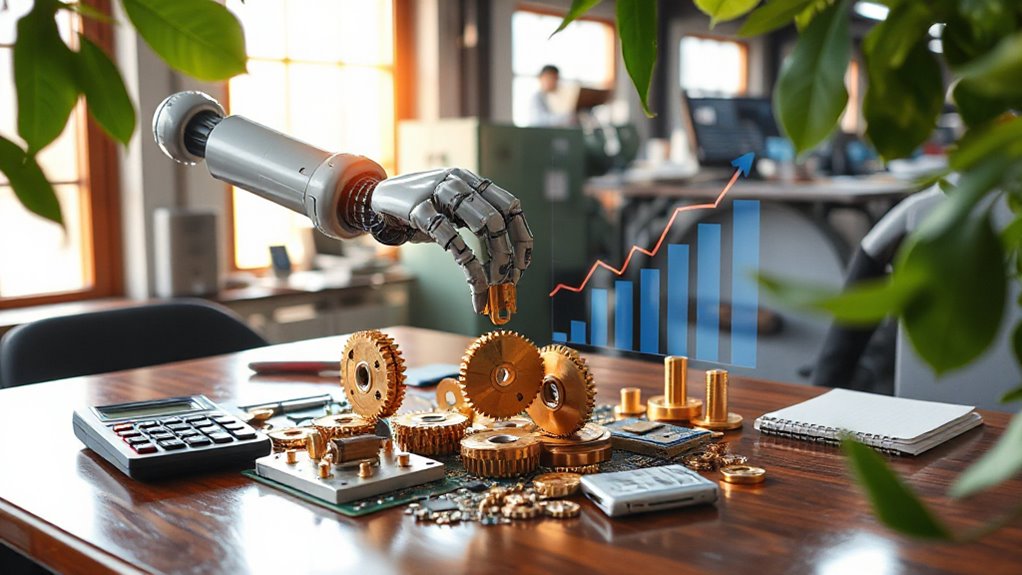

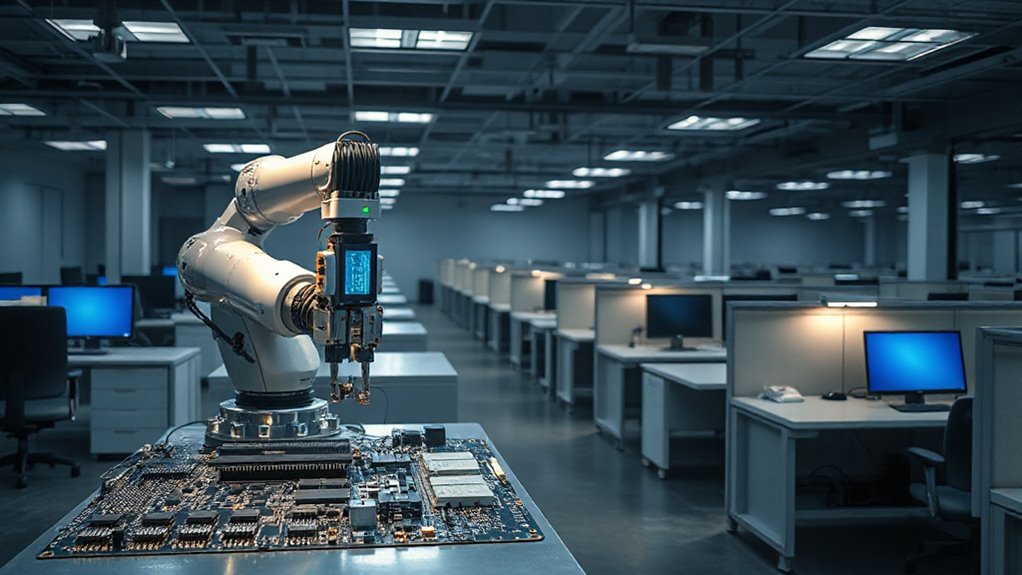

Across boardrooms and factory floors, artificial intelligence is rewriting the rules of work at a pace that would make even the fastest typist’s head spin. While headlines often scream about robots stealing jobs, the reality tells a more balanced story. By 2030, AI is projected to create 170 million new positions while eliminating 92 million roles, resulting in a net gain of 78 million jobs worldwide.
AI promises to create 78 million more jobs than it destroys by 2030, transforming work rather than ending it.
The numbers reveal both challenge and opportunity. Yes, 92 million jobs face elimination, and 375 million workers may need to adapt to AI-driven changes. Data entry clerks and administrative assistants are particularly vulnerable, with 7.5 million such positions expected to disappear by 2027. Wall Street banks anticipate cutting 200,000 entry-level roles over the next few years, while manufacturing could lose 2 million jobs to robotics.
But the flip side sparkles with possibility. Big Data Specialists are expected to see the largest job growth through 2030. Software developers will expand by nearly 18 percent, and AI Engineer positions are surging by over 140 percent.
New roles like AI Content Creator and Prompt Engineer are growing between 35 and 110 percent, creating career paths that didn’t exist five years ago.
The skills race is accelerating rapidly. Half of U.S. tech job postings now require AI skills, and mentions of AI in job listings jumped 134 percent above 2020 levels. Workers adapting to these demands are seeing real rewards. Professionals with AI skills earn 28 percent more on average, and new skills correlate with wage offers 3 to 3.4 percent higher.
Industries embracing AI show three times higher revenue growth per worker, proving that productivity gains can offset employment concerns. Even traditional sectors like mining and agriculture are increasing AI usage. The shift won’t be painless, but 63 percent of business leaders expect no major employment reduction in wealthy nations.
The message is clear: AI isn’t ending work as we recognize it. It’s transforming how we work, demanding adaptation while opening doors to careers we’re only beginning to imagine. Companies often reinvest profits into growth, which is reflected in retained earnings on their balance sheets.