


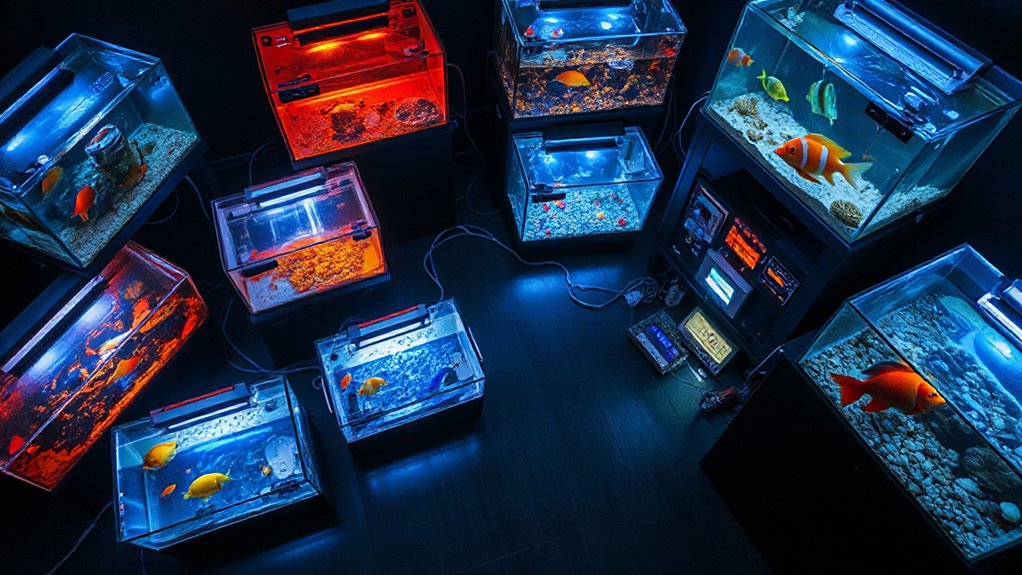
How much does it actually cost to keep those colorful fish swimming happily in their glass homes? Many aquarium enthusiasts discover that their electric bills can become surprisingly hefty when multiple tanks start humming away in their homes.
A typical 30-gallon freshwater tank consumes around 150 to 200 kilowatt-hours annually, while larger 55-gallon setups can gobble up 200 to 400 kWh per year. Even small 10-gallon tanks use about 150 kWh yearly with basic equipment running continuously.
The numbers might seem manageable for one tank, but they multiply quickly when aquarium fever strikes and hobbyists add more tanks.
The biggest energy hogs in any aquarium setup are surprisingly predictable. Lighting accounts for nearly half of all electricity use, keeping those underwater worlds bright and beautiful. Heaters follow closely behind, consuming about 35% of the total energy bill as they work tirelessly to maintain perfect water temperatures. Filters and pumps handle the remaining energy load, ensuring clean and oxygenated water for aquatic residents.
Location plays a major role in determining costs. With average electricity rates around 13.85 cents per kilowatt-hour nationwide, rates can swing wildly from just 5 cents to 70 cents depending on where people live.
Winter heating costs add another layer of expense, with each 10-degree temperature increase costing roughly $1.50 monthly per 10 gallons of water. Water pumps add significant variety to energy consumption, ranging from 3W to 400W depending on the required flow rate for different tank sizes and setups. Larger tanks have lower per-gallon costs due to their better surface area-to-volume ratio.
Multiple aquariums create a perfect storm for energy consumption. Each additional tank brings its own lighting, heating, and filtration needs. Saltwater and reef tanks demand even more power due to specialized equipment like UV sterilizers and powerful lighting systems.
A hobbyist with three or four tanks might find their monthly electric bill jumping by $50 to $100 or more.
Smart aquarium management can help control costs. Reducing lighting hours, maintaining reasonable water temperatures, and using efficient equipment all help keep bills manageable. Installing kilowatt meters helps track actual consumption rather than guessing. Like financial markets that operate continuously with 24-hour global activity, aquarium equipment runs around the clock to maintain optimal conditions for aquatic life.
While aquariums bring joy and relaxation, understanding their true energy appetite helps hobbyists make informed decisions about expanding their underwater collections without experiencing bill shock.
Related Posts