








How do you get paid for making videos online? Until recently, most YouTube creators received their earnings through traditional bank transfers or PayPal deposits in regular dollars. That’s starting to change in a big way.
YouTube’s payment revolution is transforming how millions of creators receive their earnings from traditional banking to digital currencies.
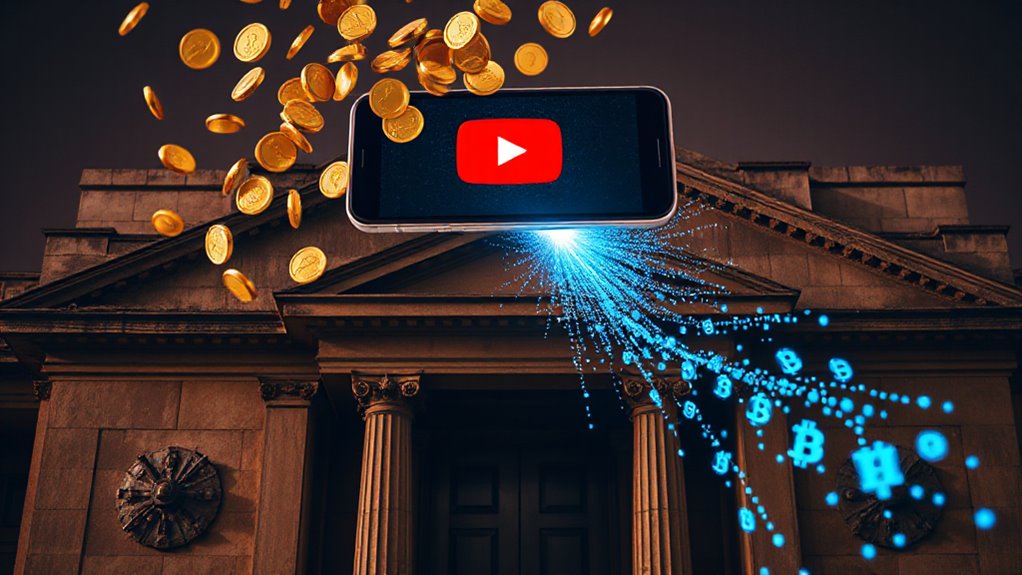
YouTube has launched a new feature allowing U.S. creators to receive payouts in PYUSD, PayPal’s digital dollar called a stablecoin. Think of PYUSD as digital money that’s always worth the same as a regular dollar, but it lives entirely online. PayPal’s crypto head May Zabaneh confirmed this feature is now live, and Google verified the addition.
This move might seem small, but it could signal something much bigger. The creator economy is worth tens of billions of dollars, and if more platforms follow YouTube’s lead, we could see a massive shift in how digital payments work. Imagine millions of creators worldwide getting paid in digital currencies instead of waiting for slow bank transfers.
The setup is surprisingly simple. Creators can hold their PYUSD earnings in PayPal’s digital wallet or Venmo. They can then use this digital money to pay merchants or make other transactions. For YouTube, this arrangement is perfect because they don’t have to handle cryptocurrency directly. They just use PayPal’s existing payout service, the same one that pays gig workers and contractors.
PayPal added this capability for payment recipients in early 2025, and YouTube quickly jumped on board. Google Cloud had already received PYUSD payments from two customers, showing the tech giant was warming up to digital currencies. PYUSD’s market capitalization has grown to nearly $4 billion, demonstrating significant adoption and trust in the stablecoin.
This reflects a broader trend of big tech companies tiptoeing into crypto amid Silicon Valley excitement. Stablecoins are particularly attractive because they avoid the wild price swings of Bitcoin or other cryptocurrencies. Unlike traditional cryptocurrency transactions that require multiple blockchain confirmations for security, PYUSD transfers can be processed more quickly for everyday payments.
Currently, only U.S. creators can access this feature, with no mention of global expansion yet. But the implications are intriguing. If creators can bypass traditional banking entirely, they might gain more control over their earnings and faster access to their money.
Whether this sparks a $100 billion market shift remains to be seen, but YouTube just made crypto payments mainstream for millions of content creators.
Related Posts