









While Volkswagen churns out electric vehicles in China at roughly half the cost of their German counterparts, these budget-friendly EVs aren’t actually invading Europe just yet. Think of it like having a fantastic pizza recipe that works perfectly in one kitchen but needs major tweaks to work in another.
VW’s Chinese EV production costs half of German manufacturing, but these affordable electric vehicles haven’t crossed into European markets yet.
VW has mastered cost-effective production in China through cheaper labor, streamlined manufacturing, and local supply chains. This impressive cost advantage lets them innovate faster and offer competitive prices. However, the company currently has no plans to bring these Chinese-made EVs to European showrooms.
The main roadblock isn’t just about money. Chinese-built VW EVs use different electronic architectures that don’t easily mesh with European market requirements. It’s like trying to plug an American appliance into a European outlet without the right adapter. European safety regulations, emissions standards, and performance requirements create additional hurdles for direct imports.
Meanwhile, VW is doing just fine in Europe without Chinese imports. The company leads the European electric vehicle market with about 27% market share as of 2025. Their European BEV sales jumped an impressive 78% in the first three quarters of 2025, driven by locally manufactured models like the ID.7 Tourer. This success comes despite China declining by 43% in BEV deliveries due to new model launches affecting the competitive landscape.
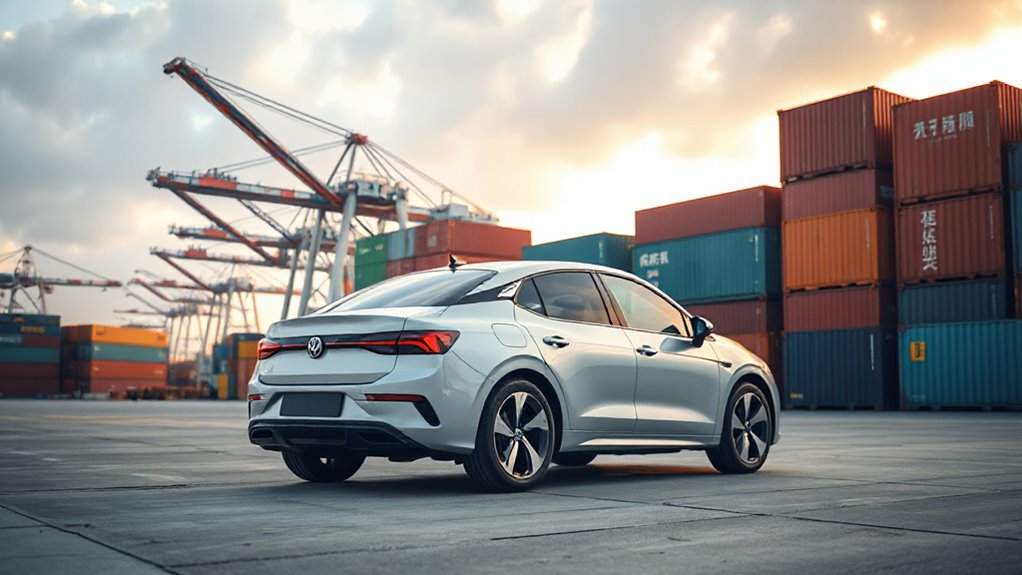
Instead of targeting Europe, VW actively exports Chinese-made vehicles to the Middle East, Southeast Asia, and Central Asia. These markets offer growing demand without the complex regulatory maze of European standards. The company plans to launch 30 new EV models in China over five years, focusing on capturing market share in developing regions. China’s auto industry faces structural overcapacity with factories producing nearly twice the expected shipment volume for 2024.
However, change might be brewing. The EU appears to be considering tariff adjustments that could make Chinese-made EVs more competitive in Europe. Current tariffs and import duties discourage large-scale imports, but reduced tariffs could narrow the cost gap between Chinese and European production.
If tariff barriers do fall, it might pressure European automakers to accelerate cost reduction and innovation. For now though, VW’s Chinese EV success story remains focused on markets outside Europe, while their European customers continue enjoying locally-made electric vehicles that meet strict regional standards. Companies seeking to enter new markets through public trading often face similar regulatory challenges and market adaptation requirements.
Related Posts