








How can a single ship suddenly cost more than half a million dollars per week to rent? The global oil shipping market has gone completely wild, with tanker rates jumping 576% this year alone. It’s like watching gas prices at the pump, except these numbers involve massive ships crossing entire oceans.
The chaos started when U.S. sanctions hit major Russian oil companies Rosneft and Lukoil hard. Buyers who once relied on Russian crude suddenly needed to find oil somewhere else. Think of it like your favorite pizza place closing down and everyone rushing to the remaining restaurants at the same time.
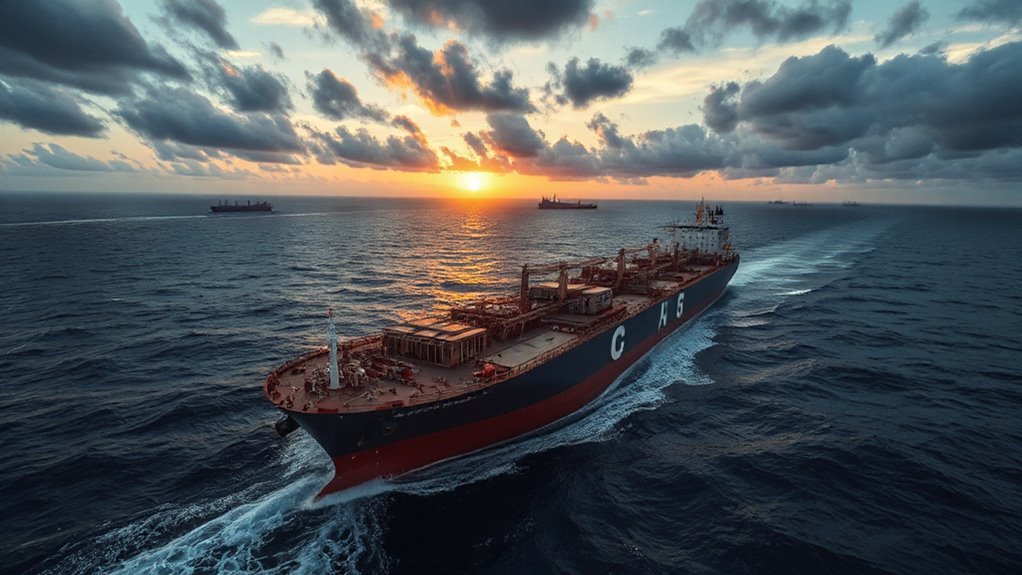
Very Large Crude Carriers, the giants of oil transport, now cost around $137,000 per day to charter from the Middle East to China. These floating giants are roughly the size of three football fields, yet demand for them has made their rental prices skyrocket beyond belief.
The problem gets worse because ships now travel much longer distances. Instead of short trips from nearby Russia, tankers must journey from the Middle East or United States to reach their destinations. It’s like being forced to drive across the country instead of going to your local grocery store.
Meanwhile, many tankers sit idle as floating storage tanks, helping Russia dodge sanctions through complex schemes. This ties up ships that could otherwise carry oil through normal trade routes. The available fleet for regular business has shrunk dramatically.
Other shipping markets face similar craziness. Natural gas tanker rates jumped four times higher, while iron ore vessel costs more than doubled. Even wheat and bulk cargo ships see elevated prices. The entire shipping world seems caught in the same storm.
Middle Eastern countries and the United States have ramped up oil exports to fill the gap left by Russian restrictions. Asian markets drive much of this demand, creating intense competition for available ships. Unlike private sales of vehicles which can take weeks or months to complete, shipping contracts need immediate execution in this volatile market.
Winter seasonal demand adds another layer of pressure as countries stock up on energy supplies. Shipowners and brokers expect rates to climb even higher, creating a psychological rush where everyone books ships earlier than usual. The rate surge represents one of the strongest market periods in a decade for the tanker industry.
Many ships continue to avoid the Red Sea route due to ongoing Houthi activity, forcing longer voyages and adding weeks to delivery times.
This shipping frenzy shows no signs of slowing down.
Related Posts