



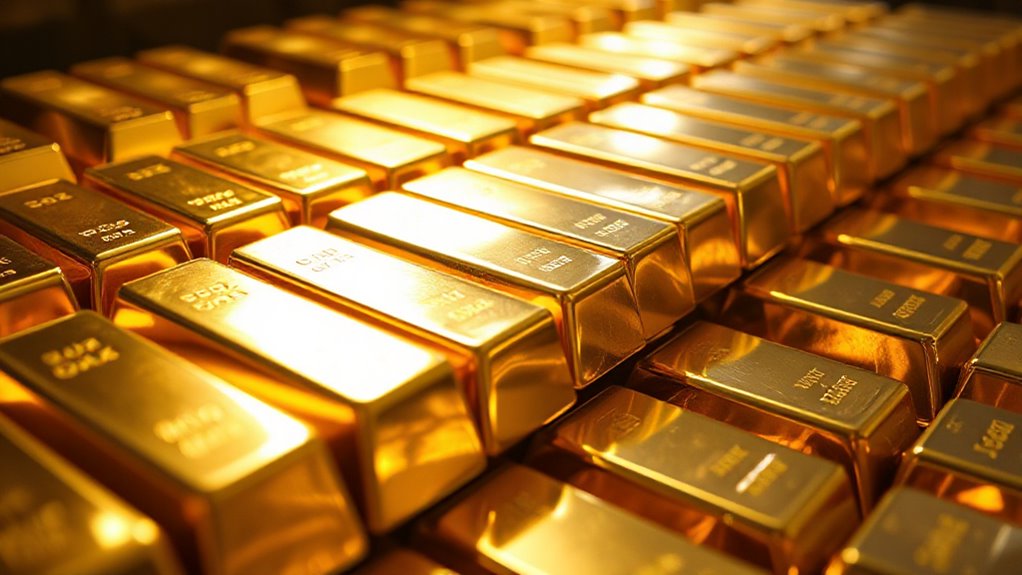
Gold shattered records on January 26, 2026, blasting past $5,000 per ounce for the first time in history and climbing above $5,100 by Monday. This milestone caps an incredible run that saw the precious metal nearly double from around $2,660 just one year earlier. Gold has surged 87% since the start of 2025, cementing its status as one of the most powerful assets in global markets.
Gold’s historic surge past $5,000 per ounce marks an 87% rally, nearly doubling in just one year.
Silver and platinum joined the party, with silver soaring past $100 per ounce and platinum exceeding $2,800. Both metals hit all-time highs, and silver actually outpaced gold’s already impressive gains over the past year. The simultaneous records across multiple precious metals signal a massive shift in investor sentiment toward safe-haven assets.
Several forces combined to drive this historic rally. Geopolitical tensions have mounted markedly, with Trump’s moves in Venezuela, ongoing fighting in Ukraine, turmoil in Iran, and strains in the NATO alliance creating widespread uncertainty. When the world feels unstable, investors traditionally flock to gold as a reliable store of value.
Fiscal concerns added fuel to the fire. Government debt levels keep climbing across the U.S. and other major economies. Moody’s Ratings even downgraded America’s credit rating from Aaa to Aa1 last May, citing rising debt burdens. Heavy government spending raises inflation fears, which typically drives investors toward precious metals as protection.
Central banks have become arguably the biggest driver behind gold’s multi-year surge. After COVID, annual central bank gold purchases doubled, led by China. Countries accelerated this buying after the U.S. froze Russia’s dollar reserves following the Ukraine invasion. Central banks sold Treasurys to fund gold purchases, diversifying away from U.S. dollars. Many central banks prefer to hold 24K gold or other high-purity reserves to maximize liquidity and value.
The weakening dollar provided additional momentum. Concerns about tariffs, high government spending, and inflation hammered the greenback. When the dollar weakens, gold becomes less expensive in other currencies, prompting even more buying from international investors. President Trump’s threat to impose a 100% import tax on Canada if Canada struck a trade deal with China further rattled markets and drove safe-haven flows. The Federal Reserve meeting scheduled for January 27–28 is expected to keep rates on hold, though traders are watching closely for any signals about potential future rate cuts that could further influence gold’s trajectory. This perfect storm of factors pushed precious metals into uncharted territory, with gold reclaiming its ancient role as the ultimate safe haven during times of global uncertainty.
Related Posts