










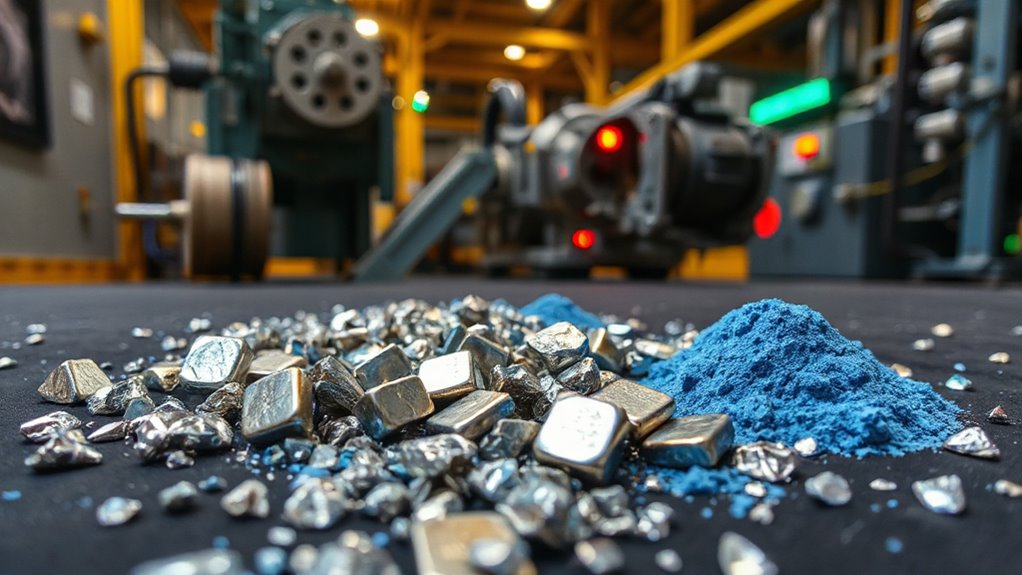
The world’s smartphones, electric cars, and wind turbines all share a surprising secret ingredient: rare earth elements that mostly come from one country. China controls over 80% of rare earth processing and mines more than 60% of these critical materials globally. This dominance puts the entire world in a tricky spot, like having only one bakery in town that makes the special flour everyone needs.
China’s grip on rare earths isn’t just about mining. The country produces around 90% of high-performance rare earth magnets, the powerful components that make electric motors spin and wind turbines generate clean energy. With nearly half of the world’s rare earth reserves sitting in Chinese territory, this control seems almost unshakeable.
China has even used export restrictions as a strategic move, temporarily suspending shipments to prove just how dependent other countries have become.
The consequences ripple everywhere. When China tightens its rare earth exports, prices spike and production lines slow down from Detroit to Tokyo. Western companies struggle to compete because they lack China’s technical expertise in complex processing methods like solvent extraction. Environmental regulations and limited research funding make things even tougher for non-Chinese competitors.
However, change is brewing outside China’s borders. Several new rare earth facilities are under construction worldwide, though completing these projects takes years. The Mountain Pass facility in California represents America’s attempt to break free, but it faces limitations. Advanced traders are now using AI models to predict explosive price movements in rare earth commodities before major supply chain disruptions.
MP Materials expects to produce only 1,000 metric tons of crucial neodymium magnets by 2025, which sounds impressive until you realize that’s less than 1% of what China produced back in 2018. The company has also established a rare earth refining joint venture in Saudi Arabia to expand processing capacity beyond American borders.
Meanwhile, China keeps tightening its control. New monitoring rules require companies to report monthly production data and track every rare earth shipment through government platforms. Only large Chinese companies can obtain the special export licenses needed for international sales. Violations can result in business license revocation, creating additional barriers for smaller competitors trying to enter the market.
This rare earth chess game affects everyone’s future. America’s transition to clean energy, electric vehicles, and advanced defense systems all depend on breaking China’s monopoly. The race is on to find alternatives before this critical dependency becomes an even bigger problem.
Related Posts