









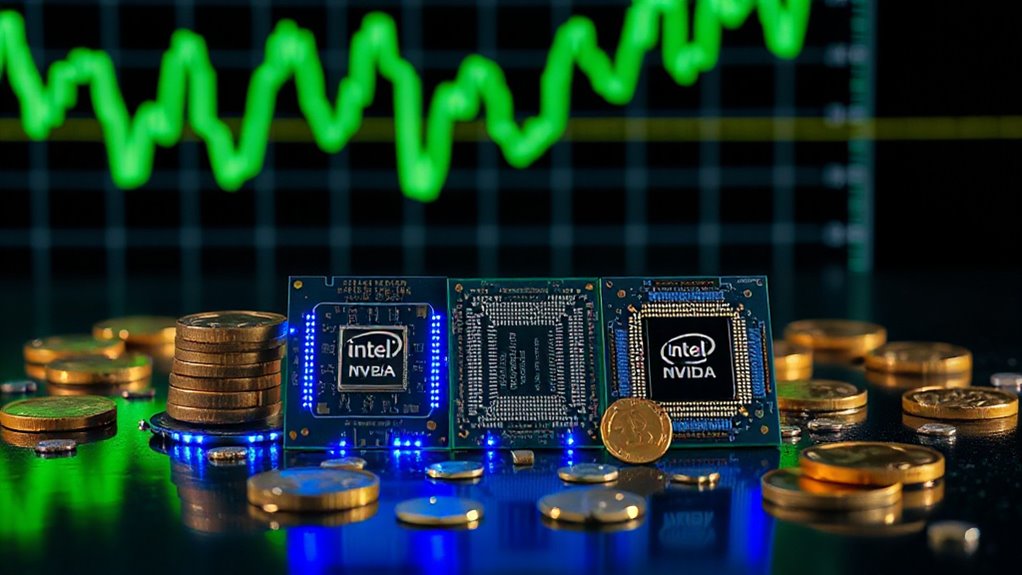
Intel’s stock price jumped in premarket trading on Wednesday after reports surfaced that the struggling chipmaker would partner with Nvidia on a cutting-edge graphics processor set to launch in 2028. The collaboration marks an unexpected alliance between two tech giants steering the rapidly evolving semiconductor landscape. Central bank decisions can shape investor sentiment and capital flows that influence such market moves, particularly through changes in interest rates.
According to Taiwan-based DigiTimes, which cited supply chain sources, Nvidia plans to work with Intel on the Feynman microarchitecture for next-generation graphics processing units. Apple is also reportedly joining this partnership. The companies are focusing on low-volume, low-tier production runs to stay within U.S. chipmaking regulations while maintaining strong relationships with Taiwan Semiconductor Manufacturing Co., the world’s largest contract chipmaker.
Intel’s role in this partnership goes beyond simple collaboration. The company will contribute portions of the Feynman GPU’s input/output die using its advanced 18A or upcoming 14A technologies. This specialized chiplet manages communication between processor cores and external components, fundamentally serving as the chip’s traffic controller. Intel will handle up to one-fourth of the final packaging requirements while TSMC oversees the remaining 75 percent.
The partnership announcement comes at a critical time for Intel, which has been struggling with strategic missteps that drained its finances. The company recently issued disappointing quarterly revenue and profit outlooks while fighting to meet soaring AI server chip demand. A new PC chip has also pressured profit margins.
Financial support has arrived from multiple sources to help stabilize Intel’s position. Nvidia will invest $5 billion in Intel’s common stock at $23.28 per share, subject to customary closing conditions. This investment represents more than just money—it demonstrates Nvidia’s commitment to Intel’s technology development. The U.S. government and Japanese conglomerate SoftBank have also provided pivotal backing.
Market response to the partnership news was immediate and positive. Investors showed clear enthusiasm about Intel’s involvement in next-generation GPU development, viewing the collaboration as a promising step forward for the struggling chipmaker’s recovery efforts. The collaboration targets hyperscale, enterprise, and consumer markets as the companies work to expand their ecosystems and lay the foundation for the next era of computing.
Related Posts