

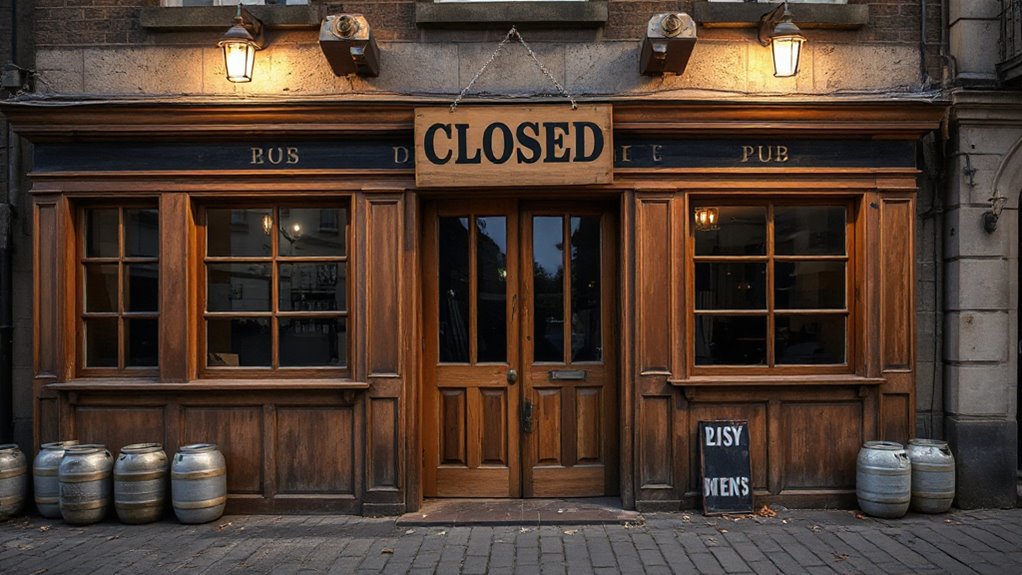
The pub closure crisis shows no signs of slowing down, with projections indicating 540 pubs will shut their doors in 2026 without urgent government action on business rates. This grim forecast represents one pub closing every single day, forming part of a broader hospitality emergency that threatens 2,076 venues total, including 963 restaurants and 574 hotels.
Without immediate action on business rates, 540 pubs will close in 2026—one every single day across Britain.
The numbers paint a troubling picture for the industry. Business rates are set to jump dramatically in April 2026, hitting the average pub with a 15% increase worth £1,400. Over three years, these rises add up to a staggering 76% increase, totaling £12,900 in extra costs. Hotels face even steeper climbs, with rates jumping £28,900 in 2026 alone and reaching 115% higher over three years.
These projections follow an already devastating 2024, which saw 4,078 permanent pub closures. That’s the highest number since 2012, though it showed some improvement from 2023 levels. Independent and rural pubs have suffered the most, struggling with rising costs and declining customer demand. The industry now operates on what experts call a “high churn model,” where more venues close than open for the second year running.
UKHospitality, the industry’s main voice, is pushing hard for relief. Chair Kate Nicholls warns that neighborhood restaurants and local hotels face similar risks. The organization demands the government increase its business rate discount from 5p to 20p on the multiplier, extending help beyond pubs to all hospitality businesses. The proposed 20p discount would represent the maximum permitted by law. The estimates draw from NIQ’s Hospitality Market Monitor, which tracks licensed premises counts across Great Britain.
The sector faces pressure from multiple directions beyond business rates. Rising National Insurance contributions, wage increases, and energy costs create what industry leaders call the heaviest tax burden in the UK economy. Despite these challenges, hospitality remains Britain’s third-largest employer, with revenues hitting £144 billion. Pubs and bars alone account for £46 billion of that total.
Without government intervention before April, these closures could reshape communities across Britain, eliminating gathering places that have served neighborhoods for generations. Central banks’ decisions on interest rates and liquidity can also influence consumer spending and borrowing costs for businesses, potentially affecting hospitality recovery and survival, with interest rates playing a central role.
Related Posts