






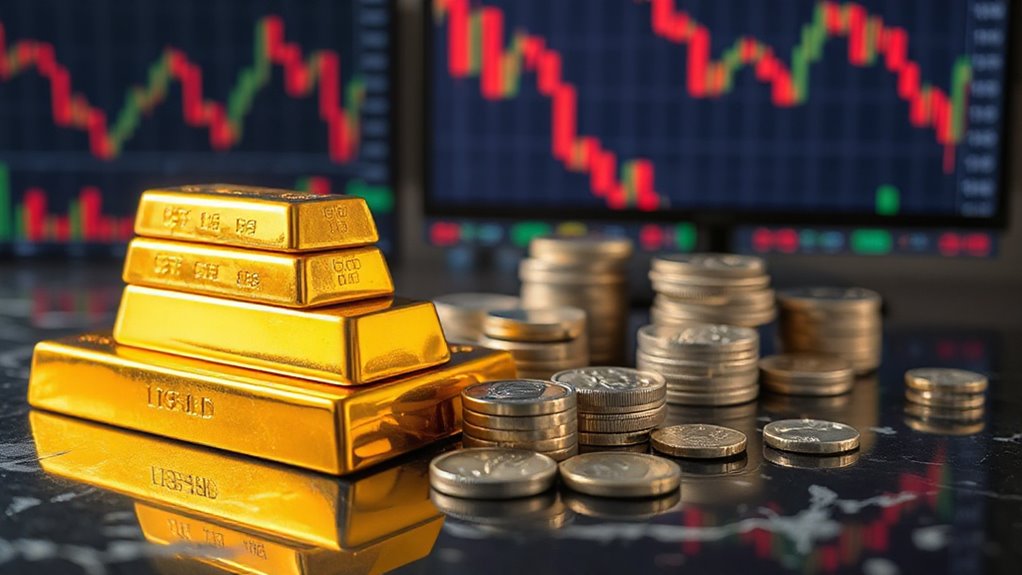
Precious metals have been on a wild ride in early 2026, climbing to heights that would have seemed impossible just a year ago. Gold reached an all-time high of $5,608.35 per ounce in January, more than doubling from under $3,000 in early 2025. Silver smashed through the $100 barrier and peaked at $116.61 per ounce on January 28. Even platinum joined the party, surging over $1,180 per ounce compared to the previous year.
The rally has been anything but smooth. Silver experienced a dramatic 40% drop in just one week during February, plunging from its peak to $70.90 per ounce. This kind of volatility makes precious metals exciting but nerve-wracking for investors. By early March, silver bounced back to trade between $80 and $95 per ounce, showing the wild swings that characterize this market.
Gold has proven more stable during recent turbulence. The metal stood at $5,097 per ounce on March 6 and traded around $5,035 to $5,145 throughout early March. While these prices represent a pullback from January’s record highs, gold remains up nearly 78% year over year. Central banks have been major buyers, diversifying away from U.S. securities and providing strong support for prices.
Platinum has quietly impressed investors with steady gains. The metal closed at $2,165.80 per ounce on March 4, benefiting from an expected market deficit of 240,000 ounces in 2026. This supply shortage could push prices even higher as industrial demand continues.
Looking ahead, experts remain optimistic despite recent volatility. Some analysts predict gold could exceed $5,500 per ounce within the next two months. Silver forecasts vary widely, with bulls calling for $200 per ounce while others expect consolidation below $100. J.P. Morgan projects silver will average $81 per ounce throughout 2026.
The precious metals surge comes as traditional investments like stocks and cryptocurrencies have stalled, prompting investors to seek safer havens. Whether this represents a lasting shift or temporary panic remains to be seen, but one thing is certain—precious metals are capturing attention like never before. Gold is often recommended as part of a diversified portfolio, with a typical allocation of 5-10% to provide downside protection.
Related Posts