




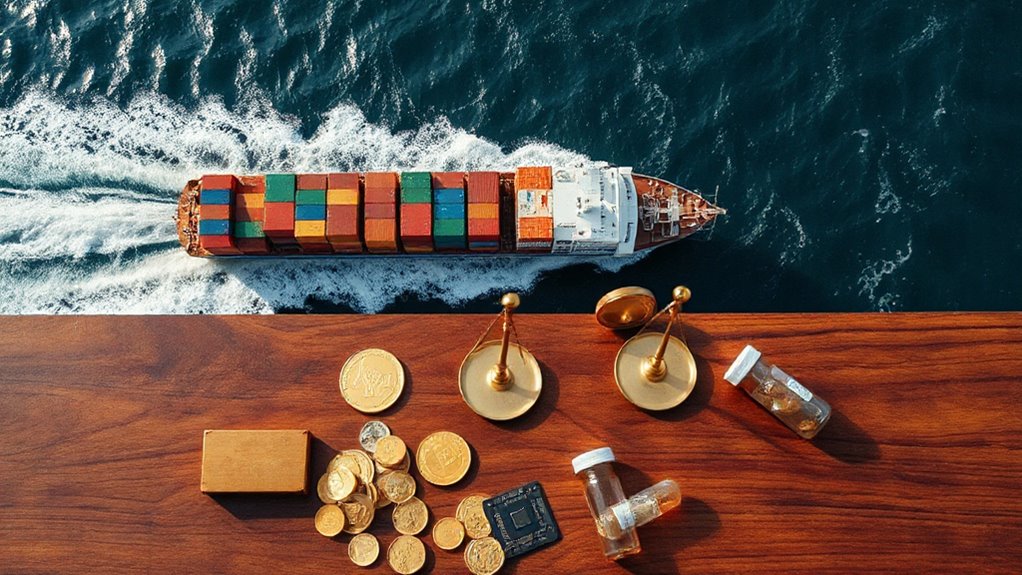
The Trump administration has launched what amounts to a sweeping makeover of America’s tariff system, touching nearly every corner of global trade. President Trump claims authority under the International Emergency Economic Powers Act to impose what he calls “reciprocal tariffs” on nearly all countries, aiming to balance trade deficits that his team views as threats to national and economic security. Central bank responses to shifting trade conditions can influence how effectively such tariffs alter domestic prices and investment, since changes in policy rates affect borrowing and spending behaviors that interact with trade-driven price shifts policy rates.
This tariff framework sits at the heart of the administration’s “America First Trade Policy” established on day one. The baseline reciprocal tariff rate increases were announced with implementation timelines stretching through mid-2026, affecting everything from steel and aluminum to semiconductors and pharmaceuticals.
The Department of Commerce is conducting national security investigations on industries ranging from computer chips to wind turbines. A semiconductor investigation resulted in a 25% duty on advanced computing chips effective January 15, 2026, specifically targeting chips destined for foreign markets or those not strengthening domestic manufacturing capacity.
Individual countries have faced unique tariff situations. India received 25% secondary tariffs beginning August 27, 2025, for purchasing Russian oil during the Ukraine war, though withdrawal was announced for February 2026. South Korea faced tariff threats up to 25% after legislative failure to enact a historic trade agreement. Taiwan negotiated a deal announced on January 15, 2026, though implementation remained pending.
The European situation shows how quickly tariff threats can shift. Eight European countries faced potential 25% tariffs on January 17, 2026, tied to a Greenland purchase initiative. That threat was retracted just four days later after reaching a framework deal with NATO’s secretary-general. Switzerland and Liechtenstein agreed to reduce tariffs to zero on U.S.-origin industrial goods, seafood, and certain agricultural products.
The administration has also threatened “trafficking” tariffs on Canada, Mexico, and China under claims related to fentanyl smuggling and illegal immigration. A critical minerals investigation resulted in postponed tariffs in favor of negotiations. This wide-ranging approach represents perhaps the most all-encompassing tariff restructuring in decades, with outcomes still unfolding. The U.S. Trade Representative announced phased-in tariffs on most Nicaraguan goods starting January 1, 2027, with rates of 10% in 2027 and 15% in 2028 for imports not originating under DR-CAFTA. Meanwhile, China’s reciprocal tariff implementation has been delayed until Nov. 10, 2026, initially set at 34% with a 10% baseline alongside other measures including fentanyl tariffs and semiconductor-specific duties.
Related Posts