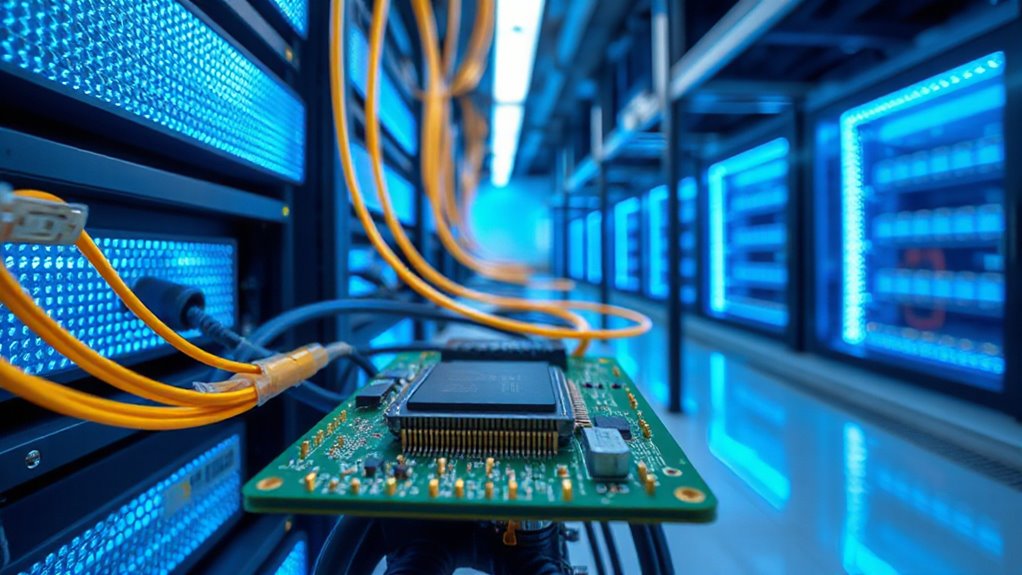










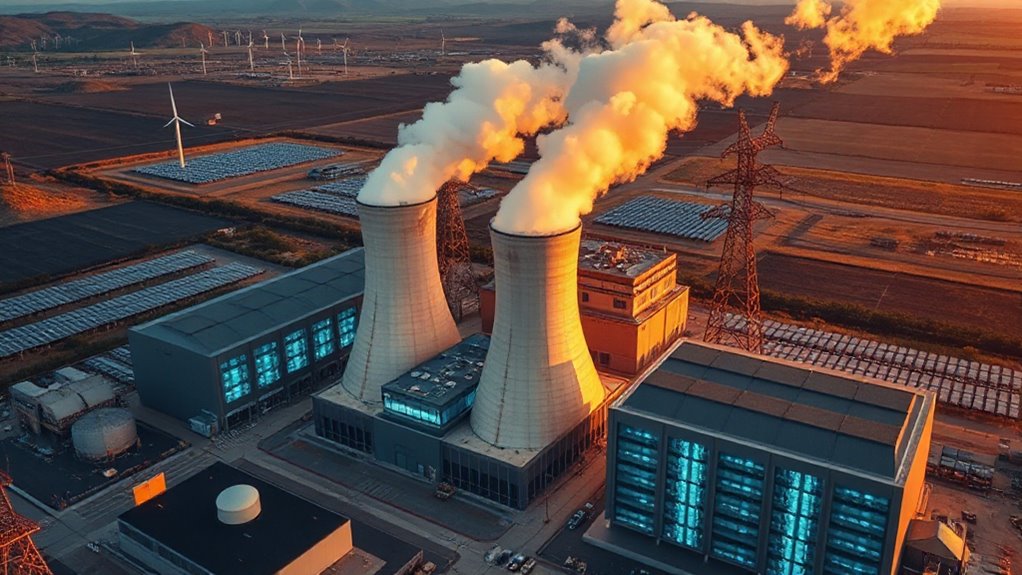
Trump is calling on tech giants to open their wallets and build new power plants to keep up with the massive energy demands of artificial intelligence. As AI systems grow more powerful and widespread, they’re gobbling up electricity at an astonishing rate. The former president wants companies like Google and Nvidia to pay for the infrastructure needed to support their technology rather than leaving utilities and taxpayers holding the bill.
The numbers tell a striking story. Global data centers consumed 460 terawatt-hours of electricity in 2022, but that figure is expected to leap to 1,050 terawatt-hours by 2026. Central banks’ policies can indirectly affect the financing costs for such large infrastructure projects, influencing how quickly they move forward and who bears the expense, especially through changes in interest rates that impact borrowing costs for utilities and tech firms interest rate channel.
In the United States alone, data centers already account for 4.4% of total electricity use, and projections suggest they could demand between 6.7% and 12% by 2028. AI-specific servers are driving much of this surge, with their energy consumption predicted to climb from 53-76 terawatt-hours in 2024 to 165-326 terawatt-hours by 2028.
Training a single large AI model like GPT-3 required 1,287 megawatt-hours of electricity and emitted 552 tons of carbon dioxide. One new AI data center can add a continuous power load equivalent to a small city. Data center grid demand jumped 22% in 2025 alone, reaching nearly 76 gigawatts. By 2030, these facilities may consume 945 terawatt-hours globally—more than Germany and France combined.
Trump’s push comes as states like Virginia and Texas offer tax breaks to attract data centers, creating a race for computing capacity. His message is clear: tech companies profiting from AI should finance the power plants and grid expansions their technology requires.
There are some bright spots. Google reports that energy per AI prompt has dropped 33 times while carbon footprint fell 44 times in just twelve months. Renewable energy sources supplied over 90% of new US utility-scale capacity in 2024. Improved cooling systems and power management techniques continue advancing. The number of data centers worldwide has grown from 500,000 in 2012 to around 8 million today. Microsoft has committed to purchasing 10.5 GW of renewable energy from Brookfield Asset Management between 2026 and 2030 to power its data centers with carbon-free energy.
Still, with global AI spending projected to exceed two trillion dollars by 2026, the pressure on electrical grids shows no signs of easing soon.
Related Posts