










How does today’s rivalry between the United States and China compare to the famous Cold War between America and the Soviet Union? While both situations involve major powers competing for global influence, the differences are quite striking.
The most obvious difference lies in economics. During the Cold War, the US and Soviet Union had almost no trade with each other. Today, America and China trade nearly $600 billion worth of goods annually. Think of it like two neighbors who argue constantly but still borrow tools from each other daily. This economic connection makes the current rivalry much more complicated than the old one.
Economic interdependence between America and China creates a rivalry unlike the Cold War’s complete separation between superpowers.
The ideological battle also looks different. The Soviet Union promoted communism worldwide and wanted to spread revolution to other countries. China today uses capitalist policies and focuses more on making money than converting the world to its political system. There’s no global struggle for hearts and minds like there was during the Cold War.
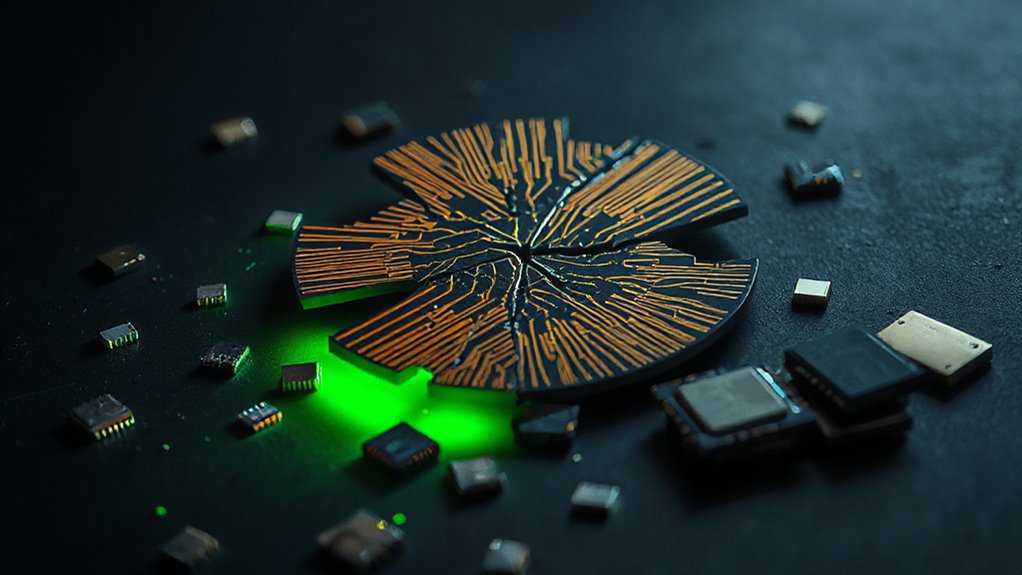
Technology has become the new battleground. Instead of competing over nuclear weapons and space races, the US and China fight for dominance in artificial intelligence, quantum computing, and semiconductors. It’s like a high-tech chess match where both sides try to stay ahead in the most important technologies of the future. The widespread adoption of artificial intelligence could significantly boost productivity and reshape corporate profitability across both nations.
Alliance structures tell another interesting story. The Cold War featured clear sides with NATO facing the Warsaw Pact. Today’s world is messier. China doesn’t have strong military alliances like the Soviet Union did. Many countries try to maintain good relationships with both superpowers rather than picking sides.
Information flows differently too. During the Cold War, an “Iron Curtain” blocked communication between East and West. Now, social media and the internet allow instant global communication, making propaganda and influence campaigns much more complex.
Perhaps most importantly, today’s rivalry involves two countries deeply connected through business and trade. Unlike the Cold War’s clear separation, the US and China must compete while remaining economically intertwined. This creates a unique form of rivalry that the world has never seen before. The competition now extends to control over critical minerals essential for advanced technology and military applications. Understanding this competition requires recognizing it as a long game that demands patience and sustained strategic thinking rather than quick fixes.
Related Posts