










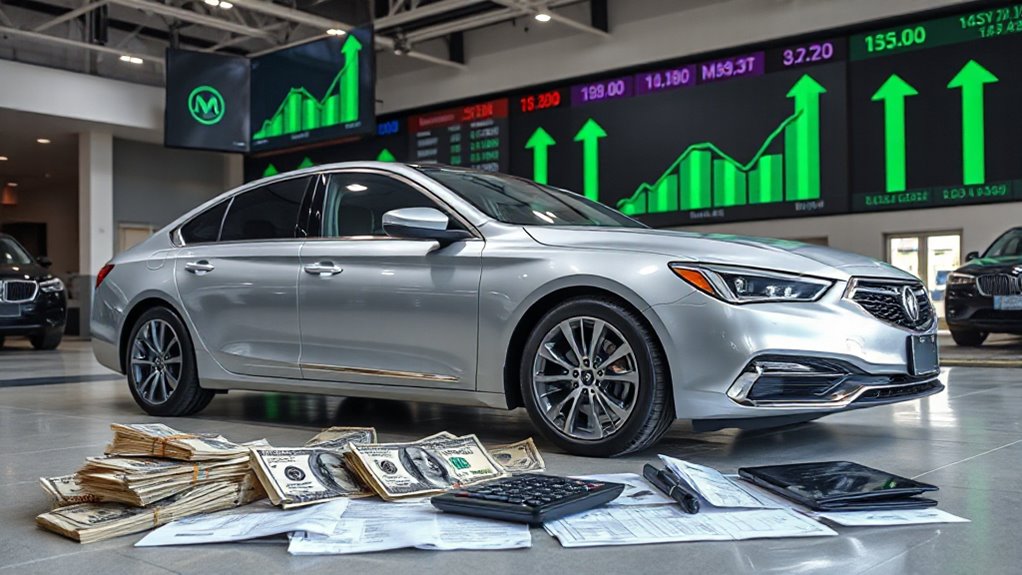
When someone walks into a car dealership with a briefcase full of cash, they might feel like they hold all the power in the room. However, smart buyers are discovering that paying cash for a new car isn’t always the brilliant financial move it appears to be.
With the average new car costing $48,000, paying cash means wiping out a huge chunk of savings in one swoop. That money could be working harder elsewhere. While borrowers save about $5,460 in interest payments on a typical loan, they miss out on something potentially more valuable: the chance to keep their cash invested in stocks or mutual funds that might earn better returns.
Your $48,000 cash payment could be earning better returns in the stock market than sitting in a depreciating driveway.
Cash buyers also wave goodbye to manufacturer incentives and dealer promotions that financing customers receive. These deals can add up to significant savings that often outweigh the cost of borrowing money.
Generation Z has become the surprising champion of cash purchases, with nearly 29% of all new car buyers paying upfront. But there’s a twist in this story. Many Gen Z buyers aren’t actually using their own money. Their Gen X parents are dipping into retirement funds and emergency savings to help their kids avoid financing.
This strategy backfires when families drain their financial safety nets for a car that loses value the moment it leaves the lot. The situation becomes more complex when considering that many Zoomers are dealing with a tight job market and low-paying positions, making parental support almost essential for major purchases.
Credit scores play a huge role in whether financing makes sense. Super-prime borrowers with scores between 781-850 can access excellent rates and take out larger loans averaging $28,828 for used cars. Meanwhile, subprime borrowers face steeper monthly payments around $777 and longer loan terms averaging 72.5 months.
The financing landscape shows interesting patterns. Over 80% of new car buyers choose financing, while only about one-third of used car buyers do the same. High interest rates have pushed many toward cash purchases, but this trend might not benefit everyone’s overall financial health. The risk extends beyond individual choices, as nearly 6% of auto loans are currently 90+ days delinquent in the U.S., highlighting the growing challenges in the auto financing market.
Smart buyers consider the bigger picture. They keep emergency funds intact, maintain investment portfolios, and take advantage of financing incentives when the numbers work in their favor. Understanding your complete annual income from wages, investments, and side businesses helps determine whether financing or cash payments align better with your overall financial strategy.
Related Posts