








Kitchen cabinet costs continue climbing in 2026, with homeowners now spending between $15,000 and $50,000 for most projects. Even specialized storage solutions like spice cabinets are seeing price increases that might surprise renovation shoppers. Several forces are pushing these costs upward, and understanding them helps homeowners plan better budgets.
Cabinet renovation budgets now require $15,000 to $50,000 as material costs and specialized storage features drive prices steadily upward in 2026.
Material choices play a major role in pricing. Wood species like maple, oak, cherry, and walnut each carry different price tags. Plywood construction costs more than MDF or particleboard but offers better durability. Building a solid financial foundation with an emergency fund can help homeowners absorb sudden renovation cost increases.
Natural wood tones now lead design trends, with medium wood tones selected by 15% of buyers, light tones by 11%, and dark tones by 3%. This shift toward authentic wood finishes instead of painted surfaces drives up material expenses since wood cabinets now outsell white options at 29% versus 28%.
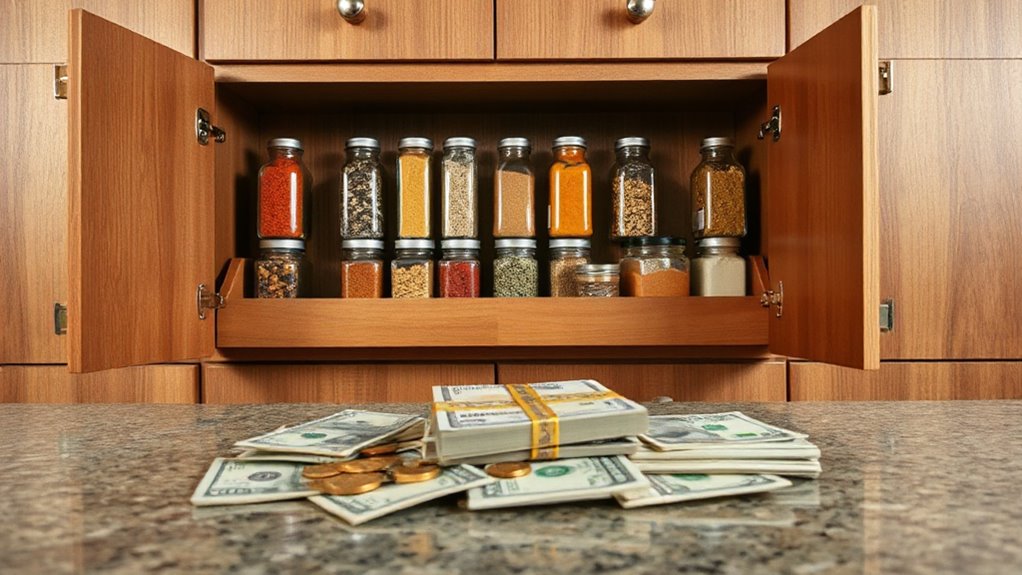
Construction details add layers of cost too. Inset doors require more precision than overlay styles, making them pricier. Custom features like pull-out spice racks, drawer organizers, and specialized compartments increase both materials and labor.
These smart storage solutions remain in high demand as homeowners prioritize function-first designs. Even trendy slim Shaker doors with narrower rails cost more to manufacture than standard designs.
Kitchen size directly impacts total spending. A small 10×10 foot kitchen runs $15,000 to $20,000 for full custom cabinets, while medium kitchens measuring 10×15 feet range from $18,000 to $35,000. Large kitchens with islands push costs to $30,000 and beyond.
Ceiling height adjustments add extra expenses, and complex layouts require more skilled labor at higher regional rates.
Finish options also influence final bills. Matte finishes have grown popular, along with warm neutrals and organic looks. Two-tone layouts pairing lighter upper cabinets with deeper base colors require additional planning and materials. Specialty finishes like glazing or distressing demand expert application. High-gloss finishes have declined in popularity because they show fingerprints and scuffs more readily than matte options.
Installation charges vary by location and project complexity. Removing old cabinets before installing new ones adds labor costs. While ready-to-assemble and in-stock options help budget-conscious shoppers, custom and modular systems continue gaining popularity despite higher price points. Installation typically adds about 10% of total cabinet cost to the final project budget. These combined factors explain why spice cabinets and other specialized storage keep getting more expensive.
Related Posts