






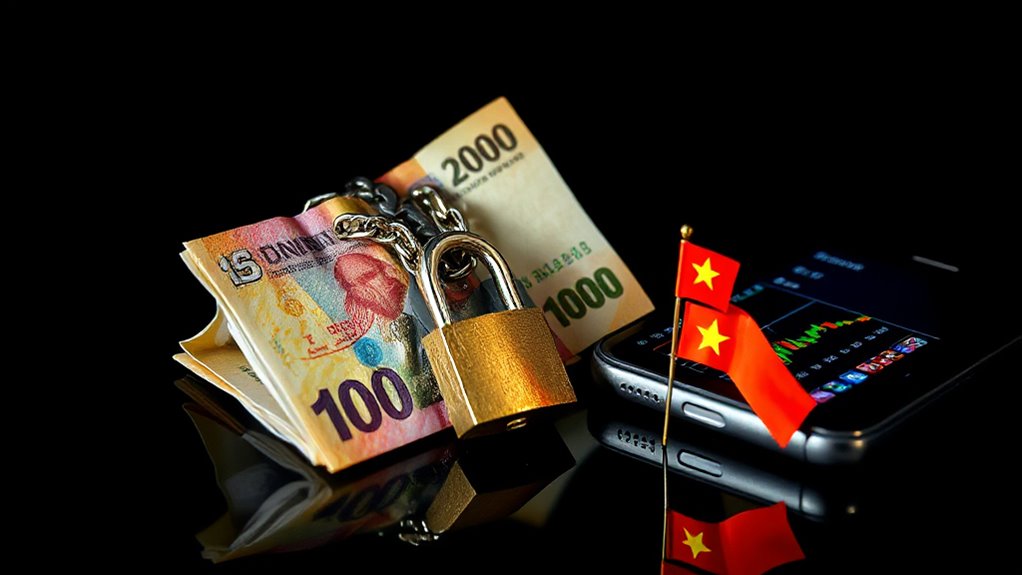
What Vietnam’s New Crypto Decree Actually Bans?
Vietnam’s new crypto decree does not ban owning cryptocurrency outright. Think of it like owning a car — legal, but you still need to follow traffic rules.
The decree targets specific behaviors.
The decree does not punish ownership. It targets what you do — and with whom.
Domestic investors cannot trade on exchanges unlicensed by Vietnam’s Ministry of Finance. They also cannot buy crypto assets reserved only for foreign investors.
Service providers cannot operate or advertise without proper licenses.
Token issuers must meet disclosure requirements and cannot offer assets to ineligible investors.
The rules take effect September 1, 2026, giving everyone time to understand what is allowed and what carries a fine. This builds on Vietnam’s Law on Digital Technology Industry, passed in June 2025, which first established the legal foundation for recognizing crypto assets. Crypto assets are formally recognized as property under Vietnamese law, enabling legal outcomes such as ownership, transfer, and inheritance. Additionally, investors are advised to use two-factor authentication and other best practices from reputable platforms to protect their holdings.
What Vietnam’s Licensed Exchange Pilot Means for Domestic Traders?
Knowing what the new rules ban is only half the picture. Vietnam’s pilot program is also building something new: a small group of licensed exchanges where domestic traders can buy and sell crypto legally.
Think of it like going from a street market to a real store with receipts.
Only a handful of platforms will get licenses at first. Trading must happen in Vietnamese dong.
Assets must be backed by real things. Traders will face tax reporting too.
It feels more formal but also more protected.
For everyday Vietnamese traders, this pilot is the government’s attempt at a safer, trackable alternative. The Ministry of Finance shortlisted five eligible exchanges after determining that two of the seven submissions did not meet regulatory requirements. To qualify for a license, service providers must meet a minimum charter capital requirement of VND 10 trillion.
The pilot also emphasizes leverage risks and tighter controls to protect retail investors.
How Much Can Vietnamese Traders Be Fined for Using Offshore Exchanges?
For Vietnamese traders who still use offshore exchanges like Binance or OKX, the new rules come with a real price tag.
Using an unlicensed platform can cost between VND 30 million and VND 50 million — roughly $1,140 to $1,900.
That is more than most people want to pay for a trading habit.
Things get pricier if someone uses crypto assets meant only for foreign investors.
That violation jumps to VND 70 million to VND 100 million or about $2,700 to $3,800.
The maximum fine for individuals sits at VND 100 million under Decree 284/2026/ND-CP effective September 1, 2026. Vietnam had previously left crypto trading in a legal gray area even as retail investor adoption remained high across the country.
Vietnam plans to license no more than five crypto exchanges in the first phase, making the pool of compliant platforms deliberately small for users trying to stay on the right side of the law.
Regulators say enforcement will target patterns of trading that resemble insider trading among retail accounts.
Why Vietnamese Users of Binance and OKX Face the Steepest Fines?
Those fines do not land equally on everyone. Vietnamese traders using Binance or OKX face the sharpest consequences because Vietnam’s new rules treat offshore exchange use as the core problem.
Think of it like jaywalking on the most-watched street in town. Binance and OKX are the biggest global exchanges so regulators treat their users as the clearest examples of the behavior the decree targets. Decentralized exchanges can present different regulatory challenges in practice.
The policy punishes trading through unlicensed platforms not simply owning crypto. Since Binance and OKX sit firmly outside Vietnam’s licensed system their users fit the violation almost perfectly. Traders who go further and buy crypto designated for foreign investors face fines reaching $3,800, doubling the standard penalty.
OKX has taken steps to position itself within Vietnam’s regulatory framework by making a strategic investment in CAEX, a Vietnamese exchange among the five applicants assessed as valid for licensing consideration.
How to Stay Compliant Before Vietnam’s September 2026 Deadline?
Before Vietnam’s September 1, 2026 deadline arrives, retail crypto traders have a clear window to get their house in order.
First, traders should check whether their platform holds a license from Vietnam’s Ministry of Finance.
Before using any crypto platform, verify it holds an active license from Vietnam’s Ministry of Finance.
Think of it like checking a restaurant’s health certificate before eating there.
Offshore platforms like Binance or OKX currently carry real fine risk for domestic users.
Traders should also confirm which assets and accounts are approved for their investor category.
The rules separate domestic and foreign investor access strictly.
Domestic investors caught trading crypto assets that are only permitted to be offered to foreign investors face fines of 70–100 million VND.
Moving to licensed Vietnamese platforms before the deadline is the smartest and safest first step. Individual fines under Decree 284/2026/ND-CP range from VND30 million to VND50 million for trading on unlicensed platforms.
Consider also using staking only through audited or licensed services to reduce exposure to smart contract and platform risks.