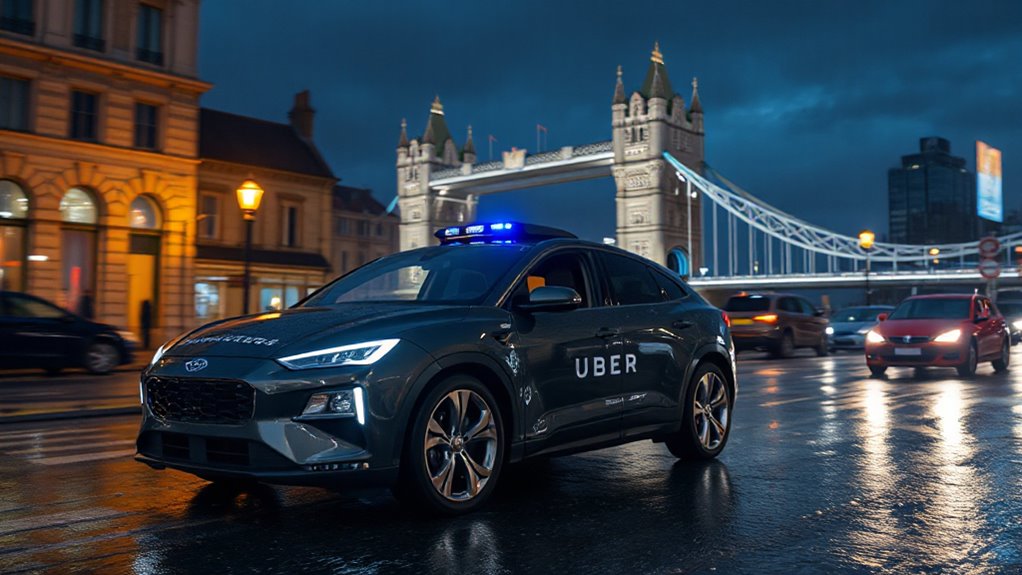
When Does the UK Robotaxi Service Actually Launch?
When exactly will Londoners be able to hail a robotaxi? No confirmed date exists yet.
Uber and Wayve have pointed to late summer 2026 as the target window.
Uber and Wayve are eyeing late summer 2026 as the target window for London robotaxi rides.
BBC coverage from August 2026 suggested rides could start as soon as September.
However, both companies stressed the rollout still depends on final approvals from local transport authorities.
Think of it like a movie with a release window but no official premiere date.
What is clear is that the first rides will happen in London with a safety driver present. The Autonomous Vehicles Act 2024 opened a formal application process in May, setting the legal framework for commercial robotaxi services.
Full driverless service remains further down the road. Uber has committed a contingent $300 million investment tied to the success of the London deployment.
Central banks’ decisions on interest rates and liquidity can influence the broader investment climate for large transport projects, affecting funding and market confidence in monetary policy.
What to Expect When You Book a Robotaxi Ride
So the launch window is getting closer, but what actually happens when someone tries to book one of these rides?
Honestly, it feels pretty normal. Riders book through the regular Uber app using familiar options like UberX.
If an autonomous vehicle becomes available, a notification pops up offering the match.
The rider can accept or switch to a regular driver.
No extra charge applies either way.
Inside the vehicle, interactive displays show the route and offer assistance. The interface supports 64 languages.
A safety operator sits upfront during this early phase. A red button is available to disengage the self-driving system if needed.
Think of it as a standard Uber trip with a quietly impressive upgrade running underneath. Traders can use limit orders to exercise price control when deciding whether to invest in mobility-tech stocks.
How Uber and Wayve Are Each Making This Work
Behind this service are two companies doing very different jobs. Uber handles everything riders already know: the app, the booking, and the pricing. Blockchain-based systems can improve transparency for ride payments and records, helping reduce disputes and streamline settlements with faster settlement times.
Autonomous rides will cost the same as a regular Uber trip. Wayve handles the harder part — actually driving the car.
Its AI software controls the vehicle and makes all the real-time decisions on London streets. Think of it like a restaurant: Uber takes the order and handles the table while Wayve does the cooking.
Together they cover both sides of the experience, each focusing on what they do best. Wayve’s AI has already proven itself across 90 cities in 90 days spanning Europe, North America, and Japan in a single continuous roadshow. Over 100,000 Londoners have already signed up to Uber’s Interest List for a chance to ride in one of these autonomous vehicles.
How to Join the UK Robotaxi Waiting List
Joining the London robotaxi waiting list takes about thirty seconds and never leaves the Uber app.
Riders simply update the app first and then tap Account in the bottom-right corner.
From there they select Settings then Ride Preferences and finally Autonomous vehicles.
One tap on Join interest list and the job is done.
No separate website is needed.
Uber opened the list in June 2026 and over 100,000 Londoners had already signed up by early August.
Signing up does not guarantee a ride but puts riders in line for priority matching once the service launches.
When a matching trip becomes available, riders will still have the option to choose a regular Uber ride instead of the autonomous vehicle.
For the waiting list page to load correctly, the browser must support JavaScript and cookies.
Many potential users weigh factors like risk management and service fees before deciding to join.