











Steve Jobs was definitely not born into wealth. His adoptive parents, Paul and Clara Jobs, were working-class folks who struggled to make ends meet in their modest Mountain View, California home. They saved every penny they could for his college education, showing incredible dedication despite their financial challenges. Jobs even had to sell his Volkswagen bus to help fund Apple’s startup, proving his success came from hard work rather than inherited riches. His inspiring journey from humble beginnings reveals much more about determination and innovation.
The story of Steve Jobs begins not in a mansion or with a silver spoon, but in a modest home where his adoptive parents, Paul and Clara Jobs, worked hard to make ends meet. Born on February 24, 1955, in San Francisco, Steve was given up for adoption by his biological parents, who were graduate students facing difficult social circumstances. Paul worked as a machinist and mechanic while Clara kept the books as an accountant. Their combined income barely stretched to cover the basics, but they had big dreams for their adopted son.
Steve Jobs’ story began in humble circumstances, not privilege, with adoptive parents who sacrificed everything for his future despite their modest means.
The Jobs family lived in Mountain View, California, before moving to Cupertino. Their neighborhood was becoming part of what we now call Silicon Valley, surrounded by engineers and electronics. Despite their tight budget, Paul and Clara encouraged Steve’s curiosity. They even saved every penny they could for his future college education, making a promise to his biological parents that education would be a priority.
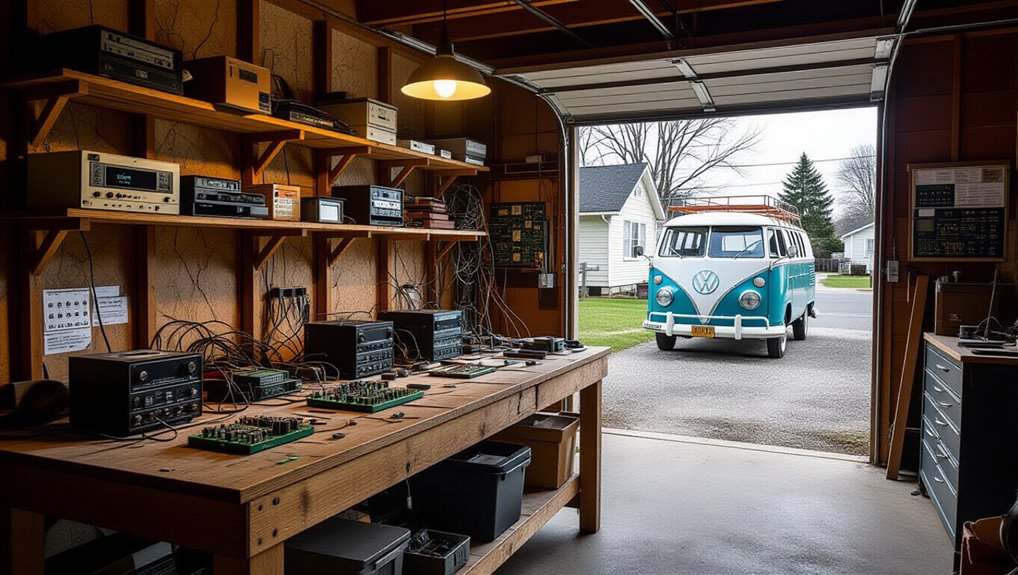
Steve’s rebellious streak showed up early at Homestead High School. While he was clearly brilliant, he clashed with teachers and eventually dropped out of formal classes. However, he did join Hewlett-Packard’s Explorer’s Club, where he got his first taste of cutting-edge technology. At home, he and his father Paul worked on electronics projects in their garage, sparking a lifelong passion for innovation. Years later, he would work on electronics with his father in their family garage, developing the technical skills that would prove invaluable in his entrepreneurial journey.
When college time arrived, his parents stretched their finances to send him to prestigious Reed College. Steve dropped out after just one semester, but not before exploring eastern philosophy and even living in a hippie commune focused on apple farming.
After working at Atari as a video game designer, he used his earnings to travel to India seeking spiritual answers.
Through all these adventures, Steve remained connected to his childhood friend Steve Wozniak, whom he met at age 13. Their shared love of electronics and pranks would eventually lead to something much bigger. When they finally started Apple, they funded it by selling personal belongings like Steve’s Volkswagen bus. Jobs and Wozniak founded Apple Computer on April 1, 1976. No trust fund required. This humble beginning contrasts sharply with today’s redefined concept of wealth, where true richness often means having enough diversified assets to maintain financial security rather than simply earning a high salary.
Frequently Asked Questions
Did Steve Jobs Ever Reconnect With His Biological Parents Later in Life?
Steve Jobs reconnected with his biological sister Mona Simpson and maintained a close relationship with her throughout his life.
However, he never reconciled with his biological father, Abdul Fattah Jandali.
Remarkably, Jobs unknowingly met Jandali at a restaurant the father owned, but neither recognized their relationship.
Despite this chance encounter, Jobs chose not to pursue contact, citing privacy concerns and mistrust.
How Did His Adoption Affect Steve Jobs’ Personality and Business Approach?
Steve Jobs’ adoption deeply shaped his driven personality and business style.
The early experience of abandonment created an intense need to prove himself and build something lasting. This fueled his perfectionist approach and relentless pursuit of innovation at Apple.
His adoption also taught him to value chosen families over biological ones, influencing how he built loyal teams and revolutionary products.
What Was Steve Jobs’ Relationship Like With His Adoptive Siblings?
Steve Jobs had a typical sibling relationship with his adoptive sister Patricia, who was adopted two years before him.
They grew up together in the same household under Paul and Clara Jobs’ care, sharing a normal brother-sister dynamic during childhood.
However, as adults, Steve became much closer to his biological sister Mona Simpson, whom he met later in life, than he remained with Patricia.
Did Steve Jobs Provide Financial Support to His Adoptive Parents?
There’s no evidence that Steve Jobs provided financial support to his adoptive parents after becoming wealthy.
His parents, Paul and Clara Jobs, weren’t affluent and spent their savings buying a home in Los Altos for better schools.
While Jobs documented paying child support for his biological daughter Lisa, biographies and public records don’t mention him financially supporting his adoptive parents despite their close relationship.
How Did Steve Jobs’ Humble Background Influence His Leadership Style at Apple?
Jobs’ modest upbringing shaped his demanding leadership style at Apple.
Growing up without wealth made him incredibly driven and perfectionist, pushing teams to achieve excellence. He developed an autocratic “my way or the highway” approach, believing tight control produced better results.
His humble background also fueled his vision to make technology accessible to everyone, not just wealthy elites, inspiring teams toward meaningful innovation.