








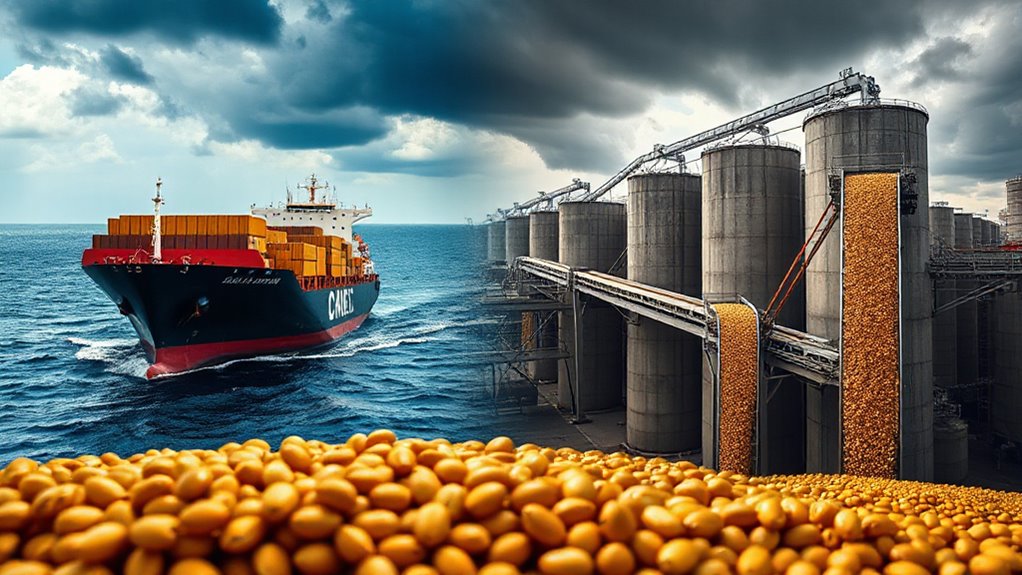
After months of silence in the soybean trade, China has announced plans to resume buying U.S. soybeans, bringing a glimmer of hope to American farmers who watched their exports to the world’s largest soybean buyer drop to nearly zero.
A breakthrough in agricultural diplomacy offers cautious optimism for struggling American soybean producers after devastating export losses.
The dramatic shift follows high-level meetings between Presidents Trump and Xi in late October 2025. China committed to purchasing 12 million metric tons of U.S. soybeans in the final two months of 2025, with ongoing purchases of at least 25 million metric tons annually through 2028. This represents a significant turnaround after nearly six months of trade tensions that left American soybean fields feeling rather lonely.
The announcement sent soybean futures soaring to nearly $11 per bushel, the highest prices farmers have seen in over a year. However, the celebration may be premature. Even with these new commitments, projected shipments would still fall about 33% below 2024’s record exports of 26.8 million metric tons to China.
Reality on the ground tells a different story. Since the trade agreement, China has confirmed only two shipments totaling 332,000 metric tons—a far cry from the promised 12 million tons by year-end. Chinese officials have remained especially quiet about firm purchase intentions, suggesting some diplomatic hedging.
Several challenges remain. U.S. soybeans still face tariffs of 13-24%, making them less competitive than Brazilian alternatives. Chinese crushers currently hold large stockpiles and face negative profit margins, reducing their urgency to buy. Brazilian soybeans, which typically account for over 70% of China’s supply, continue flowing steadily into Chinese ports. Brazil exported a record 79 million tons of soybeans to China from January to October alone. The USTR has launched a Section 301 investigation to assess China’s compliance with previous trade commitments.
Market prices have already begun to soften after the initial excitement. High U.S. prices compared to Brazil, combined with abundant global supplies and weak commercial buying interest, have dampened the rally.
While the resumed purchases offer hope for American farmers, many still face cash prices below their break-even costs for 2025. The trade deal also includes commitments for other crops like sorghum, but skepticism remains among analysts about whether China will fully meet its ambitious purchase targets on schedule.