










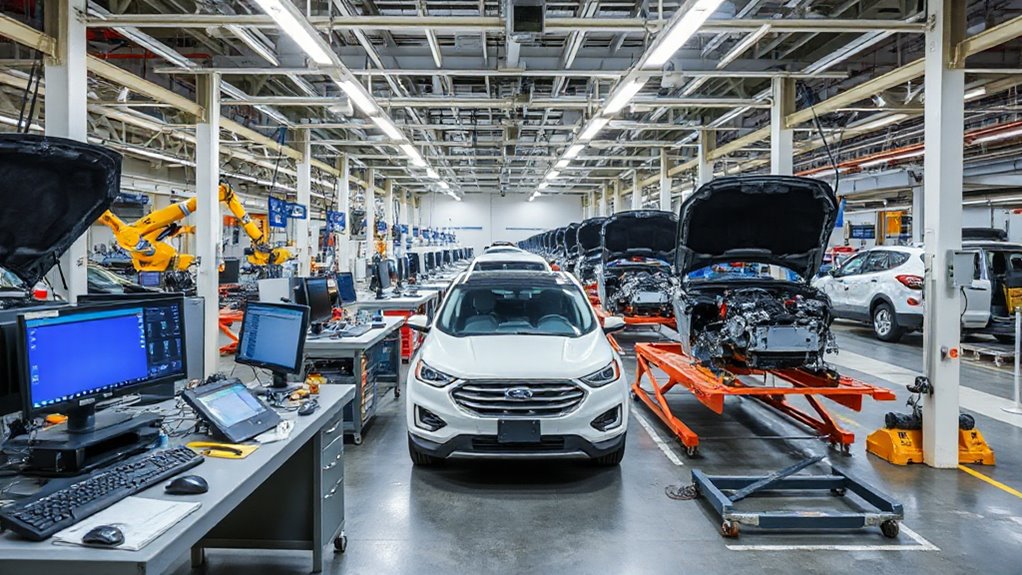
Despite offering salaries around $120,000 per year, Ford Motor Company cannot find enough skilled mechanics to fill 5,000 open positions across its facilities. This puzzling situation highlights a growing crisis that affects far more than just one car company. Scalping, a fast-paced trading strategy focusing on quick trades throughout the day, exemplifies how some industries require specialized skill sets and rapid decision-making to capture small gains efficiently.
Ford has tried everything to attract workers. The company eliminated its lowest wage tier and implemented a 25% pay increase over four years through its 2023 UAW contract. Six-figure salaries with competitive benefits should be enough to draw crowds of applicants, yet the positions remain empty. It’s like offering free pizza at a party and having nobody show up.
The problem extends across America’s skilled trades landscape. More than one million positions in manual labor and skilled trades sit vacant nationwide. These jobs span emergency response, trucking, plumbing, electrical work, manufacturing, and factory operations. Over 400,000 manufacturing jobs alone remained open as of August 2025, creating a massive gap in critical industries.
Ford CEO Jim Farley has called this shortage a “serious problem” for the entire country, and the numbers support his concern. Even with national unemployment reaching 4.3 percent in August 2025, these skilled positions remain the hardest to fill.
This creates an odd situation where people need jobs while employers desperately need workers. Many traders in fast-paced markets rely on tools like real-time data and rapid execution to succeed, showing how access to the right resources is crucial in specialized roles.
The issue appears to be structural rather than financial. A generational shift has occurred in workforce participation, with fewer young Americans entering traditional trade apprenticeships. The talent pipeline that once fed these industries has dried up, leaving employers scrambling for qualified candidates. The collapse of trade-based education and apprenticeships has created a fundamental barrier to developing the skilled workforce needed for essential trades.
These skilled-trade positions form the backbone of American manufacturing and keep essential services running. Without mechanics, electricians, and factory workers, the economy cannot function properly. Infrastructure maintenance, emergency services, and manufacturing all depend on these critical roles. Complicating matters further, five years are needed to acquire diesel engine repair expertise for Ford Super Duty trucks, creating an extended training timeline that delays workforce availability.
The crisis threatens America’s economic competitiveness and manufacturing stability. When companies like Ford cannot find workers despite offering excellent pay, it signals a deeper problem with how society views skilled trades.
Solving this challenge will require rebuilding interest in these essential careers among younger generations.