







How quickly can a nation’s oil industry bounce back from years of decline and international pressure? Venezuela’s massive oil reserves tell a story of both incredible potential and serious challenges that have left the country struggling to reach its production goals.
With 303 billion barrels of crude oil reserves, Venezuela holds the largest oil stockpile on Earth. That’s about one-fifth of all proven oil reserves worldwide. Back in the 1990s, the country was pumping out 3.5 million barrels per day, making it a major player in global energy markets. Those were the glory days when Venezuela averaged over 2,000 barrels per day per thousand people.
Venezuela’s 303 billion barrels represent one-fifth of global oil reserves, yet production has plummeted from its 3.5 million barrel daily peak.
Today’s reality looks quite different. Current production sits at around 1,142 barrels per day per thousand people as of November 2025, showing a modest increase from October’s 1,132 level. While this represents progress from the devastating low of 392 barrels recorded during July 2020, it’s still far below historical peaks.
Recent political changes have added new uncertainty to the mix. The removal of Maduro from Caracas has shifted the landscape dramatically, with Trump announcing increased US influence over the oil-rich nation. These developments could reshape production forecasts, which currently predict flat output at 900,000 barrels per day for 2026.
Venezuela’s oil comes with unique challenges that make recovery complicated. Most of it consists of ultra-heavy crude that requires special processing and dilution before it can be refined. The aging oil fields need about $10 billion in modernization investments over two years to operate efficiently.
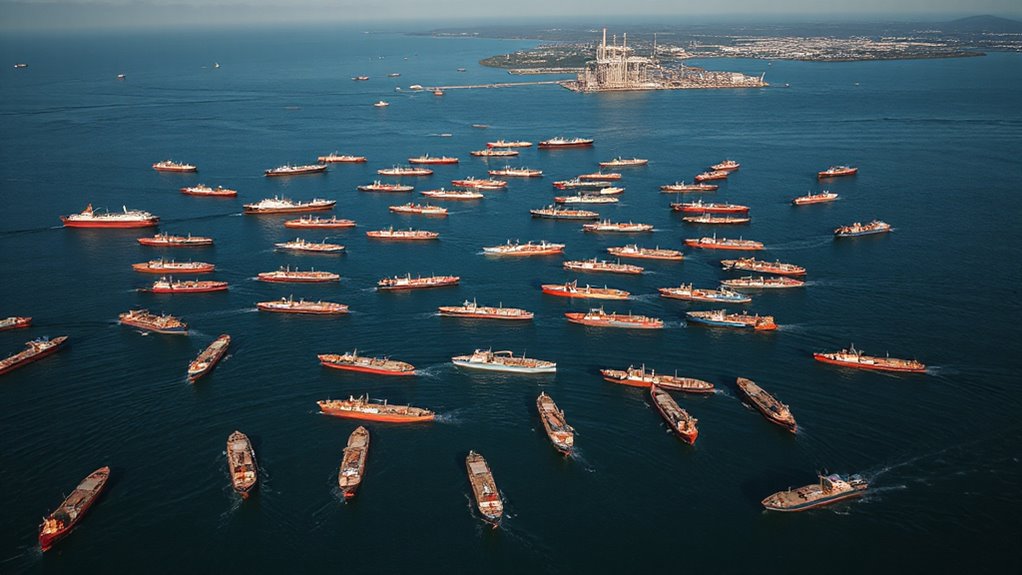
Export patterns have also evolved considerably. While the US was once Venezuela’s primary customer, China has become the main destination for Venezuelan oil exports over the past decade. This shift reflects broader changes in global energy relationships. Venezuela’s current account to GDP has improved to 4.10% as of December 2024, up from 3.10% in the previous quarter.
Looking ahead, analysts expect production to trend around 1,200 barrels per day per thousand people in 2026. A longer-term scenario envisions reaching 2 million barrels per day by 2030, which could potentially reduce global oil prices by $4 per barrel. However, achieving these targets depends heavily on substantial investment and favorable political conditions. As a founding member of OPEC alongside Iran, Iraq, Kuwait, and Saudi Arabia, Venezuela once played a crucial role in global oil geopolitics when it contributed over 7% of worldwide output. Any future revenue growth from increased production would likely benefit qualified dividends for international investors holding shares in Venezuelan oil companies, providing more favorable tax treatment compared to ordinary income rates.