






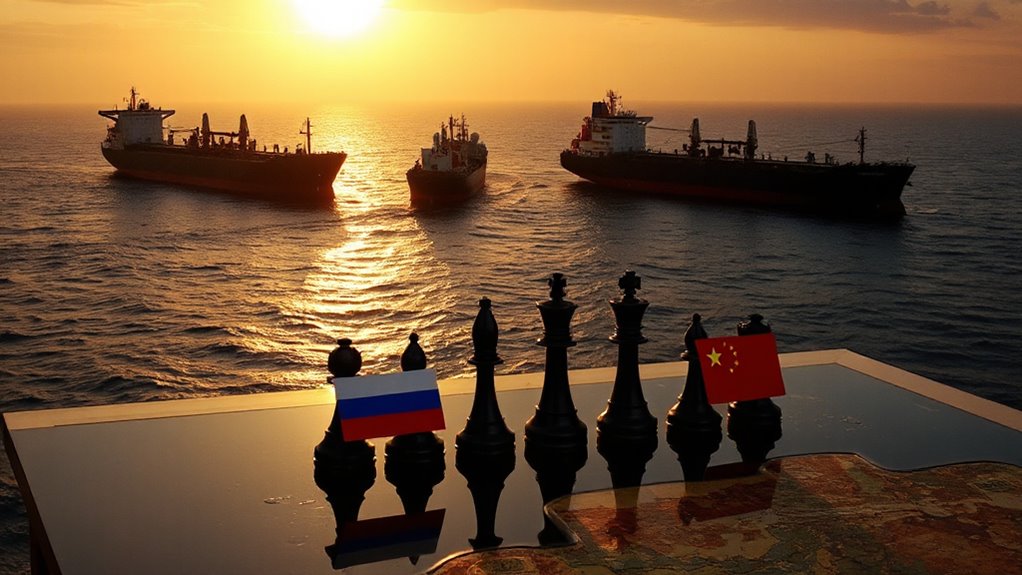
How did a weekend military operation in Venezuela send shockwaves through global power dynamics while stock markets barely blinked? Michael Burry highlighted an astonishing disconnect between a major geopolitical shift and the muted market response following the U.S. raid that removed Maduro from power.
Venezuela sits on roughly 300 billion barrels of oil, representing 19% of global reserves. That dwarfs America’s 61 billion barrels by nearly five times. Currently, Venezuela produces only about 800,000 barrels daily due to outdated infrastructure and years of sanctions. Trump announced plans to extract tremendous wealth from Venezuelan ground, signaling a long-term strategic play. Central banks’ responses to shifts in commodity-driven inflation expectations can influence how quickly markets price in such geopolitical changes and energy supply adjustments, with investors closely watching interest rate signals.
The biggest loser in this scenario appears to be Russia. Oil and gas comprise about 20% of Russia’s GDP, making it a critical financial lifeline. Expert Aleksandar Tomic from Boston College notes that increased Venezuelan supply could flood global markets and drop oil prices markedly. Lower prices directly undercut Russia’s ability to fund its ongoing war in Ukraine. Burry quipped that Putin’s jaw must be on the floor after watching the U.S. achieve in seconds what Russia has failed to accomplish in Ukraine over years.
China also faces substantial exposure. Billions in Chinese Belt and Road Initiative loans to Venezuela were collateralized by future oil production. That oil now sits in American hands. Burry sees this as a shot across China’s bow, particularly amid tensions over the South China Sea and Taiwan. Chinese stocks like Alibaba and Baidu already show increased volatility and risk.
The timeline matters greatly. Full market impact requires five to seven years as infrastructure upgrades demand billions in investments from U.S. oil companies. No immediate production surge will occur despite the regime change. Markets reflected this reality with benchmark oil prices climbing less than 1% post-raid and stock futures opening higher. Uncertainty remains regarding whether U.S. oil companies would actually return to Venezuelan operations.
Canada and Mexico could lose trade leverage if U.S. refineries eventually switch to Venezuelan crude. Many Gulf Coast refineries were purpose-built for Venezuelan heavy crude, positioning them to benefit from improved feedstock over time. The U.S. economy stands to gain substantially while adversaries lose ground in global energy markets. The paradigm shift happened fast, but its effects will unfold slowly and reshape geopolitical power for decades.