
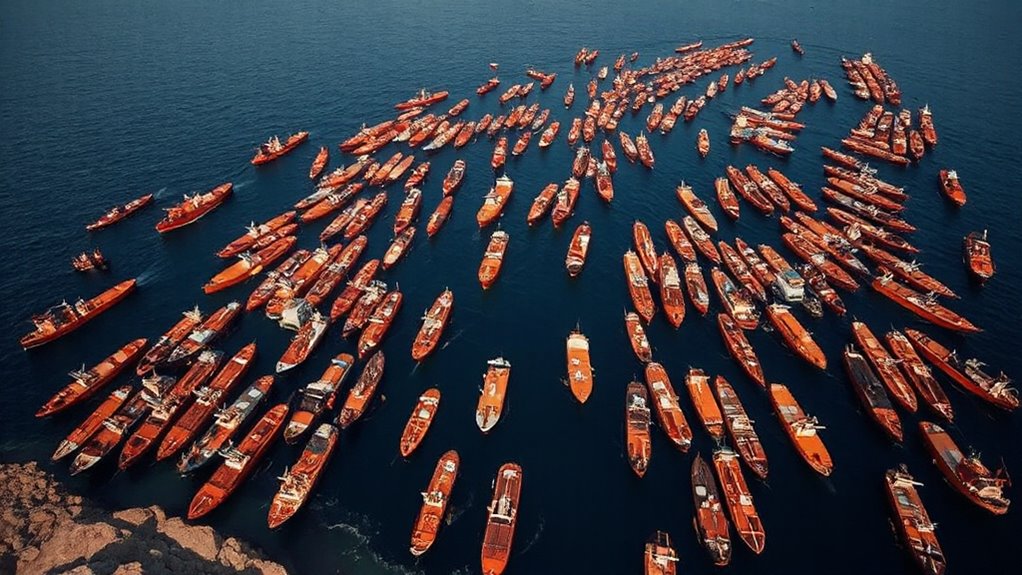
Hundreds of massive ships carrying oil and natural gas have become stuck in the waters around the Strait of Hormuz, creating a traffic jam of tankers that stretches across the Persian Gulf. At least 150 vessels are now anchored in the strait and surrounding areas, with nearly 200 more trapped deeper inside the Gulf. The situation affects roughly 10% of all container ships worldwide, and 37 India-flagged ships alone carry 1,109 sailors waiting to move.
A maritime crisis unfolds as hundreds of oil tankers remain paralyzed in the Persian Gulf, stranding over 1,000 sailors aboard.
Iran closed navigation through the Strait of Hormuz, which normally carries one-fifth of the world’s oil. Tanker traffic has dropped dramatically from 40 vessels per day in January to just one on March 3. Instead of the usual 138 ships passing through daily, only two cargo vessels made it through in the last 24 hours. About 8% of the world’s largest oil tankers are now stuck.
The closure happened during Iran’s retaliation efforts, which damaged four tankers and killed two crew members. A Marshall Islands-flagged tanker was hit by a projectile off Oman’s coast, and a U.S.-flagged tanker suffered aerial impacts while docked. Ship tracking data reveals millions of barrels of oil exposed on stranded vessels, including one South Korean tanker loaded with 2 million barrels of Middle Eastern crude.
Oil prices have surged past $100 per barrel, with Brent crude futures jumping more than 8%. Insurance companies started canceling war risk coverage for Gulf vessels, which keeps even more tankers idle. The U.S. government offered to insure up to $20 billion in losses, but many ship owners remain skeptical about accepting military escorts during active conflict.
The effects reach far beyond the Gulf. Kuwait’s three oil refineries now operate at half capacity. South Korea has seven crude oil tankers stranded and is discussing releasing strategic reserves. The Middle East normally exports over 50 million tons of naphtha to Asia and 25 million tons of gasoil to Europe annually. Those shipments, along with jet fuel deliveries, now face serious delays that could impact fuel supplies worldwide. Central bank actions, like adjusting interest rates, can amplify market reactions to such supply shocks by influencing oil demand and investor sentiment, especially when interest rates are changing.