
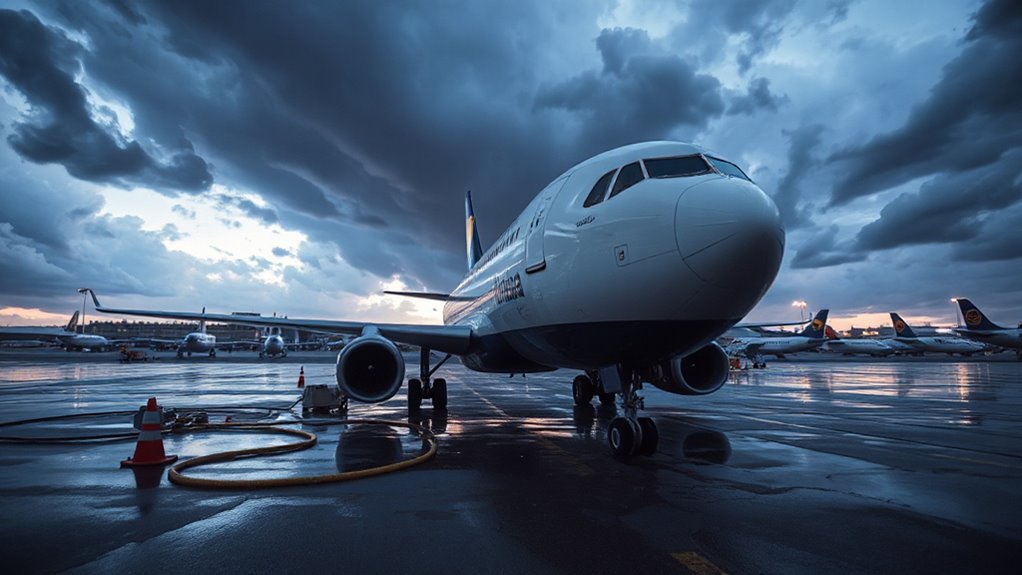
Why Are Jet-Fuel Prices Hammering European Short-Haul Routes?
Short-haul flights across Europe are feeling the pain of a fuel crisis that started far away — in the waters of the Strait of Hormuz.
That narrow waterway carries 50% of France’s jet fuel and 75% of Europe’s supply. Since conflict closed it in late February 2026, prices have jumped from $750 to $1,800 per metric ton.
Fuel already eats up 40% of airline costs. For cheap short-haul routes, that math gets ugly fast. Airlines simply earn less per passenger on a London-to-Lisbon hop than a London-to-Tokyo flight. So short-haul routes get cut first. Jet fuel prices doubled since early March 2026, squeezing airlines that were already operating on razor-thin margins.
To cope with rising costs, airlines are adding surcharges up to $280 per ticket on affected bookings, passing the burden directly onto passengers already navigating a chaotic travel landscape. Central banks’ policy interest rates tightening could further raise airlines’ borrowing costs and compound the pressure on their short-haul networks.
Which Lufthansa Flights Are Actually Getting Cut?
Not every Lufthansa flight is getting the axe — the airline is being surgical about which routes to cut. Think of it like trimming only the dead branches from a tree. Market cap categories help investors quickly compare company sizes and risk profiles, which can influence airline investment decisions.
Lufthansa isn’t slashing blindly — it’s cutting with precision, removing only the routes that no longer pull their weight.
Three routes are fully cancelled: Frankfurt to Bydgoszcz, Rzeszów, and Stavanger. These destinations simply weren’t making money.
Meanwhile, ten other connections aren’t disappearing entirely — they’re just moving to different hubs. Airports like Cork, Gdańsk, Ljubljana, and Stuttgart will still get Lufthansa service, just through Zurich, Vienna, Brussels, or Rome instead of Frankfurt or Munich.
The bigger routes? Those remain largely untouched. In total, the cuts represent less than 1% of the entire Lufthansa Group’s capacity.
The fuel savings from these reductions are significant, with the cancellations expected to conserve more than 40,000 metric tons of jet fuel across the network.
Will Passengers Feel the Capacity Crunch This Summer?
Despite 20,000 flights being cut, most summer travelers will barely notice a difference.
Lufthansa’s overall capacity drops by less than 1% in available seat kilometers. That’s roughly the size of one missing puzzle piece in a thousand-piece set.
Expansions at Zurich, Vienna, and Brussels help fill the gaps left by Frankfurt and Munich route cuts. Long-haul connections stay protected too. So that dream vacation isn’t going anywhere.
The bigger worry is regional feeder routes after CityLine’s exit. Smaller destinations may feel squeezed. Still, Lufthansa says fuel is secured and the summer timetable should run smoothly. The cuts are expected to save more than 40,000 metric tons of jet fuel across the network.
European jet fuel prices have surged dramatically since the Iran conflict began, reaching $1,840 per metric ton in early April 2026, more than double pre-conflict levels. Weekend market closures and international market moves can still influence Monday trading in airline stocks.
Why Does Cutting 20,000 Flights Save 40,000 Tonnes of Fuel?
Every takeoff guzzles fuel. Short-haul flights are especially thirsty because planes burn enormous amounts during taxi, takeoff, and climb — then land just minutes later and do it all over again. Think of it like driving a car mostly in stop-and-go traffic. Maintaining liquidity and preparing for shocks helps operators manage sudden cost spikes, so carriers often keep 3-6 months of cash reserves for stability.
Lufthansa identified 20,000 flights burning more fuel than they were worth, mostly due to low passenger numbers. Removing them saves roughly 40,000 tonnes of jet fuel. That math works because short routes repeat these fuel-hungry cycles constantly.
Fewer wasteful flights means leaner, more efficient operations — especially important when fuel prices have doubled since the Iran war began. The conflict has also disrupted the Strait of Hormuz, a chokepoint through which roughly a fifth of the world’s oil passes.
How Do These Cuts Reshape Lufthansa’s European Network for 2026?
Lufthansa is fundamentally redrawing its European map for 2026. Frankfurt and Munich are losing short-haul flights, while Zurich, Vienna, and Brussels are picking up the slack.
Think of it like rerouting traffic through different roads when one highway gets too busy. Routes to places like Bydgoszcz, Rzeszów, and Stavanger are cut entirely.
Destinations like Gdansk, Ljubljana, and Trondheim now connect through partner hubs instead. Swiss Airlines alone adds 140 European flights to help cover gaps.
Long-haul routes stay mostly untouched. The network shrinks slightly overall but shifts its weight toward smaller, leaner hubs handling Europe’s short-haul traffic. Available seat kilometers drop by just under one percent despite the sweeping scale of cancellations across the schedule.
The fuel crisis traces back to U.S. and Israeli military operations against Iran in late February, which triggered jet fuel prices in Europe to more than double almost overnight. This surge has intensified concerns over jet fuel prices and operating costs across European carriers.