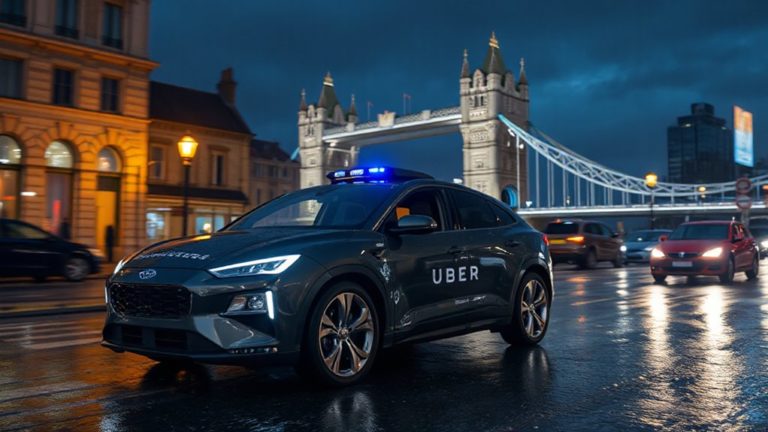









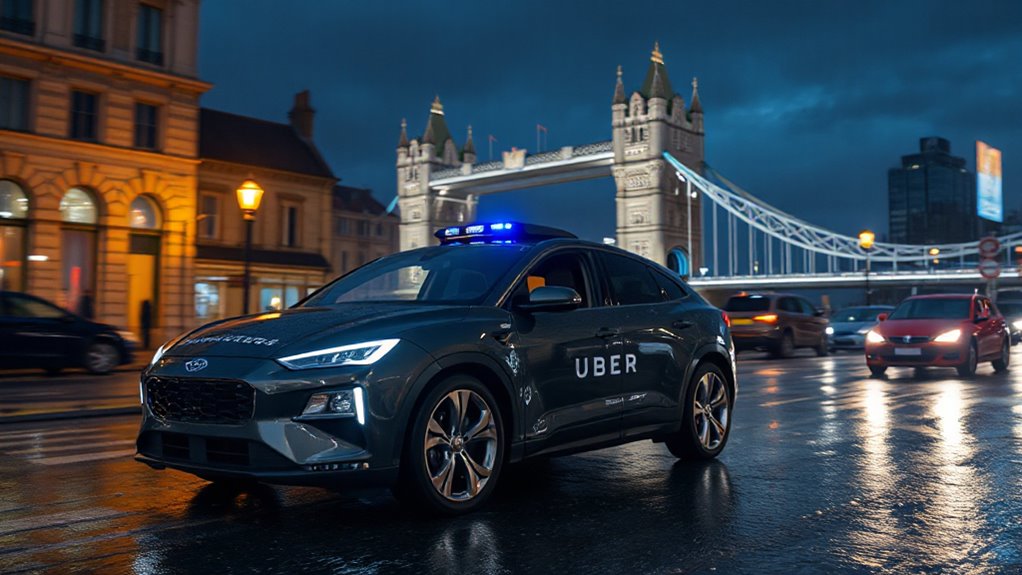

In a bold move to reshape the future of ride-hailing, Uber is betting up to $1.25 billion on electric vehicle maker Rivian to build an army of self-driving taxis. The partnership aims to deploy up to 50,000 fully autonomous Rivian R2 robotaxis across North America and Europe by 2031, marking one of the most ambitious plans in the crowded race toward driverless transportation.
Uber’s $1.25 billion bet on Rivian targets 50,000 autonomous robotaxis across two continents by 2031.
The investment will roll out over seven years, with payments tied to specific technology milestones. Uber is committing $300 million upfront once regulatory approval clears, signaling serious confidence in Rivian’s ability to crack the autonomous driving challenge. In return, Uber gets priority access to Rivian’s self-driving technology and exclusive rights to offer these vehicles through its app.
The deployment strategy starts modestly but scales quickly. Uber or its fleet partners will purchase 10,000 autonomous R2 vehicles initially, with an option to add 40,000 more starting in 2030. The first robotaxis will hit the streets of San Francisco and Miami in 2028, then expand to 23-25 additional cities by 2031. Think of it as planting seeds in a few gardens before growing an entire orchard.
Rivian’s third-generation autonomy platform powers these vehicles with impressive hardware: 11 cameras, five radars, and one LiDAR sensor working together. The system delivers 1,600 TOPS of computing power, which is basically a supercomputer on wheels capable of processing massive amounts of data in real-time to navigate safely.
This partnership drops Uber and Rivian into fierce competition with established players like Waymo, already operating in 10 major cities, and Tesla’s robotaxi ambitions led by Elon Musk. Rivian CEO RJ Scaringe emphasized the clear path to level 4 autonomy, while Uber CEO Dara Khosrowshahi highlighted how Rivian’s integrated vehicle control gives them an edge.
The R2 platform launches in late 2026, giving Rivian roughly two years to perfect the technology before commercial deployment begins. Success could cement Uber’s position as the dominant force in autonomous ride-hailing for decades to come. Blockchain-based fractional ownership could also enable new investment models for fleet financing and tokenized asset management.