










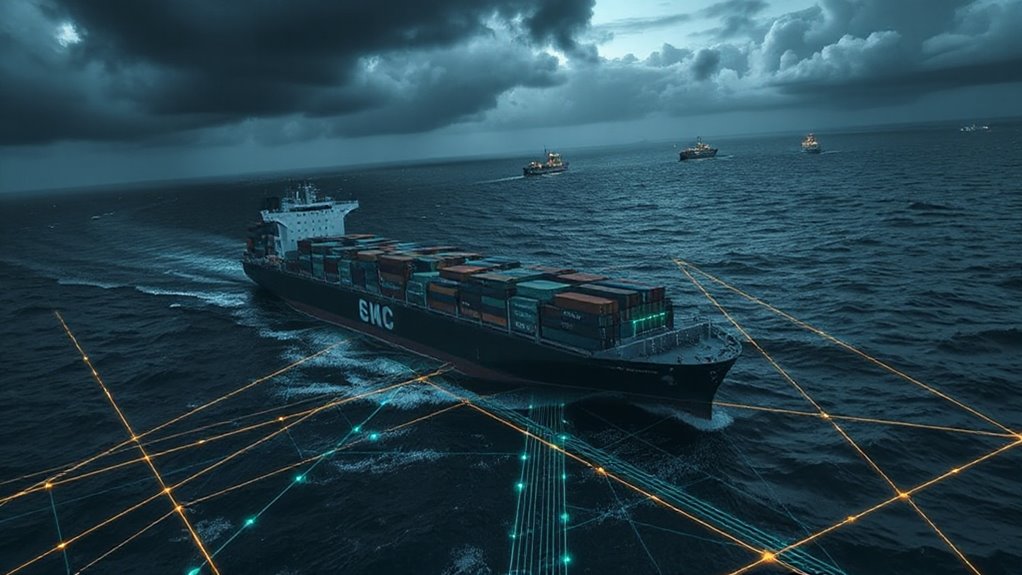
How quickly can a massive cargo ship change course when storm clouds gather on the horizon? The answer depends on whether artificial intelligence is steering the vessel. AI is transforming global supply chains at breakneck speed, creating both incredible opportunities and unexpected challenges.
Companies are discovering that AI can predict what customers want better than human analysts ever could. Smart computers now forecast demand patterns weeks ahead, spotting trends that humans might miss. These predictive insights help businesses avoid those frustrating moments when popular items suddenly vanish from store shelves.
AI systems now predict customer demand with stunning accuracy, helping retailers keep shelves stocked with exactly what shoppers want.
Real-time route planning powered by AI helps delivery trucks dodge traffic jams and find the fastest paths to customers.
The automation revolution is reshaping how supply chains operate daily. AI systems now handle tedious tasks like counting inventory and organizing purchase orders, freeing up workers for more creative problem-solving. Think of it like having a super-smart assistant that never gets tired and can process mountains of data in seconds.
Self-driving supply chains are becoming reality, with machines making autonomous decisions about when to order materials and how to schedule production.
When global disruptions strike, AI-powered supply chains bounce back faster than traditional ones. Digital twins and predictive analytics work like crystal balls, helping companies prepare for potential problems before they happen. These smart systems can spot unusual patterns and suggest backup plans when suppliers face unexpected challenges. Smart contracts are also being integrated to automate agreements and transactions between supply chain partners, reducing delays and ensuring more reliable fulfillment. The market for AI integration in supply chains is projected to reach $6.5 billion by 2023, reflecting the massive investment companies are making in these transformative technologies.
However, this technological shift creates new complications. Workers who once handled manual tasks must learn tech skills or risk being left behind. Suppliers without advanced AI capabilities struggle to compete with more digitally savvy competitors.
The labor market is experiencing dramatic changes as automation reduces demand for some jobs while creating others.
Emerging technologies like blockchain and Internet of Things devices integrate with AI to create transparent, secure information sharing across entire supply networks. Generative AI accelerates supplier management by rapidly analyzing vast amounts of data and learning from each interaction. Companies that implement granular cost analysis through AI systems achieve more accurate pricing strategies while identifying alternative product flows to optimize their supply chain pathways.
This AI boom represents the biggest supply chain transformation in decades, promising greater efficiency while demanding careful navigation of its disruptive effects.
Related Posts