
Why Bitcoin Miners Are Becoming AI Infrastructure Hosts
After the 2024 Bitcoin halving cut mining rewards in half, many miners found themselves staring at shrinking profits and rising electricity bills. Suddenly, their massive warehouses full of humming machines felt less like gold mines and more like expensive hobbies. So miners looked around and noticed something interesting. AI companies desperately needed power and space. Miners already had both. AI workloads can generate up to 25 times more revenue per kilowatt-hour than Bitcoin mining. That math was hard to ignore. Switching to AI hosting meant swapping unpredictable crypto swings for stable dollar-denominated income. The pivot made obvious sense. Multi-year AI contracts provide operators with fixed, predictable revenue that acts as a financial floor, protecting against the cyclical downturns that drove widespread bankruptcies in previous bear markets. Miners accelerating this transition have begun liquidating their Bitcoin reserves to fund GPU deployments and data-center upgrades, using their Bitcoin treasuries as capital. The speed and liquidity advantages of selling BTC outright made it a more practical funding mechanism than pursuing equity dilution or navigating traditional debt markets.
What AI Actually Requires From a Repurposed Mining Facility
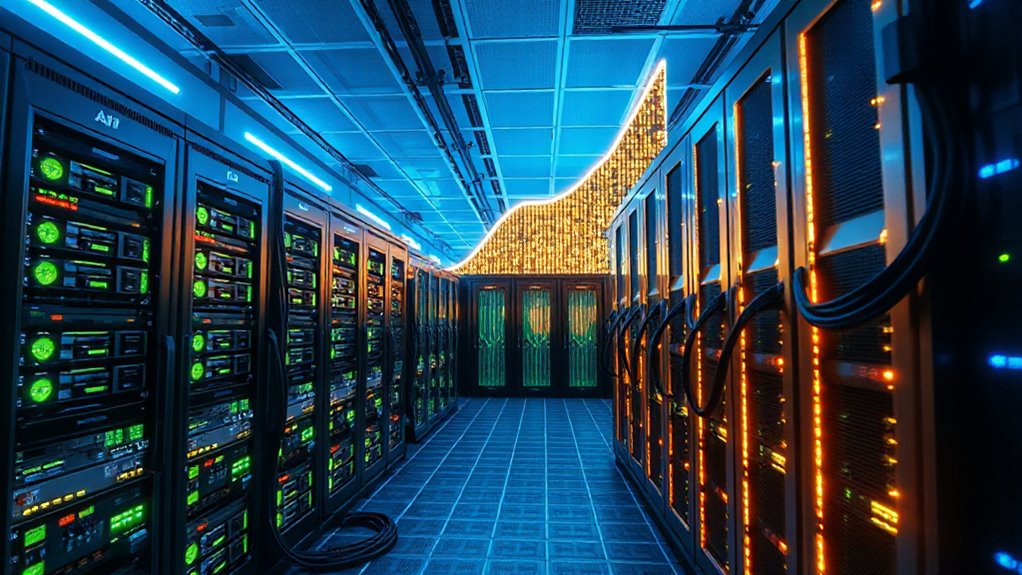
The decision to pivot toward AI hosting sounds straightforward on paper, but actually pulling it off requires some serious upgrades. Mining facilities must transform dramatically before AI workloads move in.
Pivoting to AI hosting sounds simple. In reality, it demands a total overhaul of everything inside a mining facility.
- Liquid cooling systems for GPU racks exceeding 130 kW
- High-speed fiber networks capable of massive data transfers
- Complete rack redesign replacing ASIC hardware with server-grade equipment
- Upgraded power distribution supporting Nvidia-scale densities
- Redundancy systems keeping operations running without interruption
Think of it like renovating a warehouse into a hospital. The bones are there but everything inside needs replacing. Cooling system upgrades are among the most critical investments, as AI hardware generates significantly greater thermal loads than the mining equipment it replaces.
AI data centers also demand at least N+1 redundancy across all mission-critical systems, meaning every key component must have a backup available so that maintenance or failure of a single unit never interrupts operations.
Successful conversion projects must also account for dramatically higher power consumption per rack compared with Bitcoin mining.
Why GPUs Pay More Per Megawatt Than ASICs for Bitcoin Miners
Why do GPUs earn more money per megawatt than ASICs when it comes to powering AI workloads? The answer is simple: GPUs are flexible. ASICs do one job extremely well — mining Bitcoin. But AI needs chips that can handle many different tasks at once. GPUs switch between jobs easily like a good employee versus someone who only knows one skill. Bitcoin miners sitting on megawatts of power suddenly realize their GPU rigs generate stronger revenue streams through AI contracts. ASICs cannot follow. That single-purpose limitation becomes a real financial disadvantage when data centers start writing checks for computing power. GPU hardware also tends to retain resale value, often keeping at least half of its initial purchase price after a year, while ASICs depreciate toward zero as newer models enter the market. By contrast, purpose-built ASIC miners like the Antminer S21 series deliver hundreds of terahashes per second at efficiencies under 20 joules per terahash, a performance ceiling no GPU can approach for Bitcoin mining specifically. This shift is driven in part by the fact that AI platforms increasingly bid for flexible compute capacity rather than fixed-function hashing power.
The Contracts Reshaping How Public Bitcoin Miners Get Valued
Contracts worth billions of dollars are quietly changing how Wall Street decides what Bitcoin miners are worth. Think of it like getting a raise at work — suddenly everyone sees you differently. Many of these deals provide direct market access to major cloud and enterprise customers, creating reliable, contractually-backed revenue streams.
Miners with AI contracts now trade at 12.3x forward revenue versus 5.9x for pure mining companies. That’s more than double the valuation.
Key deals driving this repricing include:
- CoreWeave-Core Scientific’s $10.2 billion agreement over 12 years
- TeraWulf securing $12.8 billion in HPC contracts
- Margins exceeding 85% on multi-year deals
- AI revenue projected at 70% of total revenue by 2026
- Over $70 billion signed industry-wide
Hut 8 also signed a $7 billion, 15-year AI lease at River Bend, illustrating how multi-decade revenue visibility is becoming a defining feature of the most valuable mining companies.
Marathon Digital Holdings is moving beyond Bitcoin by integrating AI into its business model, yet its valuation remains significantly lower than aggressive AI miners, suggesting the market has not yet fully repriced its position in the competitive landscape.
How the Hybrid Model Survives the Next Crypto Winter
During a crypto winter, Bitcoin prices can drop 80% from their peak — and that kind of hit would put most mining companies out of business fast. But hybrid miners have a safety net. When Bitcoin revenue shrinks, their AI and data center contracts keep paying the bills.
They also switch hardware into low-power mode to cut electricity costs. Some even mine only during off-peak hours. Joining mining pools helps smaller operations survive too.
Think of it like a restaurant adding catering when dine-in slows down. Multiple income streams mean one bad season does not close the doors permanently. Miners who liquidate mined BTC immediately can also convert earnings directly into cash to cover operating expenses without selling off critical equipment.
Selling older, less efficient equipment and replacing it with newer models is another way miners stay competitive through downturns. Miners who upgrade aging ASICs before a halving can lower power consumption and maintain profitability even when block rewards shrink.
Related Posts