



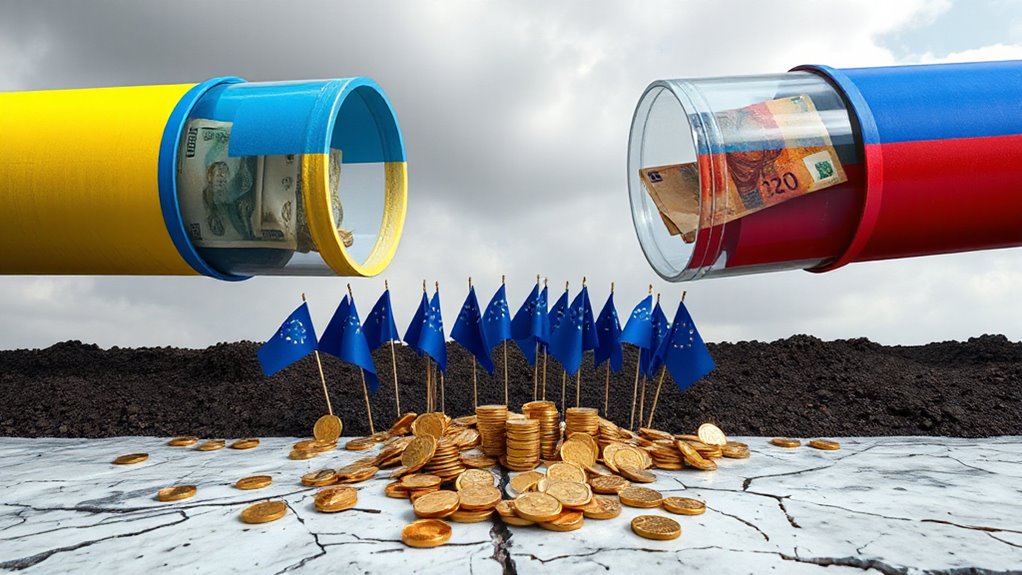

European countries find themselves in a peculiar contradiction: pouring billions of euros into Ukraine’s defense while simultaneously buying Russian goods that fund the very war they oppose.
Europe’s contradiction laid bare: funding Ukraine’s defense while bankrolling Russia’s war machine through continued trade.
The European Union has announced a massive €90 billion support package for Ukraine covering 2026-27, with 24 member states backing the initiative. Of this amount, €60 billion goes toward military aid and €30 billion supports Ukraine’s budget. Since the war began, total EU support has reached €193.3 billion. Germany leads as the biggest donor, committing $20 billion with another $32 billion promised for the future. Denmark follows with €9.2 billion in military assistance.
Creative funding ideas keep emerging. One proposal suggests liquidating $300 billion in frozen Russian assets to help Ukraine. The EU has already made $3.9 billion available from immobilized Russian funds for military purposes. Polish Prime Minister Donald Tusk strongly supports financing Ukraine aid this way. These frozen assets will remain blocked until Russia pays reparations, holding the aggressor accountable.
Yet here comes the awkward part. Despite years of sanctions, EU countries continue importing billions in strategic goods from Russia. This money flows directly back into Russia’s war economy, fundamentally funding the conflict Europeans claim to oppose. It’s like trying to put out a fire while someone keeps adding kindling.
A citizens’ initiative now calls for phasing out these Russian imports, pointing out the obvious problem. Meanwhile, Russia builds 50 additional combat divisions totaling 150,000 troops, preparing for future conflicts. An autocratic consortium including China, Iran, and North Korea supports Russia’s war economy, making the situation even more complicated.
The EU explores various funding mechanisms to strengthen defense. The “ReARM Europe” package includes a €150 billion loan program. Repurposing untapped Covid-19 recovery funds could open $100 billion. Relaxing fiscal rules on defense spending might help too.
The bottom line remains clear: European nations cannot effectively oppose Russian aggression while simultaneously financing it through continued trade. The contradiction undermines their stated principles and prolongs Ukrainian suffering. Closing this funding loop should become an urgent priority. Trade tensions and tariffs and barriers can alter these dynamics and influence which goods are imported.