









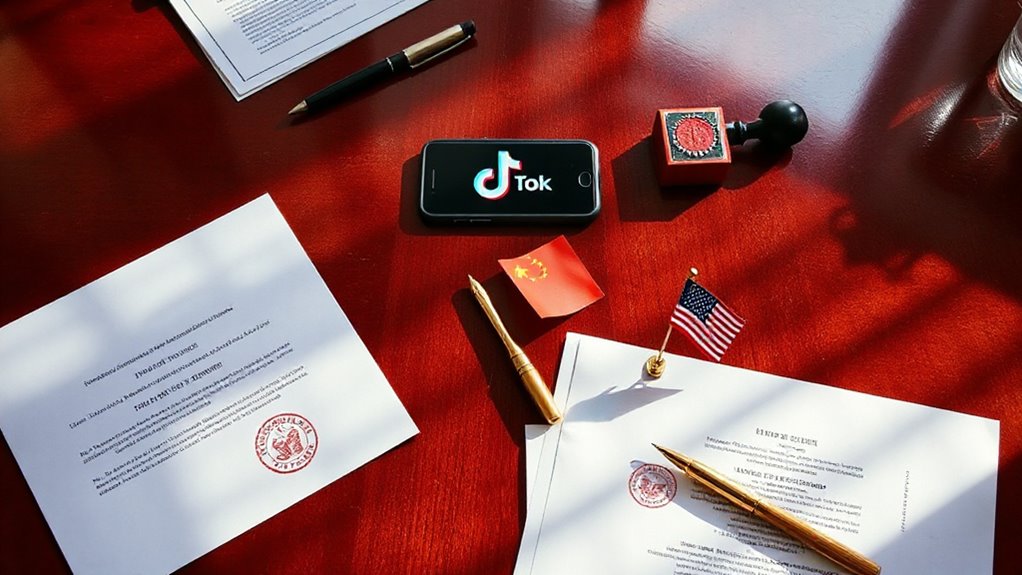
The tech giant ByteDance has finally agreed to give up control of its popular app TikTok in the United States after years of fighting against government demands. This dramatic shift marks the end of a fierce political battle that has stretched across multiple presidential administrations and created uncertainty for millions of American users.
ByteDance initially refused to sell TikTok when Microsoft tried to buy the app’s technology and artificial intelligence systems. The Chinese company strongly opposed what it called a “forced sale” and even said it would rather shut down its US operations completely than give up ownership. Like a stubborn kid refusing to share their favorite toy, ByteDance wanted to keep control of its valuable technology and data.
The Chinese government also pushed back against the Trump administration’s demands, calling the forced sale a “smash and grab” operation. This criticism made negotiations even more complicated as trade tensions between the two countries grew worse.
However, the situation changed when the US government offered a different deal structure. Instead of demanding a complete sale, officials proposed that ByteDance could keep a minority ownership stake while American companies took majority control. Oracle emerged as a key player in this arrangement, with plans to manage user data and software updates to address national security concerns.
The enforcement timeline created additional pressure on ByteDance. A nationwide ban officially started on January 19, 2025, but the Trump administration delayed actual enforcement by 75 days through an executive order on April 4. These extensions gave negotiators more time to work out the complex details. The Supreme Court heard oral arguments on January 10, 2025, in the consolidated case TikTok v. Garland, which could significantly influence the enforceability of the ban.
Trade policy became a major stumbling block during discussions. The Trump administration imposed new tariffs on China during the negotiation period, which caused the Chinese government to withdraw its support for the deal framework. This connection between TikTok talks and broader trade issues made finding a solution much harder. Like central banks coordinating during financial crises, government agencies worked together to address the national security concerns while managing potential market disruptions.
ByteDance’s position gradually softened from complete rejection to accepting compromise arrangements. The company realized that keeping some ownership was better than losing everything, leading to this surrender after years of resistance.
Related Posts