




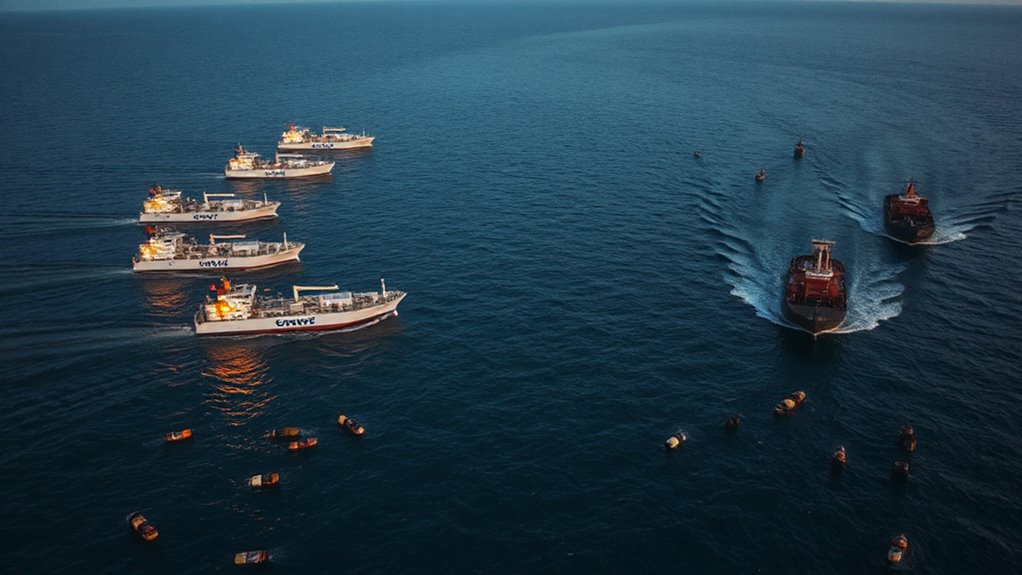
Chevron’s tankers are flooding into Venezuelan waters just as other oil ships are making hasty exits, creating a stark divide in the Caribbean Sea. Eleven tankers chartered by Chevron are scheduled to arrive in Venezuela this January, up from nine in December. Meanwhile, a shadowy fleet of other vessels has been turning around and sailing away after U.S. forces captured President Nicolas Maduro and seized a massive oil tanker.
Chevron’s fleet surges into Venezuelan ports while shadowy oil tankers flee following Maduro’s capture and U.S. military intervention.
The contrast couldn’t be sharper. Chevron’s ships are calmly docking at government-controlled ports like Jose and Bajo Grande, loading oil bound for American refineries. One tanker has already completed loading and two others are currently docked. But at least four other tankers, possibly up to sixteen, scrambled to leave Venezuelan waters over the weekend. These vessels belong to what’s called the “dark fleet” because they use sneaky practices like turning off their tracking devices to avoid sanctions.
The panic started when the U.S. Coast Guard seized a very large crude carrier holding 1.85 million barrels of Venezuelan heavy oil. That seizure left over 11 million barrels stuck on other vessels floating in Venezuelan waters with nowhere to go. Ships started making U-turns immediately. One tanker carrying 300,000 barrels of Russian naphtha turned around and headed back to Europe instead.
Chevron operates under a special license from the U.S. Treasury Department that lets the company export Venezuelan oil despite sanctions on everyone else. After a four-day pause during Operation Absolute Resolve, Chevron resumed loading oil on Monday while other ships were turned away by the increased U.S. military presence in the Caribbean. The heavy military presence has been effective, with at least 12 vessels bound for Venezuela being turned away.
President Trump announced that interim authorities would hand over control of 30 to 50 million barrels of oil for his management. He’s betting on oil companies to make big investments to revive Venezuelan production. The administration has framed the intervention as a revival of the Monroe Doctrine, the 1823 document that has shaped U.S. policy in the Western Hemisphere. Energy Secretary Chris Wright is meeting with oil executives this week to discuss the plan.
For now, Chevron stands alone as the only company permitted to export Venezuelan oil, turning the company into an unlikely winner in this complex geopolitical situation. Central banks’ decisions on interest rates and liquidity can quickly shift oil markets and investor behavior, making interest rates a key variable for energy sector returns.
Related Posts