









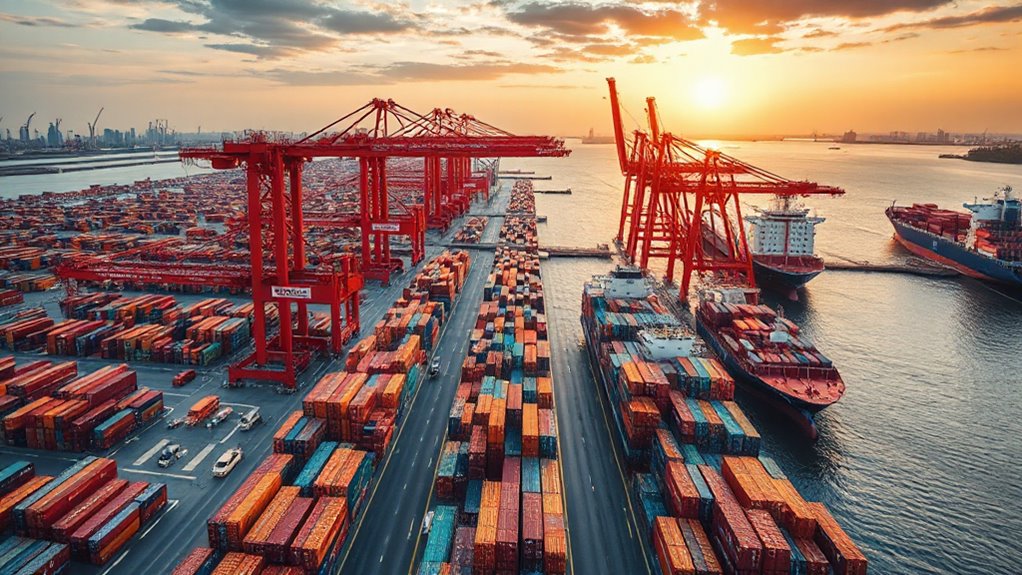
While most people think of China’s economic power in aspects of factories and technology, the country’s true strength might actually float on water. China has quietly built the world’s most impressive network of ports, and this maritime dominance is changing how global trade works.
China’s true economic strength doesn’t come from factories alone—it floats on water through maritime dominance.
The numbers tell an amazing story. Chinese ports handled 242 million shipping containers in 2019, which is more than all other East Asian countries combined. Think of it like this: if ports were pizza restaurants, China would be serving more customers than every other restaurant in the neighborhood put together.
The Port of Shanghai alone processed over 50 million containers in 2024, making it the world’s busiest container port for the fifteenth year running.
But China isn’t just focused on building bigger ports at home. The country operates or owns at least one port on every continent except Antarctica, where penguins probably don’t need much shipping anyway.
Chinese companies are involved in 129 overseas port projects worldwide, with 115 currently active. This global reach gives China influence over shipping routes that connect countries and continents.
Technology makes these ports even more powerful. Automated cranes and artificial intelligence help ships load and unload faster than ever before.
The Port of Shanghai set a global monthly record by processing over 5 million containers in January 2025. These smart systems work like having robot helpers that never get tired or take coffee breaks.
China’s port strategy faces some bumps in the road. Waiting times at major Chinese ports reached a three-year high in late 2025, with delays increasing by about 30% over just two weeks.
Trade tensions with other countries also create uncertainty, though stronger demand from Europe, Southeast Asia, Africa, and Latin America helps balance things out. The Belt and Road Initiative now involves 138 countries with a combined GDP of $29 trillion and 4.6 billion people.
This port power isn’t just about moving boxes around the ocean. Since roughly 80% of global trade travels by sea, controlling ports means controlling how goods flow between countries. Shanghai’s massive scale makes it essential for high-volume industries like automotive and electronics.
For investors watching these developments, successful long-term wealth building requires focusing on companies positioned to benefit from these fundamental shifts in global trade infrastructure.
China’s maritime network is quietly rewiring the world’s economic connections, one container ship at a time.
Related Posts