





Why Germany’s Economy Stalled in the First Place?
Germany’s economy did not slow down because of one big mistake — it stumbled into a perfect storm of problems that had been building for years.
Germany’s economy didn’t collapse overnight — it walked straight into a storm that had been brewing for years.
For decades, Germany ran on cheap Russian natural gas like a car running on discount fuel.
When Russia cut off gas exports in 2022, prices spiked and factories struggled.
Then exports weakened as China bought less German machinery.
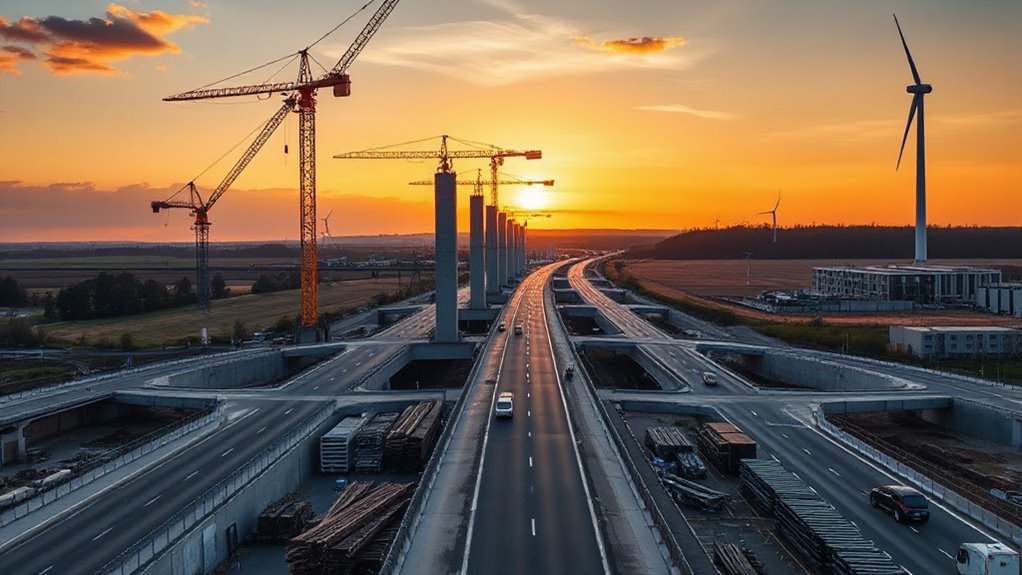
Construction slowed.
Productivity dropped.
And an aging workforce meant fewer skilled workers to keep things running.
Each problem fed the next.
Germany was not broken overnight — it slowly ran out of easy answers.
By 2024, economic output had returned to 2019 levels, marking the longest period of economic inactivity Germany had seen in seven decades.
In 2023, Germany became the worst-performing major economy globally, recording a 0.9% contraction and standing as the only G7 nation to shrink that year.
Inflationary pressures from supply disruptions and energy price spikes also eroded consumer purchasing power, contributing to the stagnation of demand and investment in the economy, particularly through higher production costs.
What Merz’s 34 Reforms Actually Target
When Friedrich Merz revealed his economic recovery plan, it did not focus on just one problem — it addressed five different areas at once. Think of it like fixing a house where the roof, plumbing, wiring, walls, and foundation all need work simultaneously.
The reforms target tax relief for businesses and workers, better support for parents and foreign workers, lower energy costs for factories, easier loans for medium-sized companies, and faster government approvals. Each piece connects to the others.
Together they aim to make Germany cheaper to invest in, easier to work in, and quicker to build in. The push for economic renewal comes as Germany looks to move beyond the tenure of Olaf Scholz, whose government drafted sweeping COVID-19 financial rescue packages but ultimately fell short of delivering sustained economic growth. During his chancellorship, Germany also passed a new Skilled Labour Immigration Act to create better conditions for meeting worker shortages, including by attracting talent from abroad. The plan also emphasizes stabilizing public finances through capital preservation measures to support long-term investment.
Why Companies Are Still on the Fence About Germany’s Economy
Merz’s 34-point plan sounds promising on paper, but many companies are not yet convinced enough to open their wallets.
Merz’s 34-point plan reads well on paper, but businesses aren’t reaching for their checkbooks just yet.
Several stubborn problems still make businesses hesitate before committing to Germany.
- Energy costs remain roughly two-thirds higher than 2022 levels
- A record 56% of firms flag labor costs as a serious burden
- 57% consider Germany’s economic policy landscape a real business risk
- Corporate investment still sits about 10% below pre-pandemic levels
Until these issues shrink, many businesses are effectively waiting at the door, hand on the handle, but not quite stepping inside. Monetary authorities’ decisions can quickly reshape borrowing costs and market sentiment, especially through interest rate moves.
Germany’s public investment gap compounds these hesitations, with the country spending just 2.8% of GDP compared to the EU average of 3.6%, leaving critical infrastructure and modernization efforts chronically underfunded.
Adding to the uncertainty, the Macroeconomic Policy Institute estimates that mandatory pension contributions set to rise sharply in 2028 could reduce GDP by 1 percentage point over five years while eliminating roughly 250,000 jobs.
How Germany’s Economy Plans to Solve Its Labor Shortage?
One of Germany’s biggest headaches right now is finding enough workers to keep its economy running. So Germany is trying several fixes at once. First it opened doors wider to skilled workers from outside Europe. A new “Opportunity Card” lets job seekers enter Germany and search for work for up to a year. Second Germany wants more mothers and part-time workers moving into fuller roles by improving childcare and cutting heavy taxes. Third older workers are encouraged to stay employed longer. Finally Germany is investing heavily in training programs so existing workers can learn new skills faster. The baby boomer retirement wave expected to peak by 2035 is set to shrink Germany’s workforce significantly, compounding the already serious difficulties employers face in recruiting skilled labour. Workers from the Western Balkans also benefit from a separate route, with the annual entry quota for countries like Albania, Serbia, and Kosovo recently doubled to 50,000 workers. Swing traders often look for opportunities in such labor-sensitive sectors when they assess market trends and sector momentum for short-to-medium term positions trend following.
Why €126 Billion in Public Investment May Not Be Enough
Fixing Germany’s worker shortage is a big piece of the puzzle, but it connects directly to another serious challenge: finding enough money to rebuild the country. Germany needs around €600 billion over the next decade.
Germany needs roughly €600 billion over the next decade — and filling its worker shortage is only part of the answer.
Spending €126 billion sounds impressive until you do the math.
- The investment gap covers infrastructure, education, housing, and the green shift
- Germany’s public investment has stayed below the EU average for two decades
- Nearly 91% of German firms flagged skilled labour shortages as a barrier
- Over 84,000 infrastructure jobs remain unfilled across 111 occupations
More money helps but cannot fix everything alone. A three percentage point rise in construction inflation alone could render €100 billion of the off-budget fund effectively worthless. Monetary policy decisions by central banks, such as changes to the policy interest rate, can also influence borrowing costs and the real value of long-term public investment.