











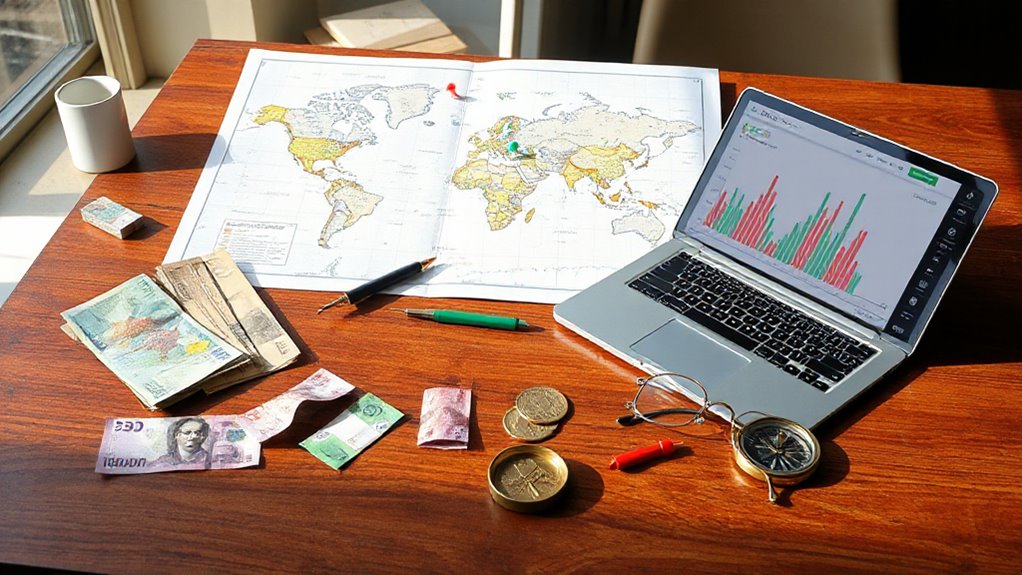
Trading international stocks from the USA is easier than many investors think. Major American brokerages like Fidelity, Schwab, and Interactive Brokers offer direct access to foreign markets through regular brokerage accounts. These platforms handle currency conversions, regulatory compliance, and tax reporting automatically. However, international trades come with special rules like day-order limitations, no margin trading, and potential foreign withholding taxes. Proper research and understanding of each market’s unique characteristics can reveal exciting global investment opportunities.

While investing in U.S. stocks might feel like staying in your own neighborhood, trading international stocks opens the door to a whole world of investment opportunities. Investors can explore companies from bustling markets in Japan to innovative firms in Germany, all from the comfort of their American brokerage account.
Getting started requires choosing the right brokerage firm. Major U.S. brokerages like Fidelity and Schwab offer international trading services, though each has different rules about which markets they support. These companies must follow strict SEC and CFTC regulations, ensuring trades meet both American and foreign securities laws. Think of it like having a passport that works in multiple countries at once.
Major U.S. brokerages navigate complex international regulations like diplomatic passports, opening global markets while ensuring compliance across borders.
U.S. residents can typically trade international stocks through regular brokerage accounts, but retirement accounts like IRAs usually restrict these investments. Non-U.S. citizens might need extra documentation, similar to how some travelers need additional paperwork at border crossings. The process involves proving identity and providing tax information.
International markets span the globe, from Australia and Canada to Switzerland and South Africa. Investors can buy common stocks and ETFs from major exchanges, though some specialized securities like warrants might not be available. The selection can change without notice, so flexibility helps. Successful international investing requires thorough research and understanding of both market fundamentals and foreign company performance before making investment decisions.
Trading rules differ greatly from domestic stocks. Only day orders work for international trades, meaning orders expire at the end of each trading session. Margin trading and short selling are off-limits, keeping things cash-only. Orders execute during local market hours, so timing matters when markets operate in different time zones.
Settlement happens in the security’s home currency, which means currency conversion fees often apply. These trades take varying amounts of time to settle depending on the country and exchange involved. When dealing with foreign futures and options contracts, intermediaries must register with the CFTC regardless of their location to legally serve U.S. customers.
Tax considerations add another layer of complexity. International investments may face withholding taxes in their home countries, though U.S. taxpayers might qualify for foreign tax credits. Brokerages typically report these transactions to tax authorities, helping investors stay compliant. International dividend income distributed by brokerages typically has net amounts paid after the foreign country deducts applicable taxes at the source.
Trading international stocks requires patience and preparation, but it offers access to exciting opportunities beyond American borders.
Frequently Asked Questions
What Are the Tax Implications of Trading International Stocks as a US Citizen?
US citizens face several tax responsibilities when trading international stocks.
Capital gains taxes apply based on holding periods, with short-term gains taxed as ordinary income and long-term gains receiving preferential rates.
Foreign dividends count as taxable income, though foreign tax credits may offset double taxation.
Citizens must report worldwide investment income on tax returns, potentially requiring additional forms like 8938 for foreign assets.
Do I Need to Report Foreign Stock Holdings to the IRS?
Yes, U.S. citizens must report foreign stock holdings to the IRS using various forms.
Form 8938 covers foreign stocks exceeding certain thresholds. FBAR reports foreign accounts holding stocks if they total over $10,000.
Form 5471 applies when owning 10% or more of a foreign corporation. Form 8621 covers passive foreign investment companies.
The specific forms depend on stock types and amounts held.
How Do Currency Exchange Rates Affect My International Stock Returns?
Currency exchange rates directly impact international stock returns for U.S. investors.
When foreign currencies strengthen against the dollar, returns increase even if stock prices stay flat. Conversely, a strong dollar reduces returns despite positive foreign stock performance.
For example, a stable European stock could generate 12% returns simply from euro appreciation.
This currency effect adds both opportunity and risk to international investing decisions.
What Are the Trading Hours for Different International Stock Markets?
International stock markets operate on different schedules across time zones.
Asian markets like Tokyo and Shanghai typically trade from morning to afternoon with lunch breaks.
European exchanges including London and Frankfurt run without lunch breaks during their business hours.
US markets open at 9:30 AM EST and close at 4:00 PM EST.
Many exchanges also offer extended trading hours before and after regular sessions.
Are There Minimum Investment Requirements for Trading Foreign Stocks?
Minimum investment requirements for foreign stocks vary by broker and method.
Most brokers require $0 to $2,500 to open accounts, with some demanding $500 minimum per trade.
Trading through American Depositary Receipts or international ETFs typically allows buying single shares, like domestic stocks.
Direct foreign exchange trading may require larger amounts due to local market rules and currency conversion costs.