



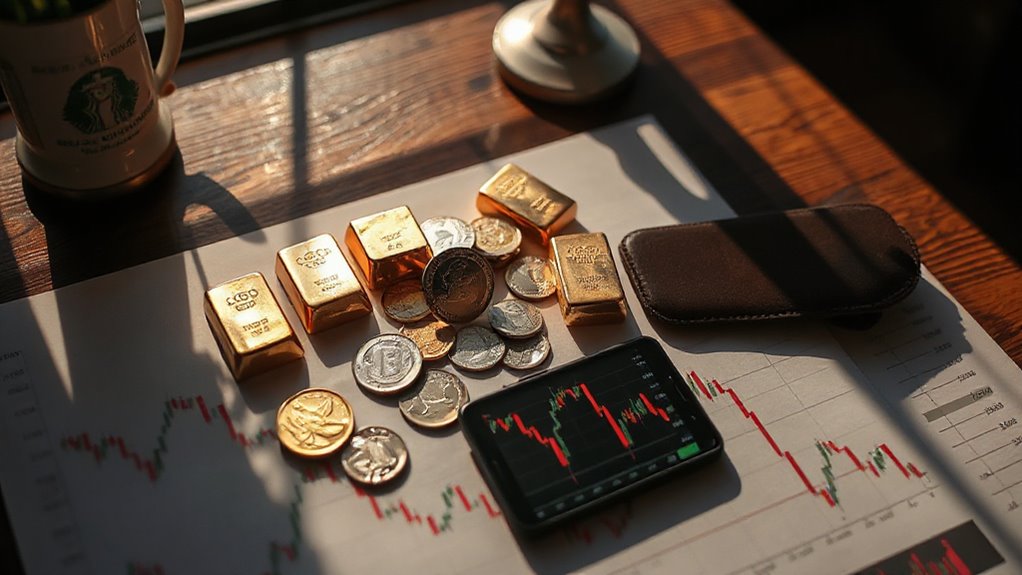
In the span of just a few trading sessions, gold and silver have tumbled from their lofty heights, reminding investors that even the shiniest safe-haven assets can lose their glow. Gold dropped 0.2% to $4,396.74 per ounce while silver fell harder at 3.4% to $66.80. These declines follow a dramatic plunge that saw gold sink 6% to around $5,000 and silver tumble 13% in a sharp reversal that caught many traders off guard.
The selloff mirrors an earlier crash on January 31, 2026, when gold dropped 12% and silver plummeted 31.4%. What caused such dramatic moves? The answer involves a messy mix of factors all colliding at once.
Mixed signals from the Middle East involving the US, Iran, and Israel have pressured prices. Disruptions around the Strait of Hormuz initially sent metals soaring on safe-haven demand, but that momentum reversed quickly. Global political tensions that once lifted prices now seem to be adding to the confusion.
Meanwhile, stock markets experienced their own earthquake. Microsoft fell 11% as megacap tech stocks faced sharp repricing. Investors questioned whether AI monetization and cloud growth could sustain lofty valuations. This violent equity repricing sent shockwaves through global markets, dragging precious metals down alongside major averages.
Volatility spiked while liquidity evaporated. Market makers reduced quote sizes, triggering stop-losses and margin calls. Gold ETF volumes surged while silver futures and ETF volumes fell, creating thinner markets that amplified price swings. Ole Hansen of Saxo Bank noted that volatility feeds on itself in these conditions.
High interest rates continue limiting demand for non-yielding assets like gold and silver. The Federal Reserve paused rate cuts after easing in 2025, with inflation remaining above target. Rumors of hawkish Fed leadership changes added pressure, particularly after Trump nominated Kevin Warsh as Fed Chair, sparking January’s selloff.
Despite these short-term headwinds, long-term fundamentals remain intact. Central banks keep buying gold at elevated levels. Silver faces supply deficits due to mining constraints while industrial demand grows for solar panels, electric vehicles, and AI infrastructure. China’s export restrictions since January 1, 2026, have created a bifurcated market that could support prices ahead. Central bank actions, including interest rate policy and market interventions, continue to be a major influence on precious metals monetary policy.
Related Posts