


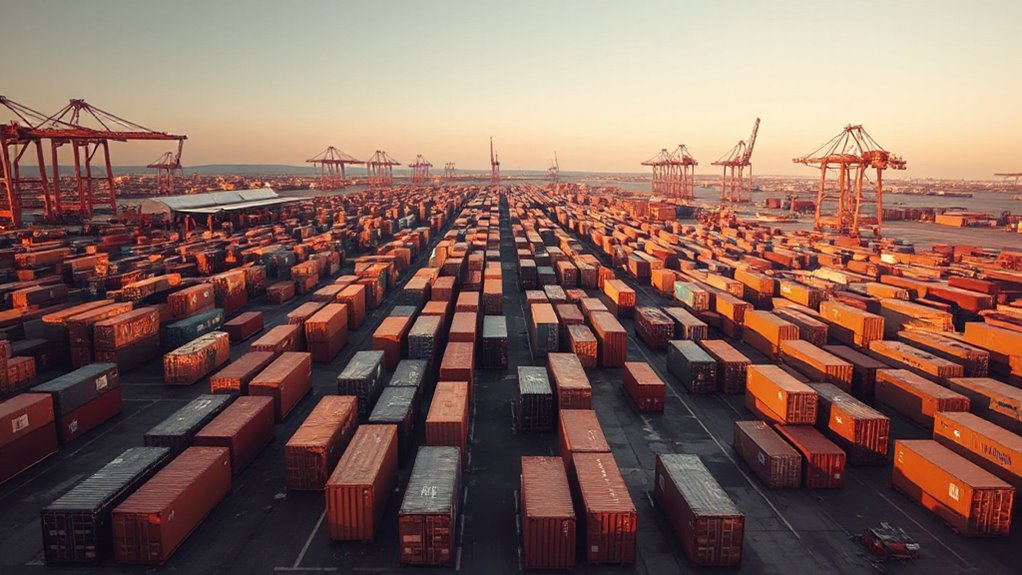
The trade war that dominated headlines throughout 2025 is finally showing signs of cooling down, though its effects continue to ripple through the global economy like waves from a stone thrown into a calm pond. According to new data from the World Trade Organization, global trade momentum has begun to falter amid widespread uncertainty and shifting policy landscapes.
The year started with a bang as the United States rolled out an aggressive tariff strategy. By April, a 10% baseline tariff hit nearly all imports, followed by even steeper rates for specific countries. China faced a staggering 125% duty, while Canada saw rates jump to 35% on most goods. Steel and aluminum imports got slapped with an additional 25% tariff in March, making these materials markedly more expensive.
These changes created a domino effect that touched everyone’s wallets. Retail food prices climbed between 5% and 18%, making grocery shopping feel like a treasure hunt for affordable meals. New car prices also rose as automakers faced billions in tariff costs, forcing them to pass expenses onto consumers. The technology sector took a particularly hard hit, with stock values declining as production costs soared.
The numbers tell a clear story of economic strain. U.S. growth dropped by 0.23 percentage points in 2025, with projections showing an even steeper 0.62 percentage point decline for 2026. Real imports fell 7% below normal trends by June, while exports also struggled at 0.6% below expectations. Trade wars typically last several years, with some historical conflicts extending over two decades depending on political changes and escalation levels.
However, some positive signs emerged. Global trade still expanded by $500 billion in the first half of 2025, with goods trade growth inching up from 2% to 2.5%. Manufacturing, especially electronics, helped drive this modest improvement. Services trade also bounced back after a rough first quarter. Developing economies led global trade growth, supported by rising South-South trade patterns that helped offset weakness in traditional markets.
Despite these bright spots, uncertainty remains the biggest challenge. Companies are scrambling to reconfigure supply chains, leading to higher logistical costs. Trade imbalances narrowed in the second quarter, but many economists worry about long-term impacts. Nearly 70% of manufacturers are now exploring or implementing domestic production strategies to reduce their reliance on foreign suppliers. The tariff surge may be waning, but its aftermath will likely influence global commerce for years to come.
Related Posts