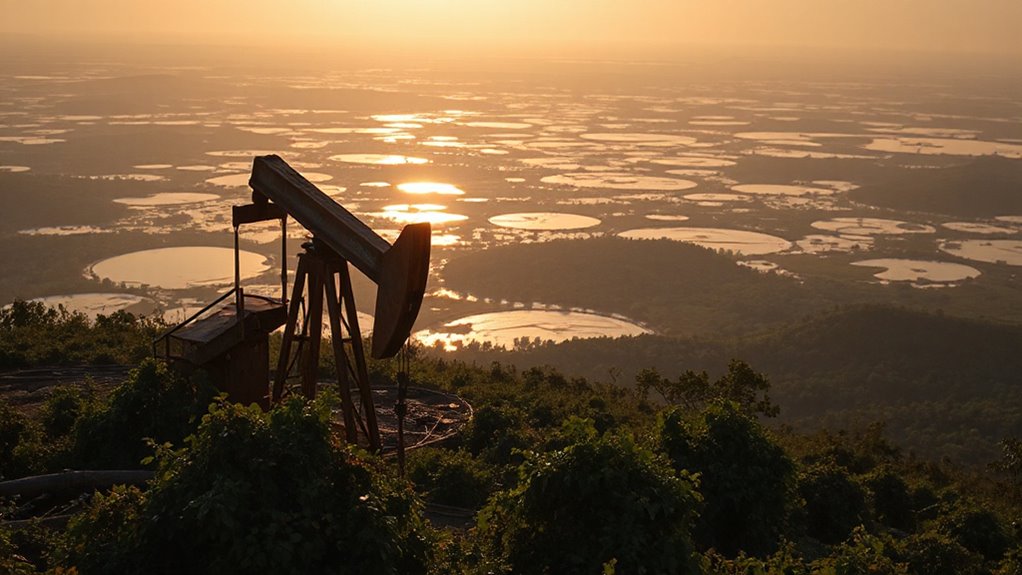
In the world of oil, Venezuela sits on a peculiar paradox. The country claims the largest proven oil reserves on Earth at 300 billion barrels, nearly one-fifth of the global total. Yet today its wells produce less than 1% of the world’s daily oil supply. Imagine owning the biggest pizza in town but only being able to serve tiny slices.
Venezuela holds Earth’s largest oil reserves yet produces a fraction of its potential—the world’s biggest untapped petroleum paradox.
The numbers tell a dramatic story. Venezuela’s production peaked decades ago when it supplied 7-8% of global oil in 1970. By the early 2000s, the country still pumped around 2.7 million barrels daily. But production collapsed from nearly 3 million barrels per day in 2013 to a shocking low near 400,000 barrels in 2020. Currently, output hovers around 750,000 barrels per day, with most exports heading to China. Indexes like the S&P 500 can help investors track companies tied to global commodity markets and energy infrastructure.
The reserve figures themselves grew impressively over time. In 2007, Venezuela reported 100 billion barrels of proven reserves. That number jumped to 172 billion in 2008 and reached 300.9 billion by 2015, largely from certifying massive deposits in the Orinoco Belt. This region alone holds an estimated 900 to 1,400 billion barrels of heavy crude, though only 380 to 652 billion barrels are considered technically recoverable.
Here’s the catch: Venezuela’s oil isn’t easy oil. The reserves consist mostly of very heavy and extra-heavy crude that requires specialized refineries. Extracting this thick oil from the Orinoco Belt demands expensive infrastructure and significant investment. It’s economically sensitive to price swings, making it far from cheap to exploit.
The production collapse stems from chronic mismanagement, corruption, and declining investment in infrastructure. U.S. sanctions beginning in 2019 accelerated the decline. Previous government expropriations also discouraged foreign investment. A late 2002 strike at the state oil company PDVSA led to the firing of 18,000 workers, draining critical technical knowledge and expertise from the industry.
Yet potential remains. Analysts suggest Venezuela could reach 1.3 to 1.4 million barrels daily within two years following political shift, and possibly 2.5 million with substantial investment over a decade. At 2020 production levels, the reserve-to-production ratio exceeded 1,500 years. In January 2023, President Nicolás Maduro and wife Cilia Flores were captured during U.S. military strikes across northern Venezuela and transported to New York to face narco-terrorism and drug trafficking charges. The wells could flow again, but releasing that potential requires more than just oil underground.
Related Posts