
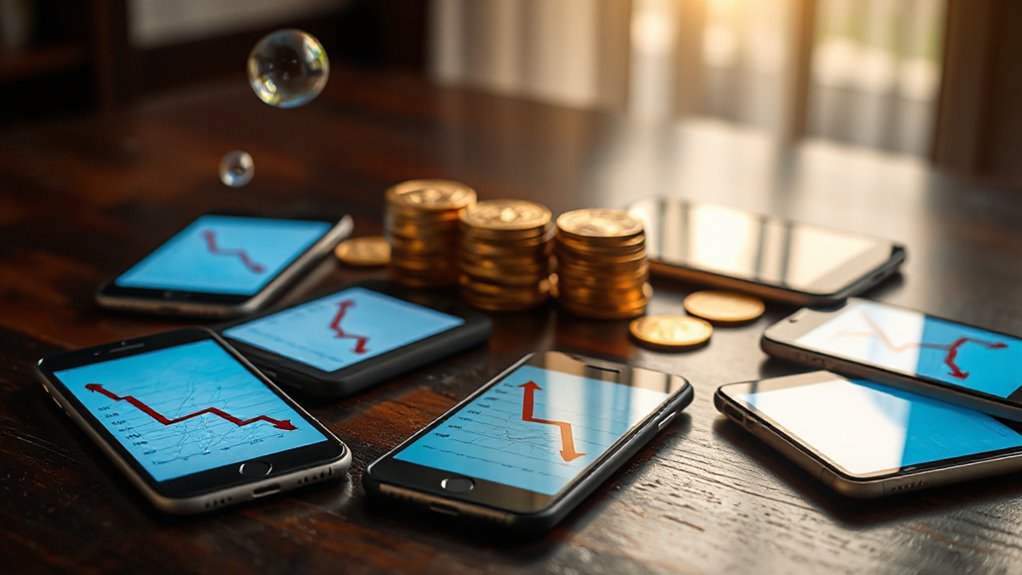
Why are social media stars losing their sparkle? The golden age of influencer culture appears to be fading as engagement rates plummet across major platforms. TikTok influencer engagement dropped a staggering 35 percent last year to just 2.65 percent, while Instagram stayed flat at 0.7 percent. Facebook and Twitter fare even worse at 0.15 percent and 0.05 percent respectively.
The golden age of influencer culture is fading as engagement rates plummet across all major social media platforms.
The problem starts with oversaturation. Nearly 25 percent of social media users now consider themselves influencers or content creators. That’s one in four people competing for the same eyeballs! Content volume has exploded while audience size plateaued, creating a digital traffic jam where everyone’s shouting but fewer people are listening. YouTube lost 200 million monthly users in 2024, further shrinking the pool of available viewers.
Young audiences are also abandoning traditional platforms for private communities. Gen Z and millennials increasingly prefer Discord servers, private Facebook groups, and chat apps like WhatsApp and Snapchat. These intimate spaces offer authentic connections that mega-influencers simply cannot provide.
This shift reflects a growing demand for authenticity over celebrity status. In 2026, trust matters more than visibility. Audiences scrutinize every post and demand genuine vulnerability from their favorite creators. Surface-level content no longer cuts it when followers expect influencers to address serious issues with depth and honesty. Like successful investing, building lasting influence requires focusing on fundamentals rather than chasing excitement or hype.
The rise of micro and nano-influencers tells the same story. Creators with 10,000 to 100,000 followers deliver higher engagement and return on investment than their mega-famous counterparts. Even nano-influencers with just 1,000 to 10,000 followers offer authentic niche connections that resonate deeply with specific communities. Podcast hosts emerge as the new authority figures, with 56% of weekly podcast consumers prioritizing host influence over traditional social media influencers.
Platform algorithm changes compound these challenges. The average person manages 8.4 social media accounts, up from 4.8 in 2014, spreading attention thin across multiple feeds. Organic reach continues declining as platforms prioritize paid content over authentic posts.
Finally, AI-generated content faces increasing backlash as audiences seek “human-made” premium experiences. People actively toggle off AI features and demand accountability from real creators. The internet has become a public court where influence depends less on follower counts and more on genuine human connection and trustworthiness.
Related Posts