


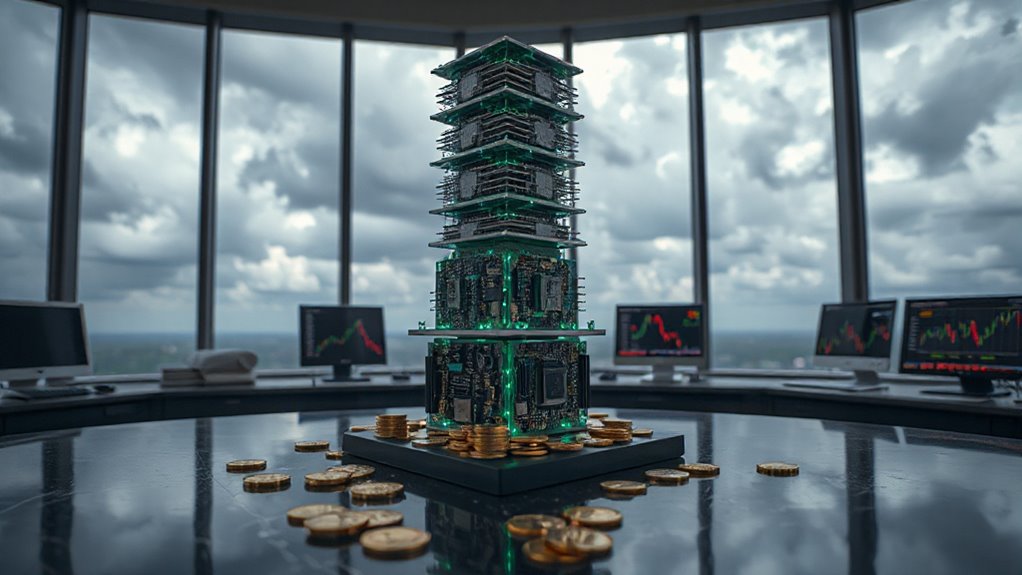
While the stock market celebrated artificial intelligence like a teenager discovering their first smartphone, warning signs began flashing across Wall Street by late 2025. The Magnificent Seven tech giants reached sky-high valuations not seen since the post-pandemic party ended, while retail traders borrowed money at levels unseen in three years.
Wall Street’s AI euphoria mirrors teenage smartphone obsession while debt-fueled trading reaches dangerous three-year highs.
Think of it like everyone cramming into the same tiny boat. The S&P 500’s concentration hit historic levels, with just four companies driving a massive $30 trillion bull run over three years. When Alphabet, Microsoft, Nvidia, and Broadcom carry that much weight, one stumble could sink the whole ship.
The Nasdaq 100 traded at 26 times future profits, which sounds scary until you remember the dot-com bubble hit 80 times.
Here’s where things get interesting. The same tech giants printing money like magic are about to flip the script. Meta and Microsoft could see their free cash flow turn negative by 2026 after paying shareholders. Alphabet might barely break even.
It’s like watching your favorite money-making machine suddenly start eating cash instead of spitting it out.
The culprit? Artificial intelligence investments that cost more than a small country’s budget. Oracle sold tens of billions in bonds just to build data centers, while Apple faced tough questions about whether AI spending would ever pay off. Despite the risks, Q3 2025 GDP growth reached 4.3% suggesting the economy maintained fundamental strength beneath elevated market valuations.
Unlike the dot-com days when companies burned cash with no profits, today’s AI leaders still make record money. But that safety net might not last forever.
Meanwhile, reality checks started hitting hard. Intel’s stock crashed nearly 64% as manufacturing delays cost them market share to AMD. The S&P 500 struggled near 6,900 by December 2025, down from earlier optimism.
Investors who once bought every dip suddenly wanted proof that AI would deliver real results. Palantir Technologies exemplified this disconnect, trading at over 180 times estimated profits despite growing investor skepticism about AI profitability. Active traders chasing AI momentum underperform market indexes by significant margins as overconfidence drives excessive speculation.
The government added another layer of complexity with increased scrutiny on AI trading and new safety rules. Political instability became the wild card nobody could predict.
If AI stocks stop climbing, the broader market follows like dominoes. The question isn’t whether AI will change the world, but whether Wall Street’s enthusiasm got too far ahead of reality.
Related Posts