









Why Airports Are Sounding the Alarm on Jet Fuel
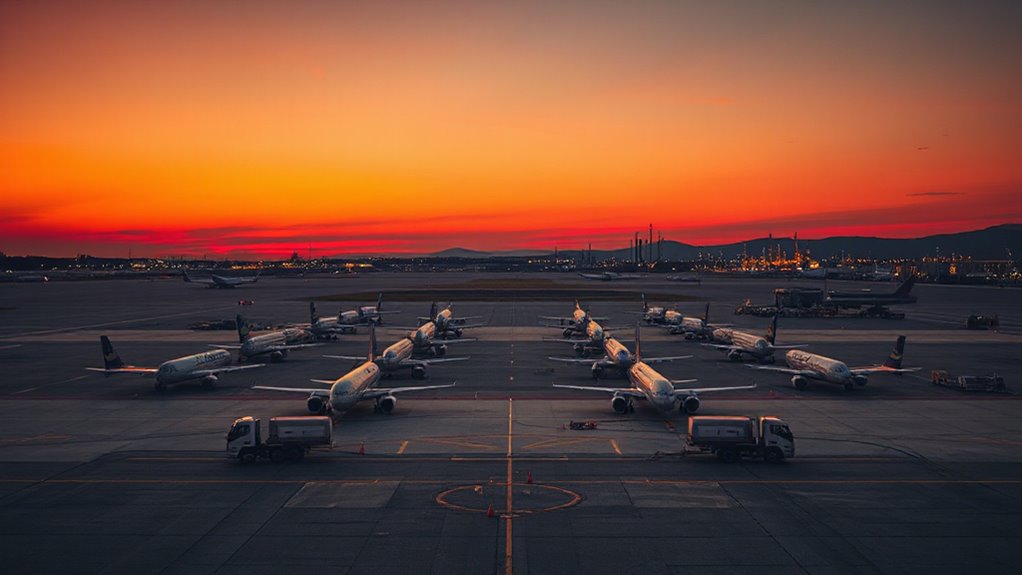
Airports across Europe and Asia are running dangerously low on jet fuel, and the problem is spreading fast. Airports Council International (ACI) Europe warned that Europe could face severe shortages by May. Airports in Italy, the U.K., France, and the Netherlands are already seeing limited supplies. Think of it like a gas station running dry — except planes can’t exactly pull over. Smaller regional airports are hit hardest because they store less fuel and have fewer backup options.
Some airports are already canceling flights. Officials fear things will get much worse if the Strait of Hormuz stays closed. Over 20% of global seaborne jet fuel trade passes through this critical chokepoint, making any prolonged closure a direct threat to worldwide supply.
The crisis is also hitting consumers directly, with airline fares rising 14.9% year over year as carriers scramble to pass surging fuel costs on to passengers. Markets operate on an Eastern Time schedule, with major U.S. exchanges opening at 9:30 a.m. ET, which can influence global fuel and airline stock trading.
How the Iran War Cut Off the Crude Behind Jet Fuel Shortages
The fuel problems at airports don’t come out of nowhere — they trace back to a single chokepoint halfway around the world. The Strait of Hormuz, a narrow waterway between Iran and Oman, normally moves 20 million barrels of oil daily. That’s roughly 20% of all traded petroleum worldwide. Think of it like the world’s busiest gas station suddenly locking its doors.
After Iran closed the strait on March 4, 2026, oil stopped flowing. Gulf producers like Saudi Arabia and Kuwait lost their main export route. Without that crude reaching refineries, jet fuel production quickly started drying up.
The IEA responded by coordinating the release of approximately 400 million barrels from strategic reserves worldwide, marking the largest such release in history. Brent crude had already surged, rising above $92 per barrel by March 6 — up 28% from the previous Friday’s close — as markets absorbed the scale of the disruption.
Which Airports and Routes Face the Worst Jet Fuel Cuts This Summer
Fuel shortages are hitting some airports much harder than others this summer. In Italy, Bologna, Milan Linate, Treviso, and Venice are all managing limited supplies. Venice is prioritizing government and medical flights, while Treviso is telling short-haul airlines to find fuel elsewhere. Think of it like a gas station posting “low supply” signs and asking smaller cars to move along. Southern European leisure airports face extra pressure from strong holiday demand. Platinum’s growing industrial demand in sectors like automotive and electronics can amplify price sensitivity tied to transportation fuels.
For airlines, the worst-hit routes are low-traffic flights on quiet days. United Airlines is already cutting redeyes and midweek services to protect busier, more profitable connections. Europe’s dependence on imports deepened as older refineries reduced kerosene production, leaving the continent more exposed when Middle East supply routes came under pressure.
Experts warn the crisis could intensify in the coming weeks, with European airports predicted to face fuel shortages by May 2026 if the conflict continues to disrupt shipping routes through the Strait of Hormuz.
Why LAX and SFO Face Worse Jet Fuel Shortages Than Other U.S. Airports
Unlike busy airports on the East Coast, LAX and SFO sit far from the Gulf Coast refineries that produce most of America’s jet fuel. Think of it like living far from the grocery store — running out of milk becomes a bigger problem. California refineries mostly make gasoline and diesel, not jet fuel. So both airports depend heavily on imports from Asia and the Middle East. When the Iran war shut down Middle Eastern supplies, West Coast airports felt the pain hardest. Longer shipping routes and limited local pipelines make restocking much slower than airports closer to domestic fuel sources. Jet fuel prices have more than doubled since the war with Iran started, compounding the financial strain on carriers already struggling with limited West Coast supply options. Airlines such as LEVEL have reported that rising fuel costs are driving carriers to explore alternative fuel sourcing strategies as supply chain disruptions continue to reshape global route networks.
When Will Jet Fuel Shortages End: or Escalate?
How long will the jet fuel crisis last? Nobody knows for certain.
Experts say recovery takes months even after the Strait of Hormuz reopens. Think of it like a broken water pipe — fixing the pipe doesn’t instantly refill every empty glass.
Refineries need time to restart and rebuild supplies. Central banks’ responses to economic shocks can indirectly affect fuel demand and financing for refiners, influencing recovery timelines and real interest rates.
The IEA calls this crisis worse than any oil shock since 1973.
IATA says airlines will survive but expect high prices to stick around.
If Hormuz stays blocked beyond a few weeks more, shortages could shift from bad to truly alarming — especially across Europe and Asia. United Airlines alone estimates an extra $11 billion in annual fuel expenses if prices hold at current levels.
Vietnam Airlines has already begun suspending domestic routes, with seven routes halted and 23 weekly flights canceled starting April 1 as fuel importers warned supplies could only be guaranteed through the end of March.