







What Is China’s Bond Connect Expansion?
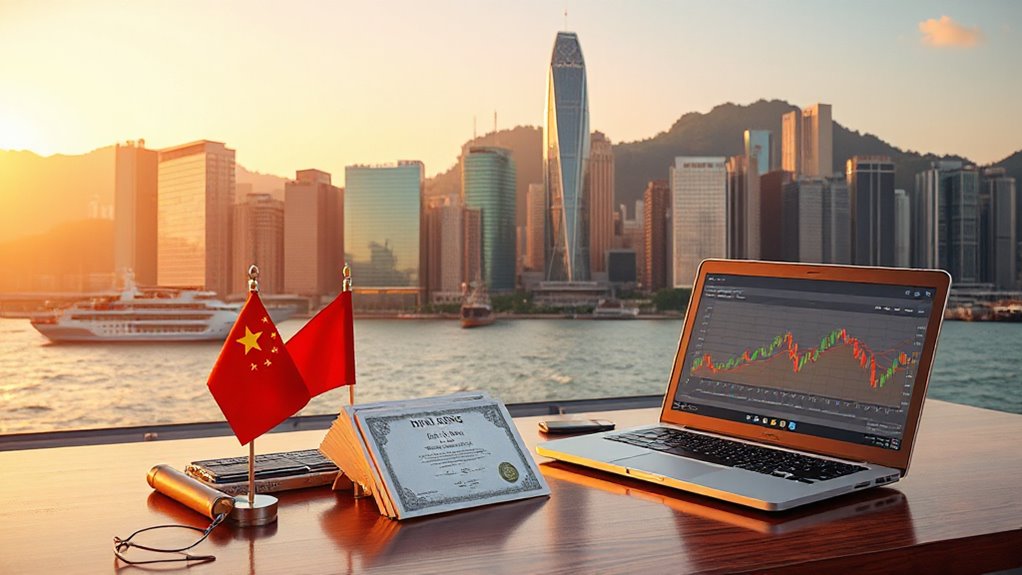
Connecting two major financial markets takes careful planning — and that is exactly what China’s Bond Connect program set out to do. Launched in 2017, Bond Connect links Mainland China’s bond market with Hong Kong’s financial system. Major U.S. brokerages and other global intermediaries now offer access routes that help international investors participate more easily in onshore Chinese bonds.
Think of it like building a bridge between two busy neighborhoods so residents can shop in either direction. The program helps investors diversify their portfolios and makes trading more efficient.
It also strengthens Hong Kong’s role as a global financial hub. Today, Bond Connect covers both Northbound and Southbound access, meaning investors on both sides can participate in each other’s markets. As of May 2025, international investors held RMB 4.35 trillion in onshore China bonds through the program. Recent enhancements to Southbound Bond Connect include plans to connect to the Macao bond market, further expanding cross-boundary investment opportunities.
Who Can Access Hong Kong Bonds Through Bond Connect?
Not everyone can simply sign up for Bond Connect and start trading — the program has a specific guest list. Think of it like a members-only club with strict entry rules.
Eligible participants include banks, insurance companies, pension funds, hedge funds, sovereign wealth funds, and asset managers. These institutions typically have the minimum capital and infrastructure to access institutional trading services.
Central banks and international financial organizations also qualify.
Even private banks can join.
Investors must register with China’s central bank before trading begins.
No mainland account is needed though.
Everything runs through Hong Kong’s existing market infrastructure. Trades are executed on the CFETS RMB Trading System.
Eligible bond types span a broad range, covering sovereign and local government bonds, policy bank bonds, and corporate debt.
How Bond Connect’s Southbound Channel Works in Practice
When a Mainland investor wants to buy a Hong Kong bond through Southbound Bond Connect, the process follows a clear two-part structure: a trading link and a settlement link.
First, the investor sends a request for a price quote to an offshore market maker in Hong Kong. Think of it like asking a store clerk for the price before buying. Interest rate channel changes help determine demand for bonds and influence pricing conditions.
Once the trade is agreed, settlement happens through a CSD-to-CSD link using nominee accounts at Hong Kong’s CMU.
Money flows in a closed loop, meaning sale proceeds must return to Mainland China and convert back into renminbi. The program operates within a daily quota of RMB 20 billion and an annual ceiling of RMB 500 billion.
On its first trading day, the scheme completed more than 150 transactions, totaling around RMB 4 billion, reflecting strong initial market reception.
What Trading Rules and Quotas Apply to Bond Connect?
The settlement steps described above are just one part of how Bond Connect works. There are also trading rules and quotas to know about.
Northbound trading — where overseas investors buy Chinese bonds — has no investment quota at all. Think of it like an all-you-can-eat buffet with no limit. Markets in the region follow Eastern Time for official hours, which affects overlapping trading periods with other markets.
Northbound trading through Bond Connect welcomes overseas investors with zero investment quotas — completely unlimited access to Chinese bonds.
Southbound trading is different. Onshore Chinese investors face a daily limit of RMB 20 billion and an annual cap of RMB 500 billion.
Trading itself uses a request-for-quote system. Investors ask dealers for prices and must accept or decline within 30 minutes. Once accepted, a trade is final. Before trading can begin, investors must complete an admission process that includes BCCL application submission and review, CFETS account mapping, and engagement with a recognized trading access platform.
Southbound trading launched on 24 September 2021, giving Mainland institutional investors a convenient and efficient channel to invest in offshore bonds through the Hong Kong bond market.
Why Bond Connect Reshapes Cross-Border Fixed Income for Investors
Bond Connect reshapes cross-border fixed income investing in some genuinely significant ways. Before it existed, foreign investors faced complicated steps just to buy a Chinese bond.
Now they can access one of the world’s largest bond markets — worth around US$9.3 trillion — without replicating onshore procedures. Think of it like ordering from a foreign restaurant without leaving your neighborhood.
Investors trade through familiar Hong Kong infrastructure and access government bonds, corporate debt, and even asset-backed securities. This access also provides a liquidity channel that helps international investors manage short-term portfolio needs.
No quotas apply either. This streamlined setup makes cross-border bond investing far more practical and helps connect global capital to Mainland China’s growing fixed income market. The scheme establishes connectivity by linking Mainland China CSDs, including CCDC and SCH, to the Central Moneymarkets Unit in Hong Kong.
Foreign investors currently account for less than 2% of the Chinese bond market, leaving significant room for international participation to grow.