







France’s Inflation Hits a Two-Year High in May 2026
France’s inflation climbed to 2.4% in May 2026, its highest point in over two years. That means prices overall were 2.4% higher than they were in May 2025.
Think of it like paying an extra 24 cents on every $10 purchase. The rate had been rising for four straight months and hadn’t been this high since February 2024.
On the EU’s official measuring scale, the rate reached 2.8%. Both figures came in slightly below what experts had predicted. Analysts forecast inflation will reach 2.8% by quarter’s end. The elevated readings have pushed inflation beyond the ECB’s comfort zone, strengthening the case for a rate hike at the June meeting. Higher inflation increases the likelihood that the European Central Bank will tighten policy by raising interest rates, which could quickly affect bond and currency markets.
Why Energy Prices Are Pushing France’s Inflation Higher
When prices rise fast, it helps to know what is doing the pushing — and in France, energy is the main culprit. Think of energy costs like a loud friend who always takes over the room.
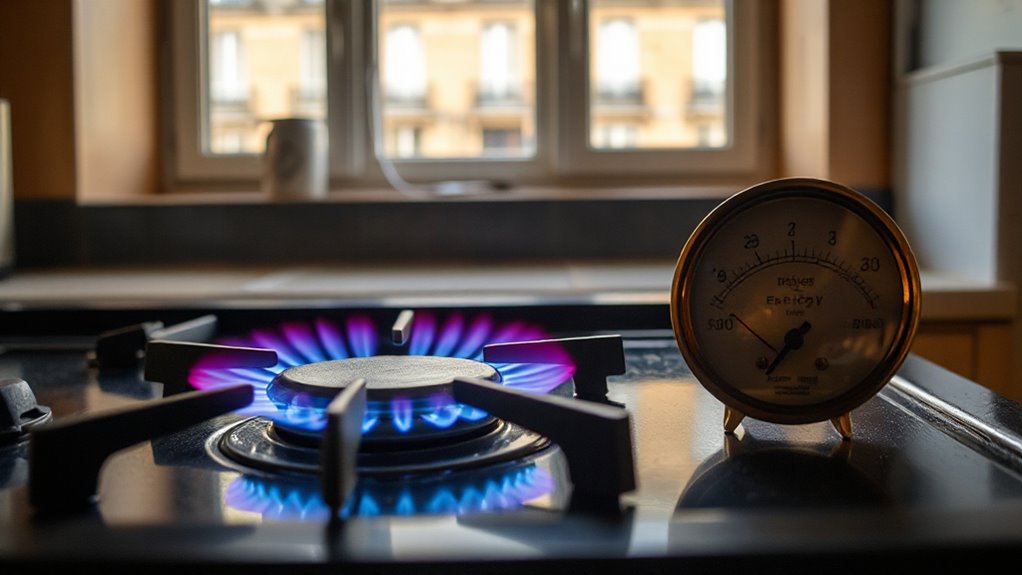
In May 2026, energy prices jumped nearly 16.8%, with gas leading the charge. That kind of spike pulls the whole inflation number upward fast.
Gasoline, diesel, and natural gas have repeatedly been the biggest troublemakers in French inflation data. Even when other costs stay calm, energy alone can send headline inflation soaring — no help needed from anything else. Gas prices rose 11.4% in July, a dramatic reversal from the 10.8% decline recorded just the month before.
In April, energy prices were projected to surge 14.2% year-on-year, a sharp acceleration from the 7.4% increase recorded in March, with petroleum products like diesel, gasoline, and liquid fuels driving the move.
Higher energy costs often trigger broader cost-push inflation as businesses pass increased production expenses on to consumers.
How France’s Inflation Reaccelerated From Near-Zero in 2025
After hitting over 6% in early 2023, France’s inflation went on a long, slow slide — falling all the way to near-zero by early 2025. Think of it like a car coasting downhill and nearly stopping.
By February 2025, inflation had dropped below 1%. May 2025 brought just 0.7% — the lowest in four years.
But then it started creeping back up. Services like health, transport, and accommodation led the recovery. Food prices edged higher too. Energy prices also contributed, falling at a slower pace of -6.9% compared to -8% the month before.
In January, energy prices surged 2.7% year-on-year, a sharp jump from just 1.2% in December, making them one of the most significant drivers of the inflation reacceleration. Central bank rate decisions can influence these trends by affecting borrowing costs and consumer demand, which in turn shape inflation expectations and real interest rates.
France’s Inflation Surpasses the ECB’s 2% Target Again
The European Central Bank has a clear goal: keep inflation across the eurozone close to 2%. Think of it like a thermostat — not too hot, not too cold.
France spent much of 2025 running below that mark. January showed 1.8% and October dipped to just 0.9%.
France spent most of 2025 below the 2% target, with inflation sliding as low as 0.9% in October.
So when French inflation climbed back above 2%, it was notable. Such shifts can influence market expectations about interest rates, which investors watch closely.
France is the eurozone’s second-largest economy so its numbers carry real weight. The ECB targets the whole bloc rather than each country separately but a major member crossing that threshold still gets attention from policymakers and markets alike. In fact, ECB Governor Francois Villeroy de Galhau expressed confidence that the bank would bring inflation toward its 2% target by 2025.
Meanwhile, Italy also saw its inflation accelerate, with consumer prices rising to 1.8% in September, driven largely by food and beverage prices pushing the figure beyond the previous month’s reading of 1.6%.
Services Costs Rise While France’s Food Inflation Stays Contained
Not all parts of France’s inflation story moved in the same direction. Services prices jumped +1.2% month on month****, driven mostly by seasonal demand.
Think summer holidays — transport costs surged +9.1% and accommodation prices climbed +4.9%. Basically, traveling and sleeping away from home got noticeably pricier.
However, food inflation stayed calm by comparison. In June 2025, food prices rose just slightly from 1.3% to 1.4% year on year — barely a nudge.
Reuters described it as a slight increase rather than a serious surge. So while services heated up, France’s grocery bills stayed relatively easy on the wallet. Services inflation in May 2026 reached 2.00%, up from 1.80% the prior month, reflecting a category that accounts for 50.1% of France’s CPI basket. Meanwhile, manufactured products fell -0.6% year on year in April 2026, marking a continued decline from the previous month’s -0.5%. Investors often look to broader tech and data trends like cloud computing when assessing sectoral impacts on inflation and spending.