
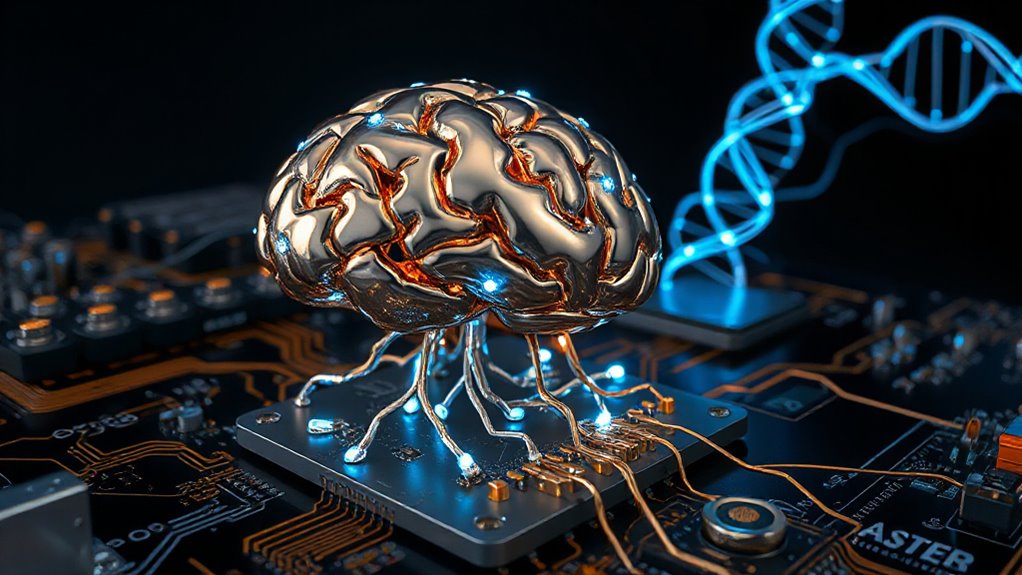
What Is Perplexity Brain and How Does It Work?
How does an AI actually get smarter the more it works? Perplexity Brain is a self-improving memory system built inside the Perplexity Computer AI agent.
Perplexity Brain is a self-improving memory system that makes AI genuinely smarter the more it works.
Think of it like a student who takes notes after every class and actually reads them before the next one.
Brain builds a working model of projects, people, and files to give the agent useful context.
It operates as a continuously learning context graph that updates itself proactively. This context graph can integrate real-time data and long-term knowledge to improve decision-making.
Instead of starting fresh each time, the agent carries real knowledge forward.
Currently, Brain is available only to Max and Enterprise Max subscribers in Research Preview. It learns by reviewing sessions, connector updates, artifacts, and corrections that happen in the background.
Every memory entry links back to the session, file, or source it came from, making the entire context layer fully traceable.
What Brain Remembers That Traditional AI Memory Ignores
Perplexity Brain works very differently from the memory systems most AI tools use today.
Most AI memory stores personal details like job titles or favorite phrases.
Brain skips all that.
Instead it remembers which websites gave good results and which ones wasted everyone’s time.
It tracks where users made corrections and why those corrections mattered.
It logs which decisions led to finished tasks and which ones hit dead ends.
Think of it less like a diary about the user and more like a coach’s notebook about what plays actually worked.
Brain compiles everything it learns into a structured knowledge base called an LLM Wiki, which is loaded into the workspace before each new task begins.
Unlike generative AI, the human hippocampus recalls entire episodes from partial cues using local associative learning rather than backpropagation of error.
Because strategies and approaches can lose effectiveness as they become widely known, Brain emphasizes tracking which playbooks remain productive over time using strategy decay metrics.
Why Brain Gets Better at Repetitive Tasks: By the Numbers
The numbers behind Brain’s improvement tell a surprisingly clear story.
Answer correctness jumps 25% on tasks requiring historical context.
Information recall improves by 16% as Brain links related files and decisions more accurately.
Costs drop 13% because Brain skips redundant searches and uses pre-compiled knowledge instead.
Think of it like a student who stops re-reading the same textbook chapter twice.
These gains also compound over time.
Each new session adds to the context graph.
The more Brain works in a familiar area the sharper and cheaper its performance becomes.
Gains are most pronounced on repeated, familiar task types.
These metrics come from internal Perplexity assessments rather than independent benchmarks.
This improvement parallels how reinforcement learning systems adapt by learning from prior outcomes.
How Brain’s Context Graph Gets Smarter Over Time
Those performance gains do not happen by accident. Brain’s context graph grows smarter through five connected processes working together.
It continuously learns from task execution history so past work informs future decisions. This continuous learning is validated through rigorous backtesting using historical task data to ensure improvements are reliable.
It asynchronously optimizes vector weights meaning it quietly fine-tunes its own understanding in the background like a student reviewing notes overnight.
It preserves relationships across sessions so nothing important gets forgotten.
It prunes noisy low-signal data to stay sharp and focused.
Finally it proactively pulls in fresh context sources.
Each cycle leaves Brain more capable than before. Over time this compounding effect means answer correctness increases by 25 percent on tasks Computer has already encountered. Agents also grow better at identifying which projects, connectors, and sources deliver the best outcomes, reducing wasted turns and model calls with every session.
How to Enable Brain and Start Building Your Context Graph
Getting access to Brain starts with a Perplexity Max subscription, which costs $200 per month or $2,000 per year.
Brain launched as a research preview on June 18, 2026.
Brain made its debut as a research preview on June 18, 2026, marking a significant milestone for Perplexity.
Once subscribed, users open the Perplexity app and find the Customize option in the sidebar.
That menu leads straight to Brain’s memory section.
From there, users can view saved memories, check their sources, and delete anything unwanted.
To connect personal data like Gmail or Google Drive, users tap their profile picture and visit the personalization settings.
After setup, the context graph begins building automatically overnight — no extra effort needed. Dollar-cost averaging can be a useful strategy for users investing in crypto who also want to gradually allocate funds to paid AI tools.
Internal benchmarks show Brain improves answer correctness by +25% on context-dependent tasks. Every memory entry is traceable to its original dialogue, file, or source, giving users complete transparency into how the AI makes its decisions.